

Ear cuff: A Style Guide
An ear cuff is the easiest way to build a styled, stacked-ear look with zero piercings — you simply slide a slip-on cuff onto the rim or mid-cartilage of your ear and give it a gentle squeeze for a secure fit. This guide is for anyone who wants the layered "curated ear" trend without a needle (or who has piercings and wants to fill the gaps between them). We'll cover the cuff types that genuinely stay put without a piercing, how to stack them so they read intentional instead of cluttered, and the honest details — fit, materials, and care — that decide whether a cuff is worth buying.
Key takeaways
- A true no-piercing ear cuff is a slip-on, adjustable band — it grips the ear by tension, not by a post. Skip "ear cuffs" that are actually threaders or studs in disguise; they need a hole.
- The detail that decides comfort is fit, not price: a cuff sized to your cartilage and gently squeezable holds all day without pinching.
- Don't overpay for "solid gold" you'll wear poolside. 18k gold-plated 316L stainless steel gives you the gold look that survives showers and gym sessions for a fraction of the cost.
- For most people, start with one bolder cuff on the mid-cartilage, then add a thinner one higher up — that two-cuff stack is the safest, most flattering entry point.
How to choose a no-piercing ear cuff: the buyer's criteria
Not every piece labeled "ear cuff" works without a piercing. Before you buy, check these in order:
- Open, adjustable band — not a post. A genuine no-piercing cuff is a C-shaped or wrap band you slide on and squeeze to fit. If the product needs a hole (a hoop, threader, or stud back), it isn't a true cuff. Meideya's slip-on cuffs are designed to stay on with a gentle squeeze, no piercing required.
- Fit to your ear, not a one-size promise. The cuff's inner diameter and band width determine where it sits and how snug it feels. A smaller inner diameter grips the thinner rim or upper cartilage; a wider band reads bolder. Look for a stated measurement (the White Baguette Ear Cuff, for example, is 13 mm outer / 10 mm inner) so you're not guessing.
- Material that survives daily wear. Because a cuff sits against skin and oil all day, the metal matters. 18k gold-plated 316L stainless steel is corrosion-resistant, won't turn your skin green (that's copper in cheap brass), and the gold tone holds for years when the plating is applied by PVD.
- Honest about the stone. If a cuff is set with sparkle, know what it is. Cubic zirconia (CZ) is a lab-made stone with honest, bright fire — it's a simulated diamond, not a mined one. Genuine gemstones (pearl, onyx, moonstone) are the real stone but each has its own hardness and care needs.
- One-time price. A cuff should be a single purchase — no membership, no auto-shipment to keep it "active."
Best cuff for each kind of wearer
Different ears and different goals call for different cuffs. Here's the quick match:
- Best for total beginners (no piercings): a single mid-cartilage slip-on cuff. It's the most secure spot for a no-piercing cuff and instantly reads "styled" without committing to a stack.
- Best for building a stack: pair a bolder cuff lower and a thinner cuff higher on the same ear. Two cuffs of different widths look deliberate; three or more starts to crowd a small ear.
- Best for sensitive skin: 316L stainless steel. It's widely considered hypoallergenic because its nickel is locked into the alloy and released at extremely low levels — far below the EU safety limit (more on that below).
- Best for water and workouts: a PVD gold-plated stainless cuff. It's built to stay on and stay gold through showers, the gym, and the beach without daily upkeep.
- Best for a gift: a CZ or baguette-set cuff. The added sparkle feels special, and a no-piercing design means the recipient can wear it whether or not they have pierced ears.
Cuff types compared: which actually work without a piercing
"Ear cuff" gets used loosely. Here's how the common styles stack up for a non-pierced ear, with verified material and fit notes:
| Style | Needs a piercing? | Best for | Typical price (gold-plated steel) |
|---|---|---|---|
| Slip-on / squeeze cuff | No — slides on, squeeze to fit | The classic no-piercing look; mid-cartilage or rim | ~$25–$45 |
| Conch / helix wrap cuff | No — wraps the outer cartilage | A bolder sculptural statement, still no needle | ~$25–$50 |
| Clip-style cuff | No — clips to the lobe or rim | Those who want a lobe accent without piercing | ~$20–$40 |
| Threader / chain "cuff" | Yes — threads through a hole | Pierced ears only; not a true cuff | varies |
The takeaway: if you have no piercings, stay in the top three rows. A slip-on squeeze cuff is the most versatile starting point, and a conch/helix wrap is the move when you want a single statement piece.

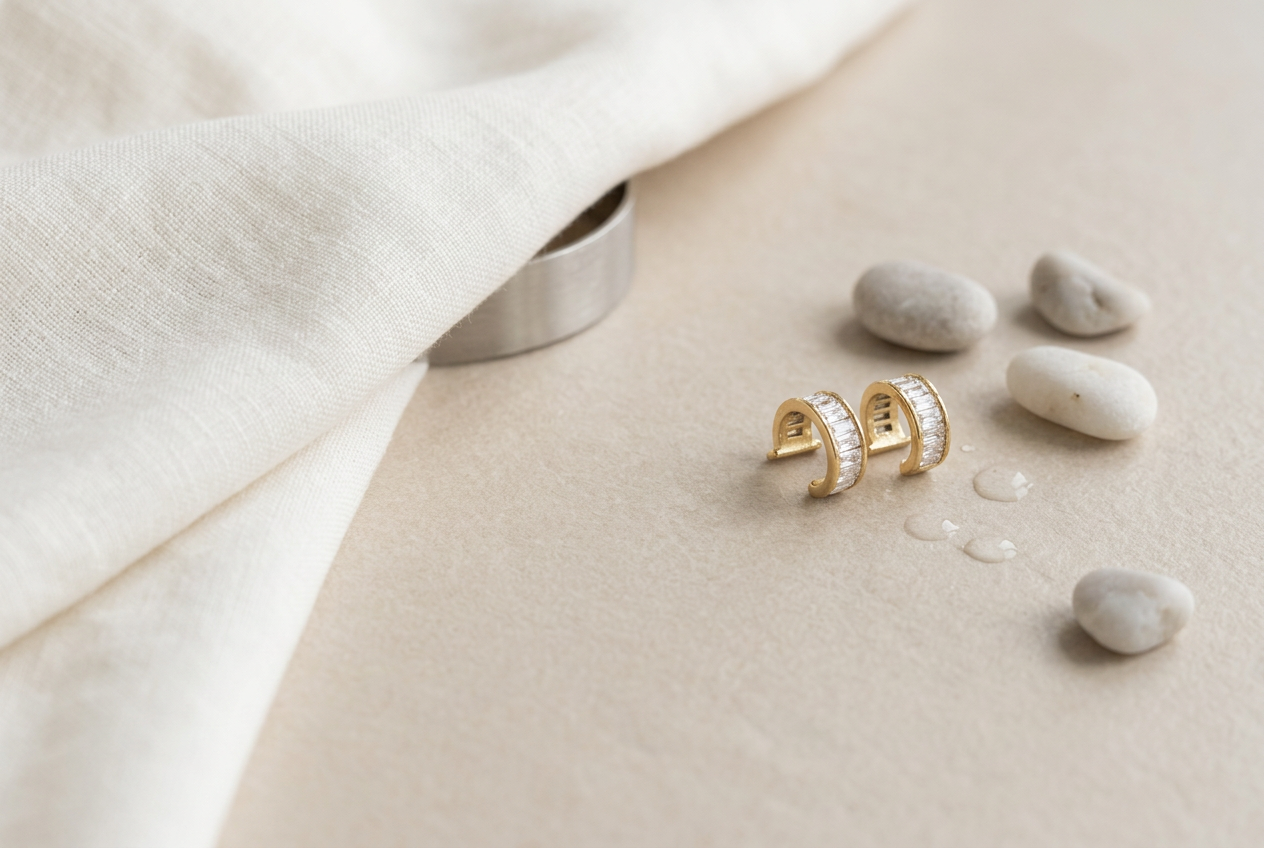
White Baguette Ear Cuff
A non-pierced cuff with a row of sparkling white baguette stones — no piercing required, just slip it on and give it a gentle squeeze for a secure fit.
Shop this ear cuff →Honest caveats — the objections worth answering
- Will it actually stay on? A slip-on cuff holds by tension, so fit is everything. Sized correctly and squeezed gently to your cartilage, it stays put through a normal day — a light squeeze tightens a loose grip; ease it open if it pinches. It won't grip like a piercing, so for high-motion activity, check it the way you would any clip-on.
- Will it arrive looking like the photo? Ear cuffs are small by nature — Meideya is dainty, demi-fine jewelry, not oversized costume pieces. We publish measurements (the White Baguette cuff is 13 mm outer / 10 mm inner) so the scale is exactly what you expect, not a catfished close-up.
- Is the sparkle a real diamond? No, and we won't pretend otherwise. CZ and baguette crystal stones are simulated — cubic zirconia sits around 8 to 8.5 on the Mohs hardness scale and gives bright, honest fire. It's a beautiful, affordable sparkle, not a mined diamond.
- Is it solid gold? No — and that's the point of affordable luxury. Our cuffs are 18k gold-plated 316L stainless steel: a real gold surface layer (the FTC requires at least 0.175 microns of at least 10k gold to call something "gold-plated") bonded by PVD over a stainless core. Plating is a surface, so it resists tarnish for years rather than forever — but you get the gold look without the solid-gold price.
- Any hidden costs? None. The price you see is a one-time purchase — no subscription, no auto-ship, no membership to keep your jewelry "active."
How to stack ear cuffs
To build a stack, start with your bolder cuff on the mid-cartilage, then add a thinner cuff higher toward the helix. Keep the widths varied so the pair reads intentional, and leave the lobe simple — a small flat stud or nothing — so the cuffs stay the focus. Three or more cuffs starts to crowd a small ear, so two is the sweet spot for most people.
Ready to start your no-piercing stack? Browse the full stainless steel earrings collection.
Frequently asked questions
Do ear cuffs really stay on without a piercing?
Yes — a true no-piercing ear cuff is a slip-on band that grips your ear by gentle tension. You slide it onto the rim or mid-cartilage and give it a light squeeze for a secure fit. Fit is what matters: sized to your ear, it stays comfortably through a normal day. It won't anchor like a piercing, so during high-motion activity you may want to check it as you would any clip-on piece.
Where on the ear should I wear an ear cuff?
The mid-cartilage (the outer rim partway up the ear) is the most secure and flattering spot for a no-piercing cuff, and the best place for beginners. When stacking, place a bolder cuff on the mid-cartilage and a thinner one higher toward the helix, keeping the lobe simple so the cuffs stay the focus.
Are the stones in ear cuffs real diamonds?
The sparkling stones in most affordable cuffs, including baguette and pavé designs, are cubic zirconia (CZ) — a lab-made simulated diamond, not a mined one. CZ sits around 8 to 8.5 on the Mohs hardness scale and gives bright, honest fire. When a cuff is set with a genuine gemstone like pearl or onyx, that stone is real, but it is not a diamond.
Is gold-plated stainless steel good for sensitive ears?
18k gold-plated 316L stainless steel is a strong choice for sensitive skin. 316L is widely considered hypoallergenic because its nickel is locked into the alloy and released at very low levels — quality 316L stays well under the EU limit of 0.5 micrograms of nickel per square centimeter per week. The stainless core also won't turn your skin green, which is caused by copper in cheap brass.
How do I care for a gold-plated ear cuff?
Wipe the metal dry after showering, swimming, or the gym, and store cuffs separately so the plated surfaces don't rub against each other. 18k gold-plated stainless steel resists tarnish for years, but plating is a surface layer, so gentle handling keeps the gold tone looking new longer. If your cuff has a soft genuine stone like pearl, keep it away from perfume and harsh cleaners.
Bottom line: choose a true slip-on cuff sized to your ear, start with one bolder piece on the mid-cartilage, and let 18k gold-plated 316L stainless steel do the heavy lifting for everyday wear. See also our guides on dainty pearl necklaces and choosing a dainty gold necklace.

Leave a comment
This site is protected by hCaptcha and the hCaptcha Privacy Policy and Terms of Service apply.