

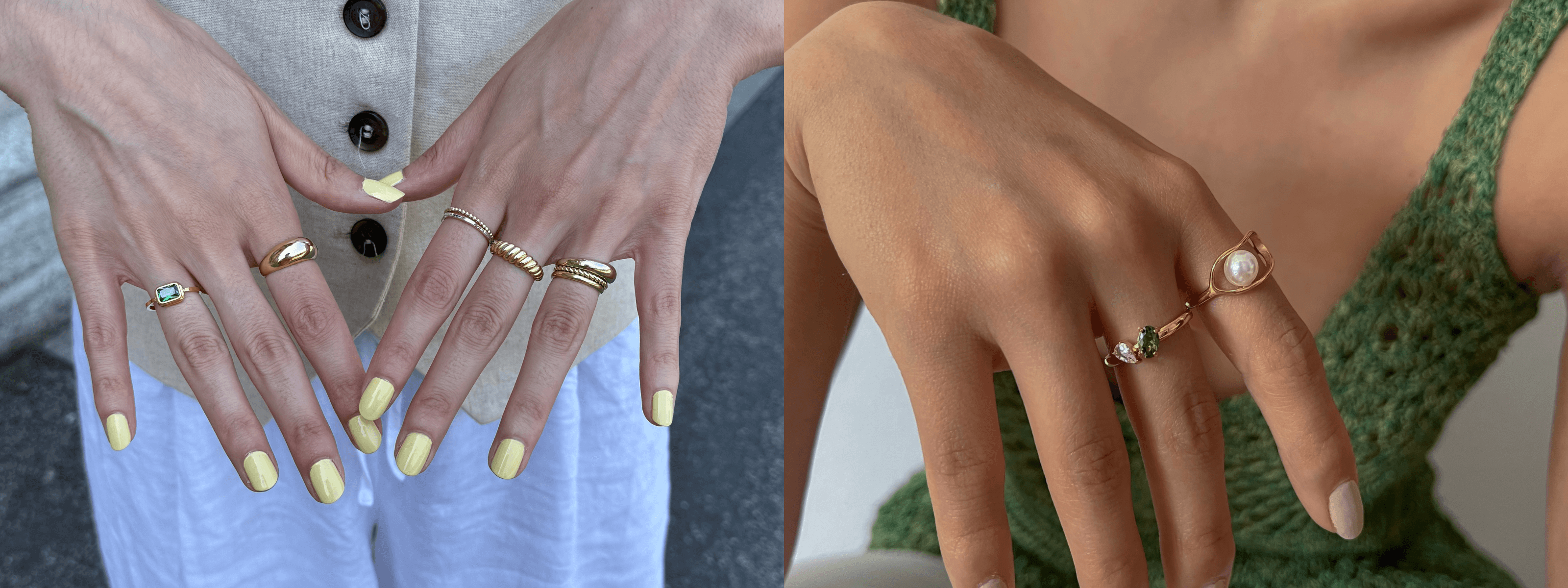
Waterproof Rings: The Ultimate Guide to Worry-Free Style
Let’s be honest: taking your rings off every time you wash your hands, do the dishes, or jump in the shower is a hassle. As someone who is active and (I’ll admit it) a little forgetful, this used to be my biggest frustration with jewelry. My old jewelry box was a graveyard of "regrets"—rings that were ruined by one accidental trip to the sink, leaving behind a dull finish or that dreaded green finger stain.
This is why the term "waterproof jewelry" has become so popular. But what does it *really* mean? And how can you be sure the ring you're buying will actually survive your real life, instead of just being a marketing gimmick?
As the founder of Meideya and a long-termist obsessed with materials, I’ve dedicated myself to finding the answer. This guide will explain what truly waterproof rings are, which materials to avoid, and why 316L stainless steel rings are the scientific and stylish solution to a worry-free life.

Key Takeaways
- "Water-Resistant" is not the same as "Waterproof." Water-resistant can handle a splash; waterproof can be fully submerged without damage.
- Materials that are **NOT** waterproof include most plated jewelry (brass, copper, zinc alloys) and sterling silver, as they will tarnish or corrode.
- The only truly waterproof and worry-free metals for everyday wear are 316L Stainless Steel, Titanium, and Platinum.
- High-quality stainless steel gold rings made with PVD coating are also fully waterproof, as the color is molecularly bonded to the steel and will not fade or chip from moisture.
"Waterproof" vs. "Water-Resistant": Decoding the Labels
This is the most important distinction shoppers need to understand. These terms are *not* interchangeable.
Water-Resistant Rings: This is a weak promise. It means the ring can likely survive an accidental, quick splash of water before you immediately dry it off. This category includes most gold-plated and vermeil jewelry. The plating is fragile, and moisture will accelerate its breakdown, eventually exposing the reactive base metal (like copper or brass) underneath.
Waterproof Rings: This is a guarantee. A truly waterproof ring can be fully submerged in water—showering, swimming in a pool, washing dishes, even going in the ocean—without its structural integrity or finish being compromised. The material itself is non-reactive and does not corrode.
The Hall of Shame: Rings That Will Fail the Water Test
Before you find the solution, you need to know what to avoid. These materials will lead to disappointment:
- Cheap Plated Jewelry (Brass/Copper/Zinc Alloy): This is the worst offender. Water will quickly wear away the thin plating, causing the piece to flake and the base metal to oxidize, which is what turns your finger green.
- Sterling Silver: Silver itself isn't "damaged" by pure water, but water (especially with chemicals like chlorine or sulfur in the air) dramatically accelerates tarnishing. Your silver ring will turn black or dull much faster if worn in the shower.
- Organic Gems: Jewelry with materials like pearls, mother of pearl, or turquoise should never be submerged, as water can damage their delicate structure and luster.

Featured: Our Waterproof Rings
Experience the freedom of our 100% waterproof and hypoallergenic 316L stainless steel rings. Designed to be lived in.
Shop All RingsThe Champion: Why 316L Stainless Steel is the Ultimate Waterproof Material
So, what makes 316L stainless steel the king of waterproof rings? The answer is pure science.
The Science of the "Passive Layer"
Stainless steel's primary ingredient is chromium. This element reacts with oxygen to form a thin, invisible, and incredibly stable layer on the surface of the steel. This is called the passivation layer. This layer acts as a suit of armor, protecting the steel underneath from water, oxygen, and salt, thus preventing rust or tarnish. Even if you scratch it, this layer instantly "heals" itself by re-exposing the chromium to oxygen. This is why it is truly tarnish-free.
The "Marine Grade" Secret: Molybdenum
316L steel is a premium "marine-grade" alloy. This is because it contains a special ingredient: molybdenum. This element gives it an extra boost of protection, making it highly resistant to corrosion from chlorides—like the salt in the ocean and the chlorine in a swimming pool.
What About Gold Stainless Steel Rings?
This is a valid question. If it's a cheap, traditional plating, it will fail. But high-quality stainless steel gold rings use an advanced process called **PVD (Physical Vapor Deposition)**.
As we explain in our guide to PVD coating, this isn't plating; it's a process that molecularly bonds the gold color to the steel in a vacuum. This finish is also waterproof, tarnish-proof, and will not fade, chip, or peel. This is how we can confidently offer gold rings that are just as worry-free as our classic silver-tone pieces.
When you combine a 316L steel core with a PVD coating, you get a "double-safe" guarantee. The coating is waterproof, and even if you could somehow wear it down years later, the metal underneath is *also* waterproof and hypoallergenic.
Frequently Asked Questions
Q1: So, I can really shower in 316L stainless steel rings?
Yes, 100%. Showering in your stainless steel rings is one of the easiest ways to keep them clean, as the mild soap and water will wash away daily oils.
Q2: What's the difference between waterproof and tarnish-free?
"Waterproof" means water will not damage the structural integrity of the metal. "Tarnish-free" means the metal will not oxidize (turn black or green) when exposed to air and moisture. 316L stainless steel is both, while sterling silver is waterproof but *not* tarnish-free.
Q3: Will saltwater or chlorine from a pool damage my stainless steel ring?
No. 316L grade stainless steel is specifically engineered with molybdenum to resist corrosion from both saltwater and chlorine, which is why it's known as "marine-grade" steel.
Q4: Do waterproof rings still need to be cleaned?
Yes, but it's very easy. While water won't harm it, soap scum, lotions, and oils can build up and make the ring look dull. A simple wash with warm water and dish soap using a soft brush is all you need to restore its shine. Check our cleaning guide for easy tips.
Your jewelry should be part of your life, not a barrier to it. The search for truly waterproof rings ends with 316L stainless steel. It’s the only material that delivers the "put it on and forget it" freedom that modern life demands, without compromising on style or safety. Explore our full collection of worry-free stainless steel jewelry and rediscover the joy of wearing accessories without a second thought.
%20a%20little%20forgetful,%20this%20used...)
Leave a comment
This site is protected by hCaptcha and the hCaptcha Privacy Policy and Terms of Service apply.