
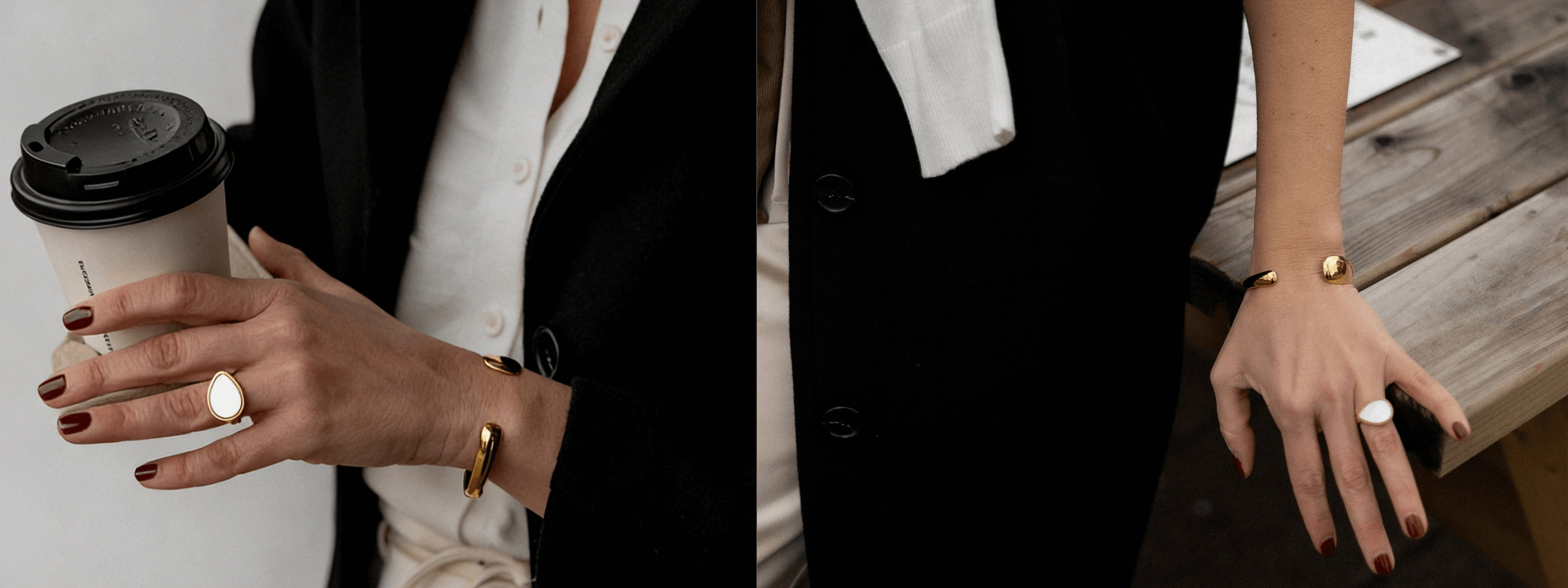
Stainless Steel vs. White Gold: A Price and Durability Comparison
Choosing a white metal—the elegant, cool tone that complements every skin color—is a fundamental decision in jewelry. Traditionally, the only option was white gold. But as a long-termist, I have always looked for a smarter, more durable material that delivers the same aesthetics without the high cost and maintenance hassle.
If you are weighing the pros and cons of traditional fine jewelry versus high-performance modern **stainless steel jewelry**, this guide is for you. We’ll break down the ultimate face-off between 316L stainless steel and white gold, proving why the modern choice offers superior value and endurance.

Key Takeaways
- The Plating Problem: White gold requires constant, expensive re-plating with rhodium (a white metal) every 1–3 years to maintain its bright color. Stainless steel requires **zero** re-plating.
- Durability Winner: Stainless steel is significantly harder and more scratch-resistant than soft white gold.
- Price vs. Value: White gold has a higher initial price, but stainless steel offers superior *long-term value* due to its lack of maintenance costs and higher durability.
- Safety: White gold often contains nickel, making it problematic for sensitive skin. 316L steel is engineered to be hypoallergenic.
The True Cost of White Gold (The Rhodium Problem)
Many consumers don't realize that white gold is not naturally bright white. It is gold alloyed with white metals (like palladium or nickel), which results in a dull, yellowish-white tone. To achieve the brilliant, reflective white color we expect, white gold jewelry must be coated with a layer of **rhodium**, a very bright, expensive platinum-group metal.
This rhodium plating is the white gold's fatal flaw for a long-termist:
- It Wears Off: Rhodium is a plating, not the base metal. It wears off quickly on high-contact areas (like the bottom of a ring or the back of a pendant), revealing the yellowish tone underneath.
- The Cost of Maintenance: To restore the white color, the piece must be professionally cleaned and re-plated every 1-3 years, costing a recurring fee that rapidly increases the lifetime cost of the jewelry.
The Performance Showdown: Steel vs. Gold
Here is a direct comparison on the metrics that matter most for daily wear and long-term investment:
| Feature | 316L Stainless Steel | White Gold (Rhodium Plated) |
|---|---|---|
| Scratch Resistance (Hardness) | Excellent (Very hard alloy, highly scratch-resistant) | Fair (Soft metal, prone to nicks and surface scratches) |
| Tarnish/Corrosion | None (Will never rust or tarnish) | None (But the rhodium plating can wear off) |
| Maintenance | Zero (Only soap and water cleaning) | High (Requires professional re-plating every 1-3 years) |
| Hypoallergenic | Excellent (Biocompatible surgical grade) | Poor (Often contains nickel, a common allergen) |

Featured: The Permanent White Metal
Get the luxurious white-silver look with zero maintenance. Explore our collection of durable, scratch-resistant, hypoallergenic 316L steel pieces.
Shop All Stainless Steel JewelryThe Smart Choice: Safety and Long-Term Value
Safety for Sensitive Skin
The nickel content in white gold is a serious concern for allergy sufferers. While white gold may be labeled "hypoallergenic" in some regions, 316L steel (specifically designed as **surgical steel**) offers a lower risk profile and a stable composition. For earrings or rings worn constantly, the safety of **stainless steel jewelry** is unmatched.
The Investment Perspective
White gold's value is in its material (gold is a commodity). Stainless steel's value is in its **performance and durability**. When you factor in the recurring cost of rhodium re-plating for white gold, the stainless steel piece becomes vastly more cost-effective over its lifetime, providing superior functional value for the modern consumer.
Frequently Asked Questions
Q1: What is the biggest maintenance cost of white gold?
White gold must be regularly re-plated with rhodium (a bright white metal) every 1-3 years because the gold mixture underneath is naturally yellowish. This re-plating cost is the largest ongoing expense and maintenance headache for white gold jewelry.
Q2: Is stainless steel more scratch-resistant than white gold?
Yes. Gold is a relatively soft metal. 316L stainless steel is a significantly harder industrial alloy, offering superior resistance to scratches and dents, making it much more durable for active, daily wear.
Q3: Does white gold contain nickel?
Most white gold (in the US and UK) contains nickel to help achieve its color and hardness, which is a major concern for people with metal allergies. 316L surgical steel, while containing trace amounts of nickel, is engineered to be biocompatible and hypoallergenic for the vast majority of people.
Q4: Which one is better for everyday wear?
Stainless steel is functionally superior for everyday, worry-free wear. It is cheaper, doesn't require re-plating, is tarnish-proof, and can be worn in the shower or gym without concern, unlike white gold.

Hinterlasse einen Kommentar
Diese Website ist durch hCaptcha geschützt und es gelten die allgemeinen Geschäftsbedingungen und Datenschutzbestimmungen von hCaptcha.