

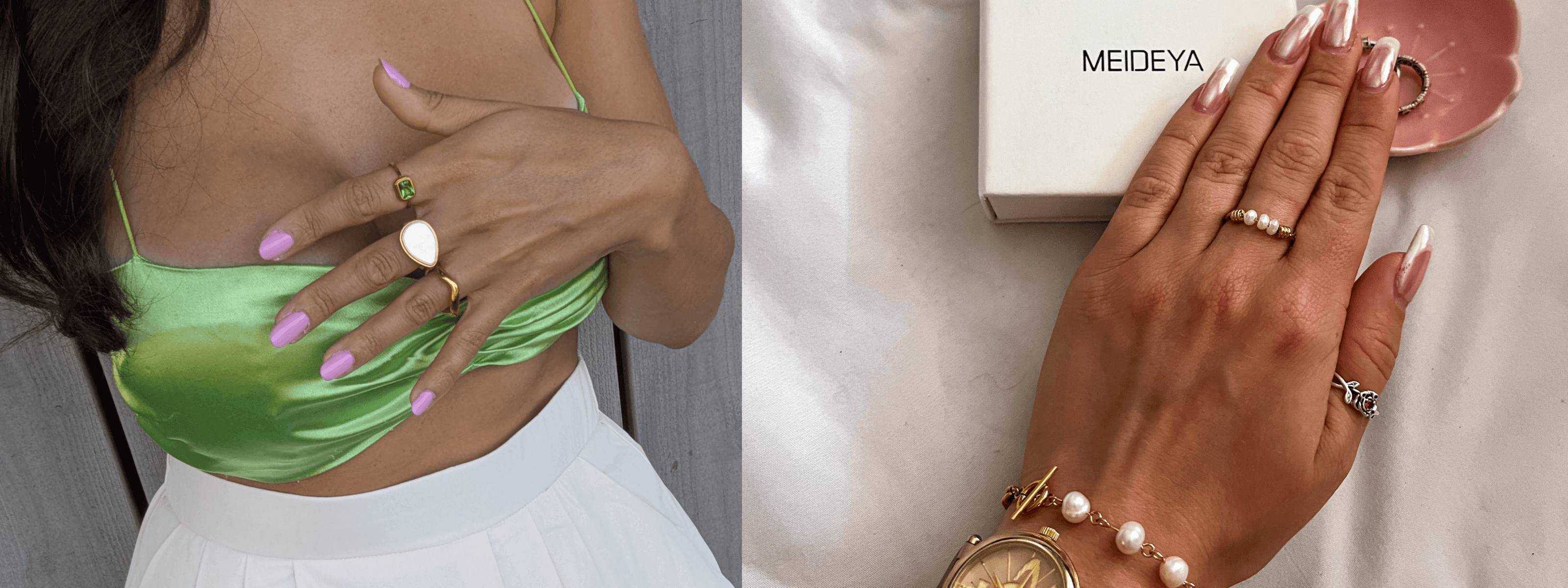
What to Look For When Buying Hypoallergenic Jewelry Online
Shopping for jewelry online should be a joyful experience. But for those with sensitive skin, it's often fraught with anxiety. "Is this pretty, but will it make me itch?" "Can I trust the description?" "What if I have a reaction?"
You deserve to shop with confidence. This guide will serve as your ultimate smart shopper's checklist. We'll teach you how to see past vague marketing claims, what to look for in a product description, and how to identify truly safe, high-quality hypoallergenic jewelry, with a focus on why stainless steel jewelry is the most reliable choice.

The Foundation: Trust Materials, Not Marketing
The most important rule of hypoallergenic jewelry shopping is this: Specific material names are your truth. Vague marketing terms are just a starting point.
As we explain in The Truth About "Nickel-Free" Jewelry Labels, terms like "hypoallergenic" are not strictly regulated in many places. The only way to be sure is to know exactly what the jewelry is made of.
Your 5-Star Smart Shopper's Checklist
Use these five key checkpoints every time you shop online.
⭐ CHECKPOINT 1: The Material Name is Specific and Verifiable
This is non-negotiable. Scour the product description for these trusted material names:
-
Top Choice for Value & Durability: 316L Surgical Steel. This is your best bet for a worry-free experience.
-
The Premium Choices: Implant-Grade Titanium, Niobium, Platinum, Solid 14k Gold or higher (ensure it's nickel-free).
If the description just says "metal alloy" or "fashion jewelry," consider it a major red flag. For a full breakdown, our Guide to the Best Metals for Sensitive Skin is your best resource.
⭐ CHECKPOINT 2: For Plated Jewelry, the Base Metal is Disclosed and Safe
The beautiful gold or rose gold color is only as good as what's underneath. The plating will eventually wear, so the base metal is what truly matters for long-term safety.
-
The Gold Standard: Look for PVD plating on a 316L stainless steel base. This gives you a "double-safe" guarantee, as we explain in our Guide to PVD Coating.
-
The Red Flag: If the brand doesn't tell you what the base metal is, assume it's a cheap, nickel-based alloy and steer clear.

⭐ CHECKPOINT 3: The Details Show a Commitment to Comfort
A brand that cares about sensitive skin thinks about the little things.
-
Earring Backs: Do they offer comfortable and hygienic options like flat-backs or screw-backs instead of just standard butterfly backs? This is a huge sign of quality. See our Guide to the Best Earring Backs for more.
-
Construction: Are the pieces described as having a smooth, polished finish with no sharp edges?
⭐ CHECKPOINT 4: The Brand is Transparent and Trustworthy
A reputable brand has nothing to hide.
-
Clear Descriptions: Is the material information easy to find and unambiguous?
-
Accessible Customer Service: Can you easily ask a question about the materials?
-
Fair Return Policy: Does the brand stand behind its products with a good return policy in case you do have an issue?
⭐ CHECKPOINT 5: Reviews Mention "Sensitive Skin"
Look for reviews from customers like you. Search for keywords like "sensitive," "allergy," or "no reaction." Real-world feedback from other sensitive-skinned individuals is one of the most powerful trust signals you can find.

The Easiest Choice: The "No-Checklist-Needed" Material
Going through this checklist is a great way to vet any brand. But the ultimate solution is to choose a material that inherently passes all these tests.
316L surgical stainless steel is that material.
-
It is a specific, verifiable grade. (✓ Checkpoint 1)
-
As a solid metal, it is the safe base. (✓ Checkpoint 2)
-
It is the ideal material for crafting high-quality, comfortable backings. (✓ Checkpoint 3)
When you choose to shop from a collection dedicated to this single, superior material, the anxiety of the checklist disappears. You know that every piece, by default, is designed for safety and durability.
Ready to shop with confidence? Explore our stainless steel jewelry collection, where every item is a "pass" on your smart shopper's checklist.
Frequently asked questions
How can I tell if jewelry is truly hypoallergenic when shopping online?
Trust specific, verifiable material names rather than vague marketing. Look for trusted materials like 316L surgical steel, implant-grade titanium, niobium, platinum, or solid 14k gold or higher that is nickel-free. If a listing only says "metal alloy" or "fashion jewelry," treat it as a major red flag.
Is the term "hypoallergenic" regulated?
No. Terms like "hypoallergenic" and "nickel-free" are not strictly regulated in many places, so they are only a starting point, not a guarantee. The reliable way to be sure is to know exactly what the jewelry is made of by checking for a specific material name. Vague labels alone should not be trusted.
What should I check when buying plated or coated jewelry?
For plated jewelry, the base metal matters most because plating eventually wears down to whatever is underneath. The description should disclose the base metal and confirm it is safe. The gold standard is PVD plating on a 316L stainless steel base, which gives a double-safe guarantee.
Why is 316L surgical steel recommended for sensitive skin shoppers?
316L surgical steel is the top choice for value and durability because it is hypoallergenic and nickel-free, so it does not trigger the most common metal allergy. It is also waterproof and tarnish-resistant for worry-free everyday wear. The article calls it the "no-checklist-needed" material because its safety is so reliable.
How do customer reviews help me find safe jewelry?
Reviews that specifically mention "sensitive skin" are a strong real-world signal that a piece is well tolerated by people who react to other jewelry. Pair this with a transparent, trustworthy brand that clearly discloses materials. Together, specific reviews and clear material disclosure help you shop with confidence.

Leave a comment
This site is protected by hCaptcha and the hCaptcha Privacy Policy and Terms of Service apply.