

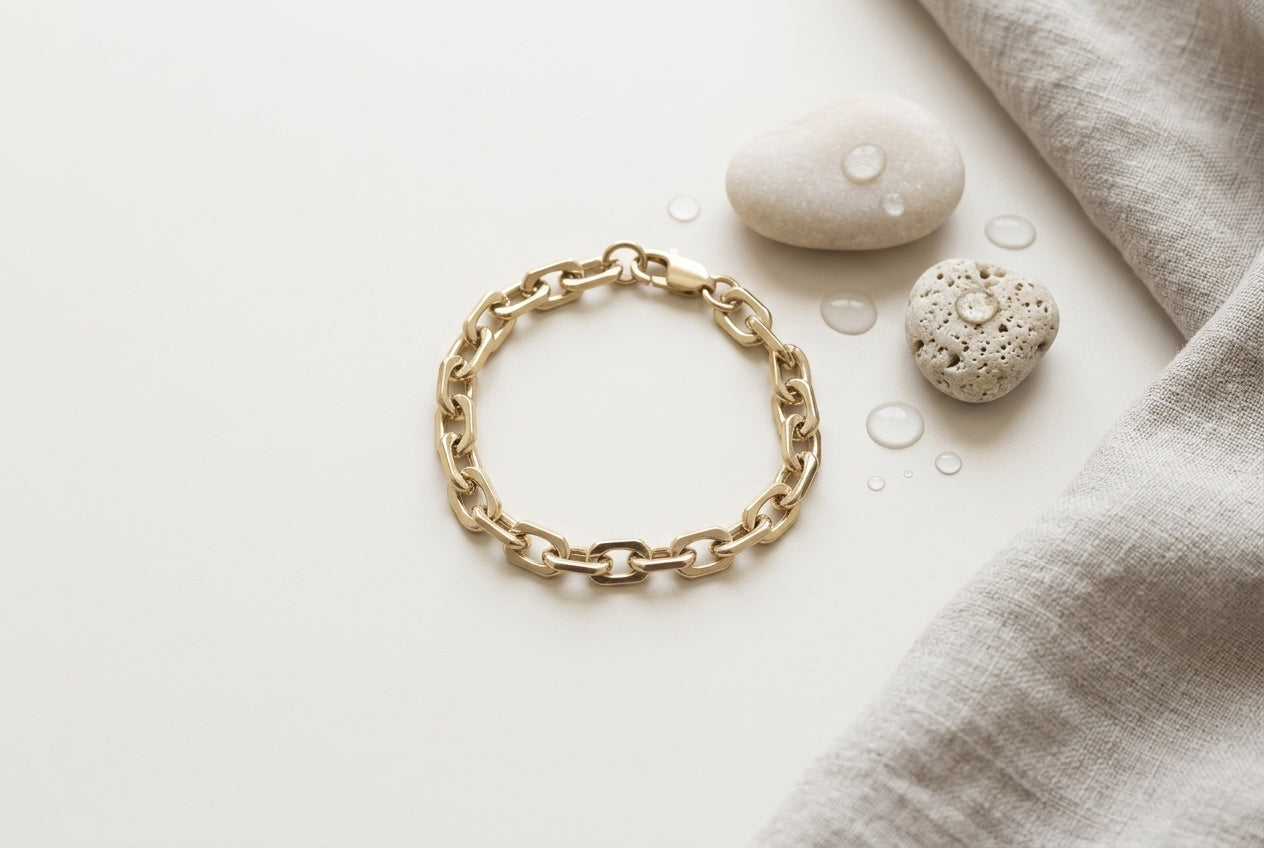
Paperclip bracelet: A Buyer's Guide
A paperclip bracelet is a chain made of long, elongated oval links — like a stretched paperclip — and the only specs that decide whether you'll actually wear it are the base metal, the plating method, and the fit. It's the rare "trendy" shape that doesn't date, because the look is geometric rather than fussy. This guide walks through what separates a paperclip bracelet you wear daily for years from one that fades in a season: how to read the material, how to size it, and how to spot the honest difference between gold-plated steel, plated brass, and solid gold — without overpaying.
Key takeaways
- The chain's base metal matters more than its gold color. Gold-plated 316L stainless steel outlasts plated brass for everyday wear because the steel core won't corrode or turn skin green if the plating eventually wears.
- PVD plating (physical vapor deposition) is bonded at a molecular level — harder, denser, and more wear-resistant than the thin liquid electroplating used on cheaper paperclip chains.
- Don't overpay for a "gold" look. A well-made gold-plated steel paperclip bracelet typically runs $30–$70; solid 14k gold versions cost many times that for a visually similar piece.
- Quick pick: for a single everyday paperclip bracelet that handles showers and the gym, choose 18k-gold-plated 316L stainless steel with a secure lobster clasp.
What to look for: the buyer's decision criteria
Paperclip bracelets all look similar in a product photo. The differences that determine cost-per-wear are mostly invisible until the piece is on your wrist for a few months. Here's what actually separates them.
- Base metal. This is the single biggest variable. 316L stainless steel (often called "surgical steel") resists corrosion from sweat and water and won't tarnish or turn skin green. Gold-plated brass can look identical new, but brass is a copper alloy — once the plating wears at a high-friction spot like a clasp, the exposed brass can oxidize and leave a green mark on skin. Solid gold avoids the issue entirely but at a steep premium.
- Plating method and karat. Under the FTC's jewelry guides, a piece can be called "gold plated" only if it carries an electroplating of at least 10-karat gold with a minimum thickness of 0.175 microns. Beyond that minimum, the method matters: PVD coatings are physically bonded in a vacuum chamber, making them harder and more scratch- and corrosion-resistant than standard liquid electroplating, which tends to be thin and prone to rubbing off.
- Link size and weight. "Paperclip" covers everything from a dainty 2mm chain to a bold statement link. A finer chain layers well and reads delicate; a chunkier link makes a stronger solo statement but is heavier on the wrist. Pick for how you intend to wear it.
- Clasp. A secure lobster clasp is the standard for daily wear — easy to operate one-handed and far less likely to pop open than a spring ring. An adjustable extender chain is a bonus if you're between sizes.
- Fit. Wrap a tape measure or strip of paper around your wrist, then add roughly 0.5–1 inch of room so the bracelet drapes rather than grips. A common everyday paperclip length sits around 6.5–7.5 inches; an extender lets one length work across a range of wrists.
Best for X: scenario-based picks
Different buyers want different things from the same shape. Match the piece to the job.
- Best for everyday / shower-and-gym wear: 18k-gold-plated 316L stainless steel with PVD plating. The steel core is waterproof and corrosion-resistant, so you can leave it on through workouts and showers.
- Best for sensitive skin: 316L stainless steel. It contains nickel but releases very little, which is why it's the grade used in surgical implants and body piercings; people with mild nickel sensitivity generally tolerate it well. (A severe nickel allergy may still need solid gold or platinum.)
- Best for a gift on a budget: a gold-plated steel paperclip bracelet in the $30–$70 range — the luxury look without the solid-gold price, and no fragile soft stones to baby.
- Best for layering: a finer 2mm paperclip chain, which stacks cleanly with other dainty bracelets without competing.
- Best for a statement solo piece: a bolder, elongated link with a high-shine finish that holds its own on a bare wrist.
The comparison: gold-plated steel vs plated brass vs solid gold
Here's how the three common ways to buy a "gold" paperclip bracelet stack up on the specs that drive long-term value. Prices are typical ranges, not exact quotes.
| Option | Best for | Key spec (verified) | Typical price |
|---|---|---|---|
| 18k gold-plated 316L stainless steel | Everyday, water exposure, sensitive skin, value | Corrosion-resistant steel core; releases little nickel; PVD plating is harder/denser than standard electroplating | $30–$70 |
| Gold-plated brass | Occasional / dressy wear, kept dry | Copper-alloy core; can oxidize and mark skin green where plating wears; tarnish-resistance depends on plating only, not the base | $20–$80 |
| Solid 14k–18k gold | Heirloom, no plating to ever wear off | 14k = 58.3% gold, 18k = 75% gold; no base metal to corrode; highest intrinsic value | $300–$1,500+ |
The takeaway: for a piece you wear constantly and get wet, gold-plated 316L steel wins on cost-per-wear. Solid gold wins only if you want a true heirloom and the budget is a non-issue. Plated brass is the column to be cautious about — it can look the same on day one and behave very differently by month six.

Cruz Chain Bracelet
Bold, elongated links in 18k-gold-plated 316L stainless steel — waterproof and tarnish-free, with a secure adjustable lobster clasp.
Shop this bracelet →Honest caveats: answering the real objections
- Will it actually hold up? The 316L stainless steel core is corrosion-resistant and won't rust, so the bracelet survives showers, sweat, and the beach. The gold tone is a PVD plating — a surface layer that resists wear for years but is not literally permanent. PVD is meaningfully tougher than standard electroplating, but no plated piece is forever; high-friction contact (a key, a desk edge) will eventually show wear before the metal itself does.
- Will it arrive looking like the photo? "Paperclip" can mean very different scales, so check the listed chain length and link width before you buy. The Cruz Chain Bracelet, for example, has a 6.5-inch chain with an adjustable clasp — a true everyday proportion, not an oversized statement link. Knowing the measurement up front is the simplest way to avoid the "it looked bigger online" letdown.
- Is "gold-plated steel" the same as solid gold? No — and any honest brand will say so. The chain is 316L stainless steel coated in 18k gold; the gold is a finish, not the whole metal. That's what keeps the price reasonable. It is not solid gold and shouldn't be sold as such.
- Any hidden costs? No. A paperclip bracelet is a one-time purchase at a one-time price — no membership, no auto-enrollment, no subscription to keep it looking good. Basic care (wipe it dry, store it away from abrasion) is all the upkeep it needs.
Once you've found the right paperclip, it's an easy chain to build a stack around. Browse the full bracelets collection to find layering partners in the same gold tone.
Frequently asked questions
What is a paperclip bracelet?
A paperclip bracelet is a chain made of long, elongated oval links that resemble a stretched-out paperclip. The geometric, open-link look reads modern and minimal, and it pairs well both worn solo and layered with finer chains.
Will a gold-plated paperclip bracelet turn my skin green?
Not if the base metal is 316L stainless steel. The green mark people associate with cheap jewelry comes from copper in brass alloys reacting with skin and moisture. A stainless steel core is corrosion-resistant, so even if the gold plating eventually wears, the exposed steel won't turn your skin green.
Is a stainless steel paperclip bracelet safe for sensitive skin?
316L stainless steel is a good choice for most people with sensitive or mildly nickel-sensitive skin. It does contain nickel, but it releases very little — it's the same grade used in surgical implants and body-piercing jewelry. Anyone with a severe, diagnosed nickel allergy may still need solid gold or platinum.
What size paperclip bracelet should I buy?
Measure your wrist by wrapping a tape measure or strip of paper around it, then add about half an inch to an inch so the bracelet drapes comfortably rather than grips. Many everyday paperclip bracelets run 6.5 to 7.5 inches, and an adjustable clasp or extender chain lets one length fit a range of wrists.
How is a paperclip bracelet different from a solid gold one?
A gold-plated paperclip bracelet has a base metal — ideally 316L stainless steel — coated with a layer of 18k gold, which keeps the price affordable while delivering the gold look. A solid gold bracelet is gold throughout (14k is 58.3% gold, 18k is 75%), with no plating to wear off, but it costs many times more for a visually similar piece.
The buying rule is simple: judge a paperclip bracelet by its base metal and plating before its price tag, then size it to drape. For everyday wear, gold-plated 316L stainless steel is the value sweet spot. See also our guide on dainty gold bracelets for choosing a finer chain to layer alongside it.

Leave a comment
This site is protected by hCaptcha and the hCaptcha Privacy Policy and Terms of Service apply.