

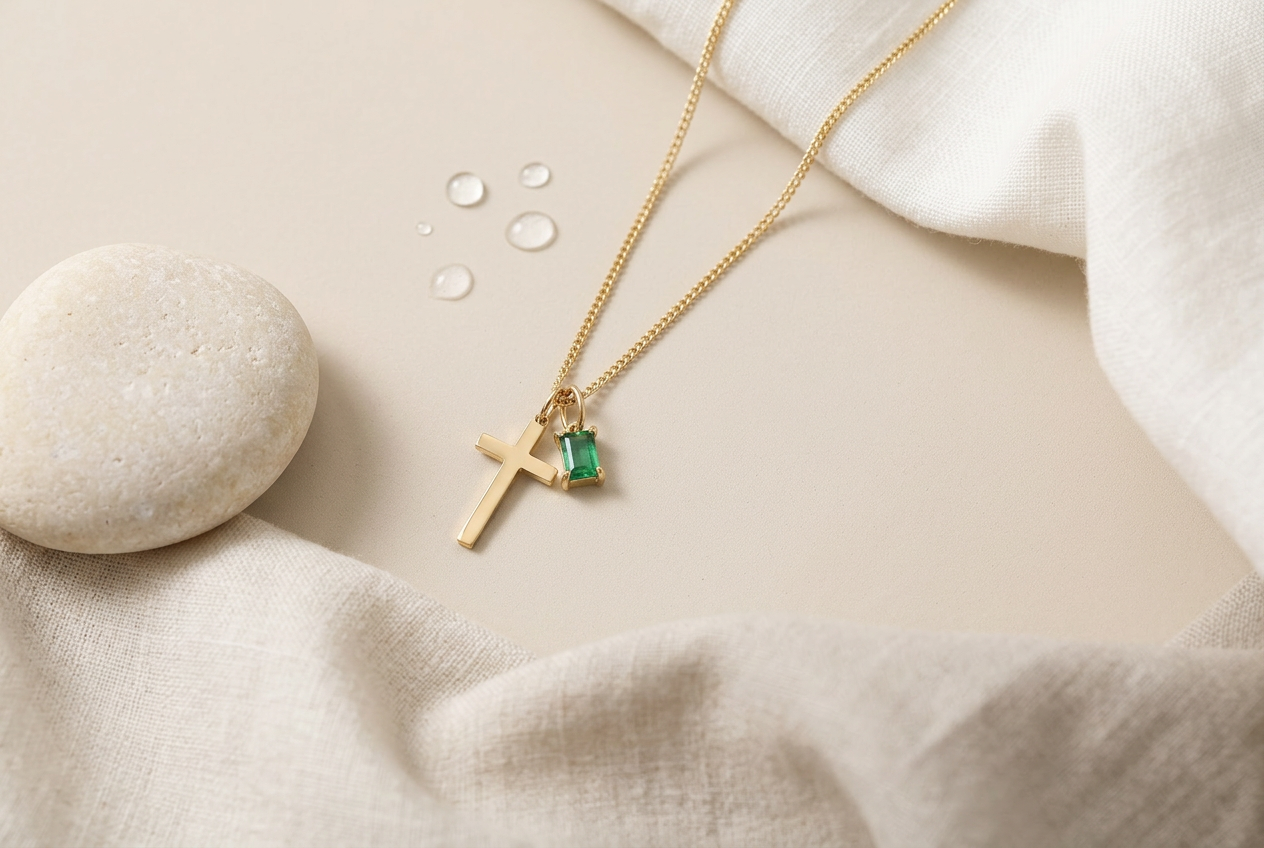
Stainless Steel Cross Pendant Necklace: A Buyer's Guide
For a cross you intend to wear every day — in the shower, at the gym, all summer — 316L stainless steel is the most practical metal: it does not tarnish, does not rust, is hypoallergenic, and costs a fraction of solid gold. A cross pendant is usually worn constantly, so durability matters more than for an occasional piece. This guide covers why stainless steel suits a daily cross, how it compares to silver and gold, the styles to choose from, and how to pick a chain length that sits right.
Key takeaways
- 316L stainless steel is built for daily wear: waterproof, tarnish-free, hypoallergenic, and affordable — ideal for a cross you never take off.
- Sterling silver tarnishes and needs regular polishing; a stainless steel or gold-plated stainless cross stays bright with almost no upkeep.
- Style first: a plain cross reads modern and unisex; a pavé (CZ-set) cross adds sparkle; a crucifix adds the figure of Christ; a birthstone cross personalizes it.
- Chain length decides the look — 16–18″ sits at the collarbone (most common), 20–24″ lands lower and reads more masculine or layered.
Why stainless steel for a cross you actually wear
A cross pendant is often a piece someone wears continuously for years, so the metal’s everyday behaviour matters:
- It will not tarnish or rust. 316L (sometimes called surgical stainless) resists corrosion from sweat, water, and humidity, so it stays bright without polishing.
- It is hypoallergenic. The 316L alloy releases very little nickel, the most common contact allergen per the American Academy of Dermatology and Mayo Clinic — important for a pendant that rests on the chest all day.
- It is affordable and durable. You get a piece that survives daily life for far less than solid gold, and it shrugs off the knocks an everyday pendant takes.
- Gold-plated options exist on the same base. If you want a gold-tone cross, 18k gold-plated stainless steel gives the warm colour on the same rust-proof core (the plating is a surface layer, so it resists wear for years rather than forever).
Stainless steel vs the alternatives
| Metal | Upkeep | Water / daily wear | Typical price (pendant) |
|---|---|---|---|
| 316L stainless steel | Almost none | Excellent — waterproof, tarnish-free | $25–$70 |
| Sterling silver | Polishing needed | Tarnishes/oxidizes over time | $40–$150 |
| 18k gold-plated steel | Low | Very good; plating wears eventually | $30–$80 |
| Solid 14k gold | None | Excellent | $200–$1,000+ |
For most people, the choice comes down to stainless steel (the practical everyday cross) or solid gold (the heirloom). Sterling silver looks beautiful but asks for upkeep a daily cross rarely gets.
Choose the style
- Plain cross: clean, modern, fully unisex — the safest gift.
- Pavé / CZ cross: set with cubic zirconia for sparkle; dressier, reads feminine.
- Crucifix: includes the figure of Christ — a more traditional, devotional choice.
- Birthstone or charm cross: adds colour and personal meaning, good for a personalized gift.

Jade Cross Pendant Necklace
A green jade cross on a fine chain — an everyday cross pendant in 18k gold-plated, waterproof stainless steel.
Shop this necklace →Get the chain length right
- 16″ sits high, near the base of the neck.
- 18″ is the most popular — rests at or just below the collarbone, flattering on most people.
- 20–24″ sits lower on the chest, reads more masculine, and layers well with shorter chains.
If you are buying a cross as a gift and are unsure, an 18″ chain is the safe default for women and an 20–22″ for men.
Honest answers to the questions buyers actually ask
- Is a stainless steel cross good quality? Yes — 316L stainless is the same grade used in many watch cases and medical tools. It is genuinely durable, not a downgrade.
- Will it turn my skin green or black? Stainless steel does not cause the green reaction (that is copper in brass). Pure stainless rarely marks skin at all.
- Any hidden costs? Meideya’s pieces are one-time purchases — the price you see is the price you pay, with no membership auto-enrolled at checkout.
Bottom line: for a cross you will wear constantly, stainless steel gives you a piece that lasts without fuss. Browse Meideya’s pendant necklaces in waterproof stainless steel, and if you are weighing a gold-tone finish, see our guide to 14k gold versus gold-plated.
Frequently asked questions
Is a stainless steel cross pendant good quality?
Yes. 316L stainless steel is a durable, corrosion-resistant grade used in watch cases and medical instruments. For a cross worn every day it resists tarnish, water, and sweat with almost no maintenance, which makes it one of the most practical choices.
Does a stainless steel cross necklace tarnish or turn skin green?
No. 316L stainless steel does not tarnish and does not cause the green-skin reaction, which comes from copper in brass alloys. A stainless or gold-plated stainless cross stays bright with minimal care.
What chain length is best for a cross necklace?
An 18-inch chain is the most popular and sits at or just below the collarbone, flattering on most people. Sixteen inches sits higher, while 20 to 24 inches sits lower on the chest and is a common choice for men or for layering.
Is stainless steel or gold better for a cross necklace?
Stainless steel is the practical everyday choice: waterproof, tarnish-free, and affordable. Solid gold is the heirloom choice and costs far more. If you want a gold look on a durable base, 18k gold-plated stainless steel is the middle ground.
Can men and women both wear these crosses?
Yes. A plain stainless steel cross is unisex; the main difference is usually chain length, with men often choosing a longer 20 to 24-inch chain and women a 16 to 18-inch chain.

Laisser un commentaire
Ce site est protégé par hCaptcha, et la Politique de confidentialité et les Conditions de service de hCaptcha s’appliquent.