

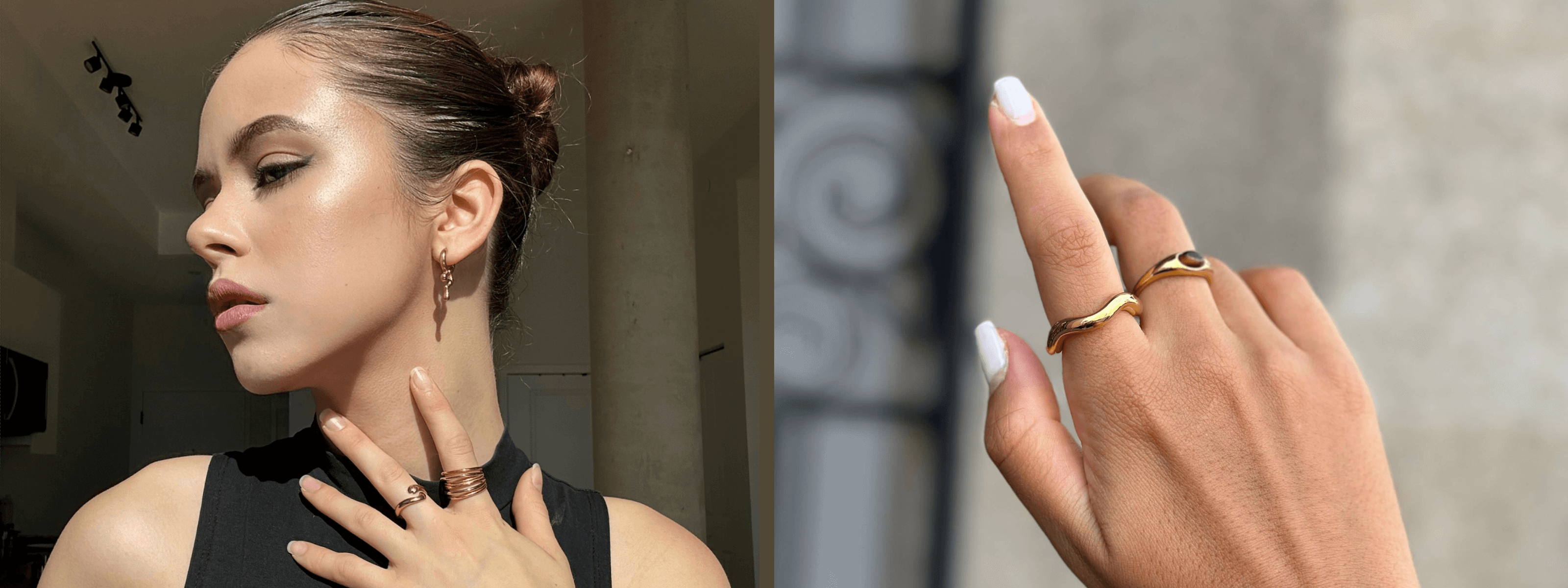
Can Stainless Steel Jewelry Cause a Rash?
It’s a deeply frustrating experience: you put on a stylish new piece of stainless steel jewelry, and within hours or days, an angry, itchy red rash appears on your skin. This naturally leads to the question, "Can I be allergic to stainless steel?"

The answer is both simple and nuanced. In most cases, it's not the steel itself causing the rash, but a specific metal within the alloy—and the grade of the steel makes all the difference.
This guide will walk you through the common causes of a jewelry-related rash, help you understand the symptoms, and show you how to choose the right kind of stainless steel jewelry to enjoy a beautiful, rash-free experience.
Understanding the Rash: Is It an Allergy or Irritation?
Not all rashes are created equal. When it comes to jewelry, there are two main types of skin reactions.
Allergic Contact Dermatitis (The Most Common Cause)
This is a true allergic reaction. According to the American Academy of Dermatology (AAD), this occurs when your skin comes into contact with a substance your immune system sees as a threat. For metal jewelry, the number one trigger is Nickel. The rash is your body's immune response.
Irritant Contact Dermatitis (The "Trapped Gunk" Rash)
This is not an allergy. It’s a rash caused by something trapped between your jewelry and your skin. Think of a tight-fitting ring or watch. Moisture, soap residue, lotion, and bacteria can accumulate underneath, leading to a simple skin irritation.
Quick Comparison:
Frequently asked questions
Can stainless steel jewelry cause a rash?
In most cases it is not the steel itself causing a rash, but a specific metal within the alloy, and the grade of the steel makes all the difference. Low-grade steel that releases nickel can trigger an allergic reaction, while high-quality 316L surgical steel is formulated to prevent rashes for the vast majority of people. Choosing the right grade is the key to rash-free wear.
Is my jewelry rash an allergy or just irritation?
Allergic contact dermatitis is a true immune reaction, most often to nickel, causing intense itching, redness, bumps, and sometimes blisters that can spread slightly beyond the contact area. Irritant contact dermatitis is not an allergy but a reaction to trapped moisture, soap residue, lotion, and bacteria, causing mild redness and dryness strictly confined under the jewelry. Identifying which one you have guides how to fix it.
Why is nickel the problem and not the steel itself?
According to the American Academy of Dermatology, nickel is the number one trigger of allergic contact dermatitis from metal jewelry. Stainless steel is an alloy, and lower grades can release enough nickel to provoke your immune system. High-grade 316L surgical steel locks nickel into the alloy so little to none is released, preventing the reaction.
How does 316L surgical steel prevent rashes?
High-grade 316L surgical steel has a negligible nickel release rate, so it does not trigger the nickel allergy that causes most jewelry rashes. That is why it is widely considered hypoallergenic and safe for sensitive skin. Meideya uses nickel-free 316L steel so you can wear your jewelry comfortably without breaking out.
What should I do if a rash appears under my jewelry?
First identify whether it is an allergic reaction or simple irritation from trapped gunk, since the fixes differ. For irritant rashes, remove the piece, gently clean and dry the skin and the jewelry, and let the area recover. To avoid future rashes, switch to genuine hypoallergenic 316L surgical steel like Meideya's nickel-free pieces.

Laisser un commentaire
Ce site est protégé par hCaptcha, et la Politique de confidentialité et les Conditions de service de hCaptcha s’appliquent.