

Gold Rings That Don't Tarnish
The gold rings that genuinely don't tarnish are 18k gold-plated over a solid 316L stainless steel base, where the gold is bonded by PVD (physical vapor deposition) rather than dipped on by traditional electroplating. That combination — corrosion-resistant steel underneath, a molecularly bonded gold layer on top — is what survives showers, sweat, and the pool. The catch is that a lot of "gold" rings sold at the same price are gold-plated brass, which does tarnish. This guide explains how to tell the difference, what to look for, and which Meideya ring to reach for if you want one piece you never have to take off.
Key takeaways
- The base metal decides everything: 316L stainless steel resists tarnish; plated brass does not. The gold color looks identical in photos — the metal underneath is what matters.
- How the gold is applied matters second: PVD bonds the gold at a molecular level and outlasts thin electroplating, which wears and dulls.
- Don't overpay for "solid gold" if everyday durability is the goal — a well-made 18k gold-plated 316L ring in the $39–55 range is more practical for daily, get-it-wet wear.
- Quick pick for most people: a stainless-steel base ring like Meideya's Eternity Lace Pave Band Ring ($49) — waterproof, tarnish-free, US sizes 6–8.
What actually makes a gold ring "not tarnish"
Tarnish is corrosion — a chemical reaction between the metal and air, moisture, sweat, or chemicals. So a "non-tarnish" gold ring is really a ring whose metal doesn't readily corrode. Two things determine that, in this order:
- The base metal under the gold. 316L stainless steel contains roughly 16–18% chromium, 10–14% nickel, and 2–3% molybdenum. That molybdenum is the key differentiator from cheaper 304 steel — it gives 316L its strong resistance to chloride (saltwater, sweat) corrosion and pitting. Gold-plated brass, by contrast, is a copper alloy that oxidizes; once the thin gold wears at the edges, the brass underneath darkens.
- How the gold layer is applied. Traditional electroplating deposits a very thin gold layer (often under one micron) in a chemical bath; it's prone to wearing and dulling. PVD plating physically bonds the gold to the steel at a molecular level, producing a harder, more scratch- and tarnish-resistant finish that holds its color far longer. A professionally PVD-coated stainless steel piece can keep its finish for years with normal care.
- Is it "solid gold" instead? Solid 14k/18k gold never tarnishes either — but it costs many times more and is softer, so it scratches and bends more easily in daily wear. For a ring you want to shower and work out in without thinking about it, gold-plated 316L is the more practical value; for an heirloom, solid gold is the splurge. Be clear which one you're buying: Meideya rings are 18k gold-plated stainless steel, not solid gold.
Best for each kind of buyer
Different people want different things from a "gold ring that lasts." Here's the honest match:
- Best for everyday, get-it-wet wear: 18k gold-plated 316L stainless steel. Waterproof, tarnish-free, and priced so you're not precious about it.
- Best for sensitive skin: a genuinely stainless-steel piece. 316L releases very little nickel — well below the EU EN1811 skin-contact limit of 0.5 µg/cm²/week — which is why it's used for body piercings and surgical implants. Note that nickel content isn't the same as nickel release: 316L contains nickel but locks it in. (Plated brass can still trigger reactions once it wears, so the base metal matters here too.)
- Best on a budget: a simple plated-steel band in the $39–45 range. You get the same tarnish resistance as the dressier styles without paying for stones.
- Best for an heirloom / forever piece: solid 14k–18k gold from a fine jeweler — accept the higher cost and gentler handling.
316L stainless vs. plated brass vs. solid gold
The clearest way to choose is to compare what's actually under the gold. These are verified material facts, not marketing:
| Ring type | Best for | Why it does (or doesn't) tarnish | Typical price |
|---|---|---|---|
| 18k gold-plated 316L stainless steel | Daily, waterproof wear; sensitive skin | Steel base resists corrosion (chromium + molybdenum); PVD gold bonds molecularly and holds color. Marketed as waterproof/tarnish-free. | ~$39–55 |
| Gold-plated brass | Occasional, dry wear only | Brass is a copper alloy that oxidizes; once the thin plating wears, the base darkens. Needs to stay away from water, sweat, and lotion. | ~$15–50 |
| Solid 14k–18k gold | Heirloom / forever pieces | Real gold doesn't corrode, so it never tarnishes — but it's softer and scratches/bends more easily, and costs far more. | $200+ |
For a ring you'll wear constantly and won't baby, the first row wins. For a once-in-a-lifetime piece you'll store carefully, solid gold is worth it. The one row to be wary of when you see a low "gold ring" price is the middle one — that's where most disappointing tarnish stories come from.

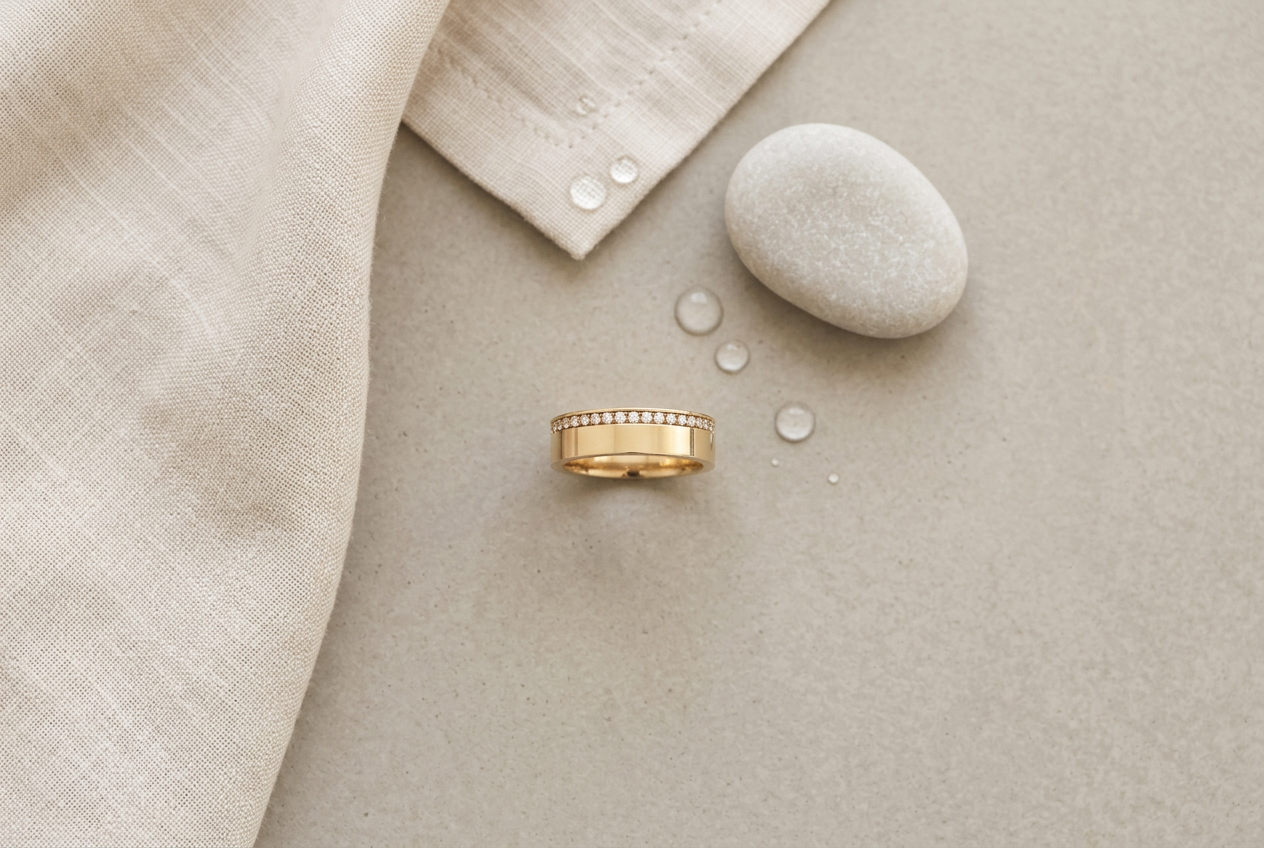
Eternity Lace Pave Band Ring
A sleek 18k gold-plated stainless steel band with a continuous row of pave-set stones — waterproof and tarnish-free, in US sizes 6–8.
Shop this ring →Honest answers to the real questions
- Is it actually waterproof, or will it tarnish like my last "gold-plated" set? If the base is 316L stainless steel and the gold is PVD-bonded — as it is on Meideya's stainless rings — it's built to be worn in the shower, pool, and ocean without tarnishing. The reason your last set failed is almost always that it was plated brass: the gold wore through and the copper base oxidized. Check the base metal before you buy, every time.
- Will it arrive looking like the photo, or will it be tiny? Rings are sized, not "one size," so there's no scale surprise the way there is with thin chains — but read the listed range. Meideya's Eternity Lace Pave Band Ring comes in US sizes 6, 7, and 8; simpler bands like the Sun Band and Thin Dome run in standard US sizes too. Measure your finger (or check a ring you already own) and pick by number rather than guessing from a photo.
- Am I being signed up for a hidden subscription? No. Every Meideya ring is a one-time purchase at a one-time price — no membership, no "luxe" auto-enrollment, nothing added at checkout. The price you see on the product page is the price you pay.
- Will the gold rub off? Any plating can eventually show wear with years of hard daily use — that's true of all plated jewelry. PVD plating resists it far better than standard electroplating, and a stainless base means even significant wear won't leave you with a tarnished, darkened ring. We won't claim "no plating to wear off" — it's plating — but it's the durable kind, over a metal that doesn't corrode.
If you want to see the full range of waterproof, tarnish-free options before deciding, browse the complete stainless steel rings collection.
Frequently asked questions
What gold rings don't tarnish?
Gold rings that don't tarnish are either solid 14k–18k gold or 18k gold-plated over a 316L stainless steel base where the gold is applied by PVD. The stainless steel base resists corrosion thanks to its chromium and molybdenum content, and the PVD-bonded gold holds its color. Avoid gold-plated brass if tarnish resistance is your priority — brass oxidizes once the plating wears.
Does 18k gold-plated stainless steel tarnish?
No, not under normal wear. The 316L stainless steel base doesn't corrode, and PVD gold plating is bonded at a molecular level so it resists fading far longer than ordinary electroplating. These rings are made to be worn in the shower, gym, and pool. Plating can show wear after years of heavy use, but the steel base won't tarnish underneath.
Is gold-plated stainless steel real gold?
It's a real layer of 18k gold bonded to a stainless steel core — it is not solid gold throughout. Solid gold is more expensive and softer; gold-plated 316L gives you the gold look with far better everyday durability and a much lower price (typically $39–55 versus $200+ for solid gold). Meideya rings are gold-plated stainless steel, not solid gold.
Is stainless steel jewelry safe for sensitive skin?
316L stainless steel is a good choice for most sensitive skin. It contains nickel but releases very little — below the EU EN1811 limit of 0.5 µg/cm²/week for skin-contact items — which is why it's used in body piercings and surgical implants. If you have a confirmed nickel allergy, choose a genuinely stainless piece rather than plated brass, since brass can react once the plating wears.
Why do my gold-plated rings turn my finger green or go dark?
That happens when the ring is gold-plated brass: the copper in the brass oxidizes and reacts with skin and moisture, leaving a green mark or a darkened band where the thin plating has worn through. A gold-plated 316L stainless steel ring doesn't have a copper base to oxidize, so it won't green your skin or tarnish in the same way.
The buying rule is simple: ignore the gold color in the photo and check the base metal. A gold-plated 316L stainless steel ring with PVD plating is the one you can wear and forget. For more on the finish, see our guides on whether gold-plated stainless steel tarnishes or fades and whether stainless steel is hypoallergenic.

Laat een reactie achter
Deze site wordt beschermd door hCaptcha en het privacybeleid en de servicevoorwaarden van hCaptcha zijn van toepassing.