

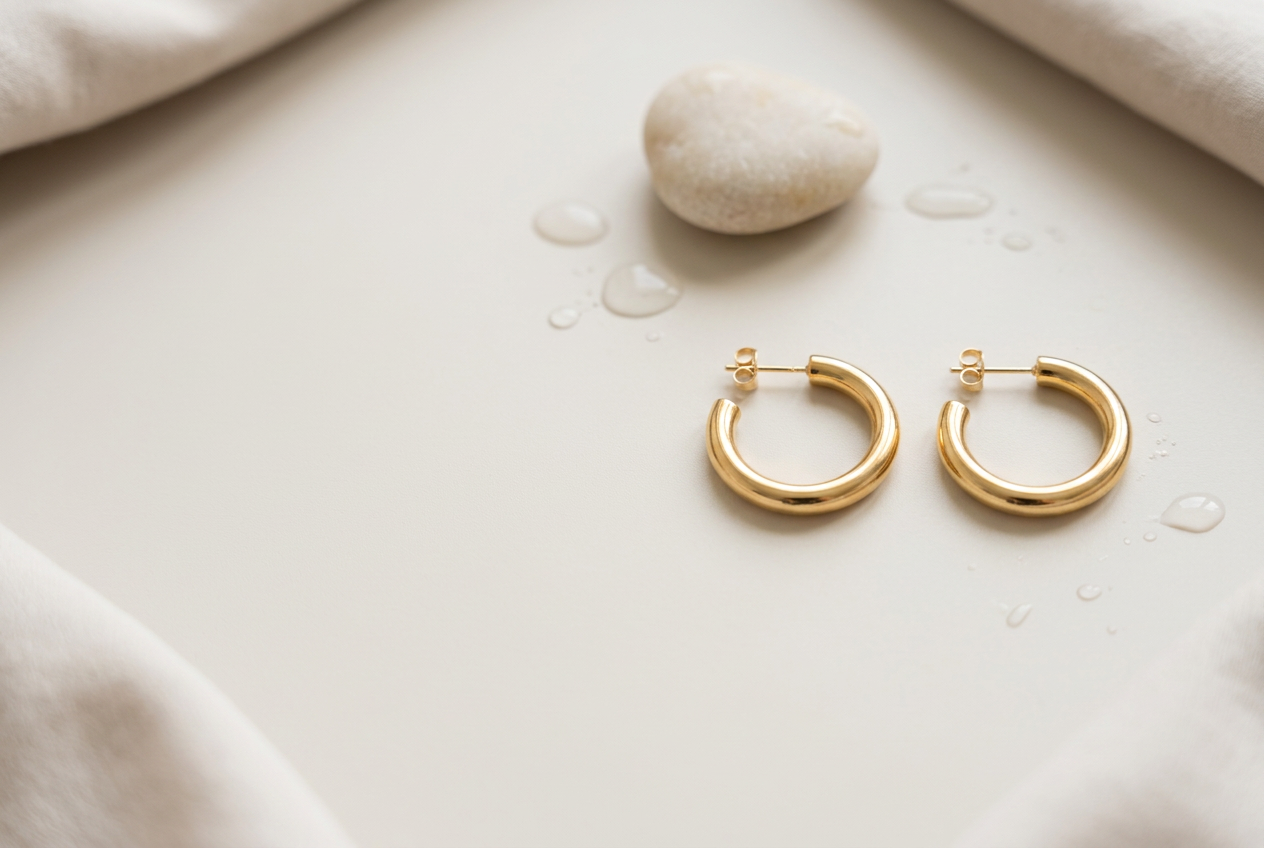
Stainless Steel Hoop Earrings: Buyer's Guide
The best stainless steel hoop earrings are made from 316L stainless steel, sized to your face and lifestyle, and honest about whether they are solid metal or gold-plated. Hoops are the one earring almost everyone wears daily, so the metal has to survive showers, workouts, and sweat without turning your earlobes green or losing its shine in a month. This guide walks you through the two decisions that actually matter — the metal and the diameter — then compares the common metal options, gives scenario-based picks, and answers the questions real buyers ask before checkout.
Key takeaways
- For everyday wear, 316L stainless steel is the practical sweet spot: corrosion-resistant, low nickel release, and a fraction of the cost of solid gold.
- Diameter decides the look. Small hoops sit at 10–20 mm, medium at roughly 25–40 mm (a 26 mm hoop is a versatile, wear-anywhere middle), and large at 45 mm and up.
- Do not overpay for "solid gold" if you want daily hoops you never have to baby — a quality 18k-gold-plated 316L hoop gives you the look and the durability for far less.
- For most people, one pair of 316L medium hoops (about 26–30 mm) is the buy that gets worn the most.
How to choose: the buyer's decision criteria
Two things separate hoops you wear for years from hoops you abandon in a drawer: what they are made of, and how big they are. Get those right and the rest is taste.
- Metal first. The metal determines whether your hoops can handle real life. 316L stainless steel is the same low-carbon, corrosion-resistant grade used in surgical and marine settings; its chromium oxide layer resists rust and tarnish, and its molybdenum content helps lock nickel in place so very little is released onto the skin. Brass and cheap base metals are the opposite — copper in brass is what turns skin green over time.
- Diameter (the size you actually see). Hoop size is measured by the diameter of the circle, in millimeters, usually the inner diameter. Small hoops (10–20 mm) read delicate and sit close to the lobe; medium hoops (about 25–40 mm) are the most-worn, go-anywhere range; large hoops (45 mm and up) make a statement and hang noticeably lower.
- Tube thickness and weight. A thicker tube looks bolder but weighs more on the lobe. If you wear hoops all day, a lighter medium hoop is more comfortable than an oversized one.
- Closure. Click-and-snap (latch-back) closures are the most secure for daily hoops; make sure the mechanism feels solid, since the closure is the part most likely to fail before the metal does.
- Plating quality, if it is plated. If you want a gold look, the question is the plating, not the color. Under FTC rules, "gold-plated" requires an electroplated layer of at least 10k gold at a minimum 0.175 micron thickness. Plating is a surface layer — it resists tarnish for years, but it is not infinite, so a quality base metal underneath (like 316L) matters.
Best for X: scenario-based picks
Different buyers want different things from a hoop. Here is the honest match.
- Best for everyday, never-take-them-off wear: 316L stainless steel hoops. They handle the shower, the gym, and sweat without tarnishing, so you can put them in and forget them.
- Best for sensitive ears: 316L stainless steel. It is widely considered the gold standard for hypoallergenic jewelry because it releases very little nickel — and nickel is one of the most common causes of allergic contact dermatitis, per the American Academy of Dermatology.
- Best for the gold look without the gold price: 18k-gold-plated 316L hoops. You get the warm gold tone and the corrosion resistance of stainless for a small fraction of solid-gold cost.
- Best for a gift or first "nice" pair: a medium hoop around 26–30 mm. It is the most versatile size, flatters most faces, and works from desk to dinner.
- Best for a bold statement: large hoops, 45 mm and up — just expect more weight on the lobe and a more dramatic, less everyday look.
Stainless steel vs solid gold vs gold-filled vs brass
The metal is the single biggest decision, so here is how the common hoop materials actually compare. Prices are typical ranges, not fixed figures — always check the live product page.
| Metal | Best for | Durability & skin | Typical price (pair) |
|---|---|---|---|
| 316L stainless steel (often 18k-gold-plated) | Everyday, sensitive ears, water exposure | Corrosion-resistant; very low nickel release; plating resists tarnish for years (surface layer, not forever) | $20–$60 |
| Solid 14k/18k gold | Heirloom pieces, max longevity | 14k = 58.3% pure, 18k = 75% pure; will not tarnish; highest cost | $150–$800+ |
| Gold-filled | A middle ground that wears well | Bonded layer of ≥10k gold at ≥1/20 (5%) of total weight — much thicker than plating | $40–$150 |
| Brass / base metal | Short-term or costume looks | Copper content can turn skin green; tarnishes; not ideal for daily wear | $5–$25 |
The takeaway: solid gold wins on pure longevity but costs the most; gold-filled is a durable middle; brass is the one to skip for daily hoops. For everyday wear at a fair price, 316L stainless steel — especially 18k-gold-plated — is the column most people are happiest with.

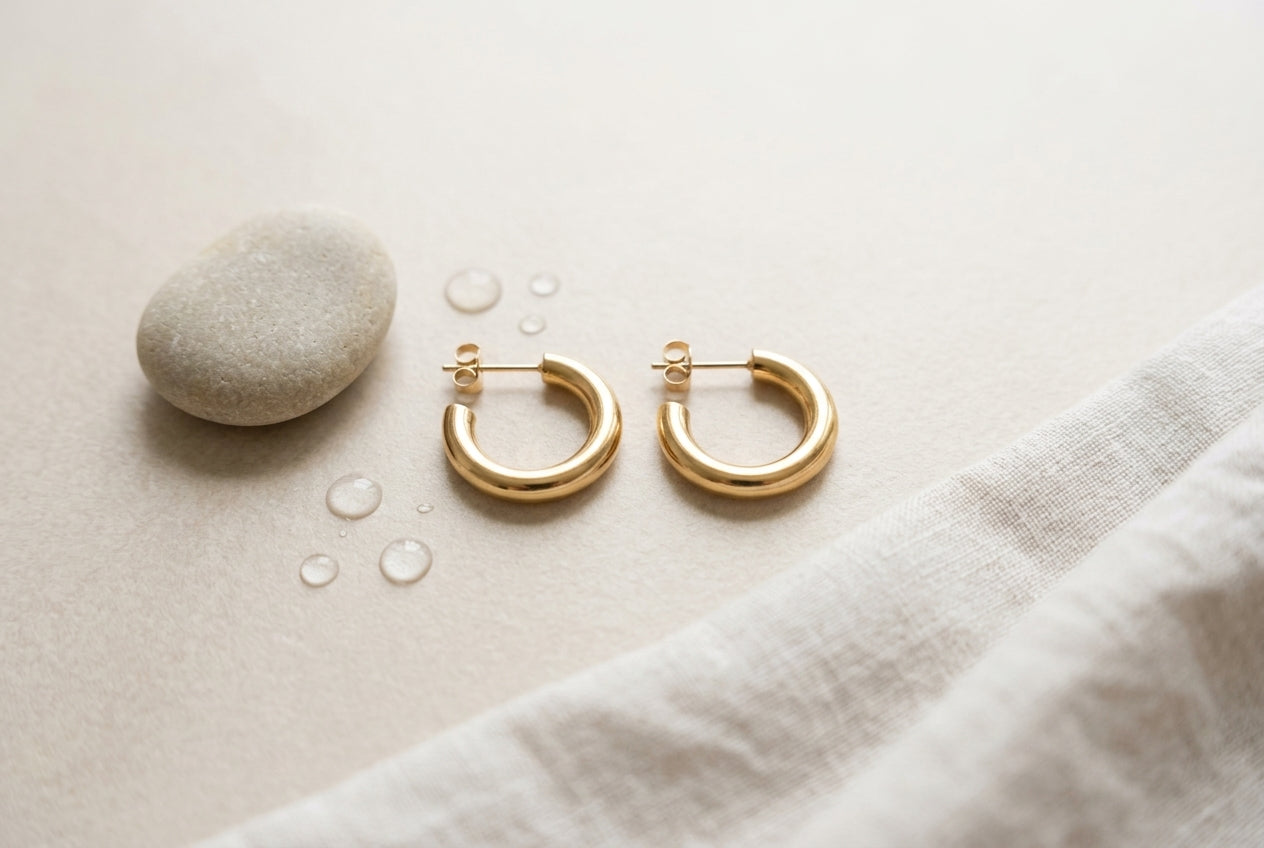
Charity Medium Hoop Earrings 26mm
A versatile 26 mm medium hoop — Charity is the middle sister in our hoop trio, sized to pair naturally with our smaller Hope hoops.
Shop this pair →Honest caveats: the real objections
- Will it actually hold up, or tarnish like my last gold-plated set? The base metal is what fails first, and that is where 316L earns its place — it is corrosion-resistant and releases very little nickel. The gold tone on plated pieces is a surface layer, so it resists tarnish for years but is not literally permanent. Treat the plating gently (skip harsh cleaners and perfume directly on the metal) and 316L hoops easily survive daily wear, showers, and the gym.
- Will it arrive tiny compared to the photos? This is the number-one frustration with online hoops, so here is the straight answer: hoop size is the diameter in millimeters. A 26 mm hoop is a true medium — noticeable but not oversized, sitting just below the lobe. Check the mm before you buy rather than guessing from a photo. Meideya lists the real diameter, so the size you read is the size you get.
- Any hidden subscription or recurring charge? No. Meideya hoops are a one-time purchase — you pay once for the pair, with no auto-enrollment, membership, or recurring fee.
If you want a starting point, a medium 316L hoop is the most-worn size for a reason. Browse the full Hoop Earrings collection to compare diameters side by side.
Frequently asked questions
Are stainless steel hoop earrings good for sensitive ears?
Yes. 316L stainless steel is widely considered the gold standard for hypoallergenic jewelry because it releases very little nickel, and nickel is one of the most common causes of allergic contact dermatitis according to the American Academy of Dermatology. Its molybdenum content and chromium oxide layer help keep nickel locked in the alloy, so most people with sensitive ears tolerate it well.
Will stainless steel hoop earrings turn my ears green?
No. Green skin comes from copper, which is found in brass, not in stainless steel. 316L is corrosion-resistant and does not cause the green discoloration that low-quality base metals do.
What size hoop earring should I get?
It depends on the look you want. Small hoops (10–20 mm) are delicate and sit close to the lobe; medium hoops (about 25–40 mm) are the most popular, go-anywhere size; large hoops (45 mm and up) make a bolder statement. For an everyday, flatters-most-people pick, a medium hoop around 26–30 mm is the safest choice.
Are 18k-gold-plated stainless steel hoops as good as solid gold?
For daily wear, they are an excellent value. You get the gold look and the corrosion resistance of 316L stainless steel for a small fraction of solid-gold cost. Solid 14k or 18k gold (58.3% and 75% pure, respectively) lasts essentially forever and never needs plating, but it costs far more — so plated stainless is the practical choice if you want hoops you wear hard without worrying about the price.
Are stainless steel hoop earrings waterproof?
316L stainless steel is corrosion-resistant, so it holds up to showers, sweat, and swimming far better than brass or sterling silver. "Waterproof" here means it will not rust or corrode from water exposure — it is built to be worn in the shower and at the gym without tarnishing. On gold-plated pieces, going easy on harsh chemicals helps the plating last longer.
The buying rule for hoops is simple: pick a metal that survives your real life (316L for most people), then pick the diameter that matches your style (medium for versatility). See also our guides on 14k gold hoop earrings and diamond hoop earrings.

Laat een reactie achter
Deze site wordt beschermd door hCaptcha en het privacybeleid en de servicevoorwaarden van hCaptcha zijn van toepassing.