

The Best Jewelry for Eczema-Prone Skin: A Complete Guide to Safe Style
For those living with eczema, the world can feel full of potential triggers—and sadly, jewelry is often one of them. The joy of wearing a beautiful accessory can quickly turn into the misery of an itchy, red flare-up. Does this mean you have to give up on jewelry altogether?
Absolutely not. It means you have to be extra discerning, choosing materials and styles that work in harmony with your sensitive skin.
This guide, based on recommendations from dermatologists and skin health experts, will walk you through everything you need to know. We'll explain why eczema-prone skin is unique and provide a definitive guide to choosing safe, beautiful jewelry, with a special focus on why high-quality stainless steel jewelry is a game-changer.

The Eczema Challenge: A Compromised Skin Barrier
The National Eczema Association explains that eczema compromises the skin's barrier function. This means your skin is less able to protect itself from external substances, leading to a "double-threat" from jewelry:
-
Allergic Contact Dermatitis: Your skin is more susceptible to developing allergies, especially to common irritants like Nickel.
-
Irritant Contact Dermatitis: Friction from a rough design, or moisture and bacteria trapped under a piece of jewelry, can easily trigger a flare-up on already sensitive skin.
Therefore, the best jewelry for eczema is both chemically inert (hypoallergenic) and physically smooth & easy to clean.
Your Material Masterlist: The Safest Metals for Eczema
Here is a hierarchy of the best metal choices for ultra-sensitive, eczema-prone skin.Top Tier: The Purest & Most Inert
Top Tier: The Purest & Most Inert
-
Platinum: A dense, precious metal that is extremely unreactive and an excellent, albeit expensive, choice.
-
Titanium & Niobium: These are pure, medical-grade elemental metals that are 100% nickel-free and highly biocompatible. They are considered the gold standard for initial piercings for a reason.

The Smart & Practical Champion: 316L Surgical Stainless Steel
This is often the ideal choice for eczema sufferers for a multitude of reasons. 316L Surgical Steel is a medical-grade alloy that excels in all the areas that matter:
-
Proven Hypoallergenic: As we explain in Is Stainless Steel Biocompatible?, its stable structure prevents nickel from leaching out, making it safe for the vast majority of people.
-
Non-Porous and Hygienic: Its smooth, non-porous surface is easy to clean and doesn't harbor bacteria, a crucial factor for preventing irritant dermatitis.
-
Extremely Durable: It resists scratches that can create rough edges and trap irritants.
-
Affordable: This allows you to build a collection of safe jewelry without a huge financial investment.
Metals to Approach with Caution or Avoid
-
Gold: Stick to 14k or 18k solid gold. Avoid gold-plating, as the plating can wear off and expose a reactive base metal.
-
Sterling Silver: Can be a risk as its alloy may contain nickel, and it tarnishes, which can trap irritants.
-
Avoid at All Costs: Costume jewelry, nickel, brass, copper.

An Eczema-Friendly Jewelry Checklist: Beyond the Metal
Choosing the right material is step one. Here are the other crucial factors to consider:
-
✓ Choose Smooth, Simple Designs: Avoid intricate filigree or rough textures that can cause friction and trap irritants. Look for smooth, polished surfaces.
-
✓ Keep It Clean: Regularly clean your jewelry according to our Ultimate Care Checklist to remove any potential buildup of skin cells, lotion, or bacteria.
-
✓ Moisturize First, Accessorize Later: Apply any lotions, creams, or medications and wait for them to fully absorb before putting on your jewelry.
-
✓ Give Your Skin a Break: Take your jewelry off at night to allow your skin to breathe.
-
✓ Listen to Your Skin: Never wear jewelry on an active eczema flare-up. Wait until the skin is calm and healed.
The Verdict: Stainless Steel as a Safe Haven
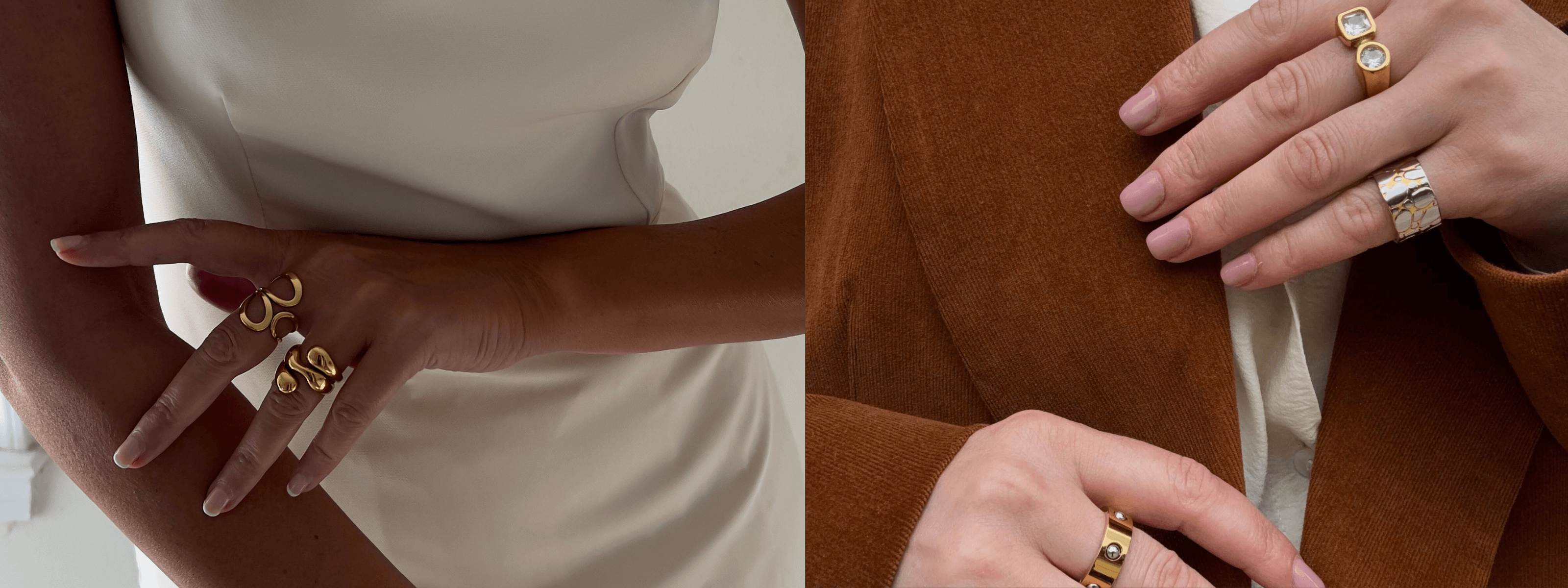
While platinum and titanium are superb choices, 316L stainless steel jewelry offers the most compelling combination of safety, durability, hygiene, and value for those with eczema-prone skin. It removes the guesswork and provides a reliable foundation for a beautiful, worry-free jewelry collection.
You don't have to sacrifice style for comfort. By making informed choices, you can safely enjoy the beauty of jewelry. Explore our collection of high-quality stainless steel jewelry, crafted with your most sensitive skin in mind.
Frequently asked questions
What is the best jewelry metal for eczema-prone skin?
The best metals are both chemically inert and physically smooth. Top-tier choices include platinum, titanium, and niobium, which are nickel-free and highly biocompatible. For an affordable, durable everyday option, 316L surgical stainless steel is an excellent practical champion because it is hypoallergenic and nickel-free.
Why is eczema-prone skin more sensitive to jewelry?
Eczema compromises the skin's barrier function, so the skin is less able to protect itself from external substances. This creates a double threat: allergic contact dermatitis from irritants like nickel, and irritant contact dermatitis from friction, moisture, or bacteria trapped under a piece. That is why both the metal and the design matter.
Is stainless steel jewelry good for eczema?
Yes. High-quality 316L surgical stainless steel is hypoallergenic, nickel-free, and has a smooth, easy-to-clean surface, which addresses both the chemical and physical triggers for eczema-prone skin. It is also waterproof and tarnish-resistant, so it holds up to frequent cleaning. This makes it a reliable safe haven for sensitive wearers.
Which jewelry metals should people with eczema avoid?
Eczema-prone wearers should be cautious with metals that commonly contain nickel, such as unspecified "fashion jewelry" or generic metal alloys, since nickel is a leading cause of allergic contact dermatitis. Vague material labels are a warning sign. Always choose specific, verifiable materials like 316L steel, titanium, or niobium.
Does jewelry design matter for eczema, not just the metal?
Yes. Beyond choosing an inert metal, look for smooth designs without rough edges that cause friction, and pieces that are easy to clean so moisture and bacteria do not get trapped underneath. A safe choice is both hypoallergenic and physically gentle. This is why 316L steel's smooth, polished finish is an advantage.

Laat een reactie achter
Deze site wordt beschermd door hCaptcha en het privacybeleid en de servicevoorwaarden van hCaptcha zijn van toepassing.