

Everyday Jewelry: A Complete Buyer's Guide
The best everyday jewelry is the piece you never have to take off — waterproof, won't tarnish, comfortable enough to forget you're wearing it, and true to the photo when it arrives. For most people that means well-made 18k-gold-plated 316L stainless steel: it survives the shower, the gym, and the beach, it won't turn your skin green, and it costs a fraction of solid gold. This guide covers what actually makes a piece "everyday," how to build a small capsule that works with everything, and the honest trade-offs to know before you buy.
Key takeaways
- "Everyday" is a durability standard, not a style: the piece has to handle water, sweat, and friction without changing color.
- The material decides almost everything — 18k-gold-plated 316L stainless steel is the sweet spot for daily wear on a normal budget.
- You don't need much: one dainty necklace, a pair of small hoops or studs, a stackable ring, and one bracelet covers nearly every outfit.
- Buy on the material spec and your real measurements, not the styled photo — and skip anything that hides a subscription behind the price.
What actually makes jewelry "everyday"
Plenty of jewelry looks good in a photo. Far less of it survives an actual day. When you wear something from morning coffee through a workout and a shower, four things decide whether it stays in rotation or ends up in a drawer:
- It's genuinely water-safe. Daily life means hand-washing, sweat, rain, and showers. Solid 316L stainless steel is corrosion-resistant and waterproof; a good PVD or thick gold plating seals the surface so it holds color through repeated exposure. Thin electroplated or brass-based pieces are where "everyday" wear fails first.
- It won't react with your skin. That green or grey mark some jewelry leaves is copper oxidizing — it comes from brass and copper alloys, not from stainless steel. 316L (often called surgical steel) is low in nickel and widely tolerated, which matters because nickel is one of the most common contact allergens, per the American Academy of Dermatology.
- It's comfortable enough to ignore. Everyday pieces are usually lightweight and low-profile: dainty chains, small-to-medium hoops, slim or stackable rings. If it snags, pinches, or you're aware of it all day, you'll stop reaching for it.
- It's true to scale and honestly priced. A piece you wear constantly should arrive looking like its listing — dimensions in millimeters, not just a flattering close-up — and it should be a one-time price, not a "deal" that quietly enrolls you in a membership.
Build an everyday capsule — best picks by category
A versatile everyday set is small on purpose. Four categories cover almost everything; pick one of each in a single metal tone so they layer cleanly.
- Best everyday necklace: a dainty pendant or fine chain you can wear solo or layer. A 16–18 in length sits at the collarbone and works under most necklines; add a 20–24 in piece later if you like to layer.
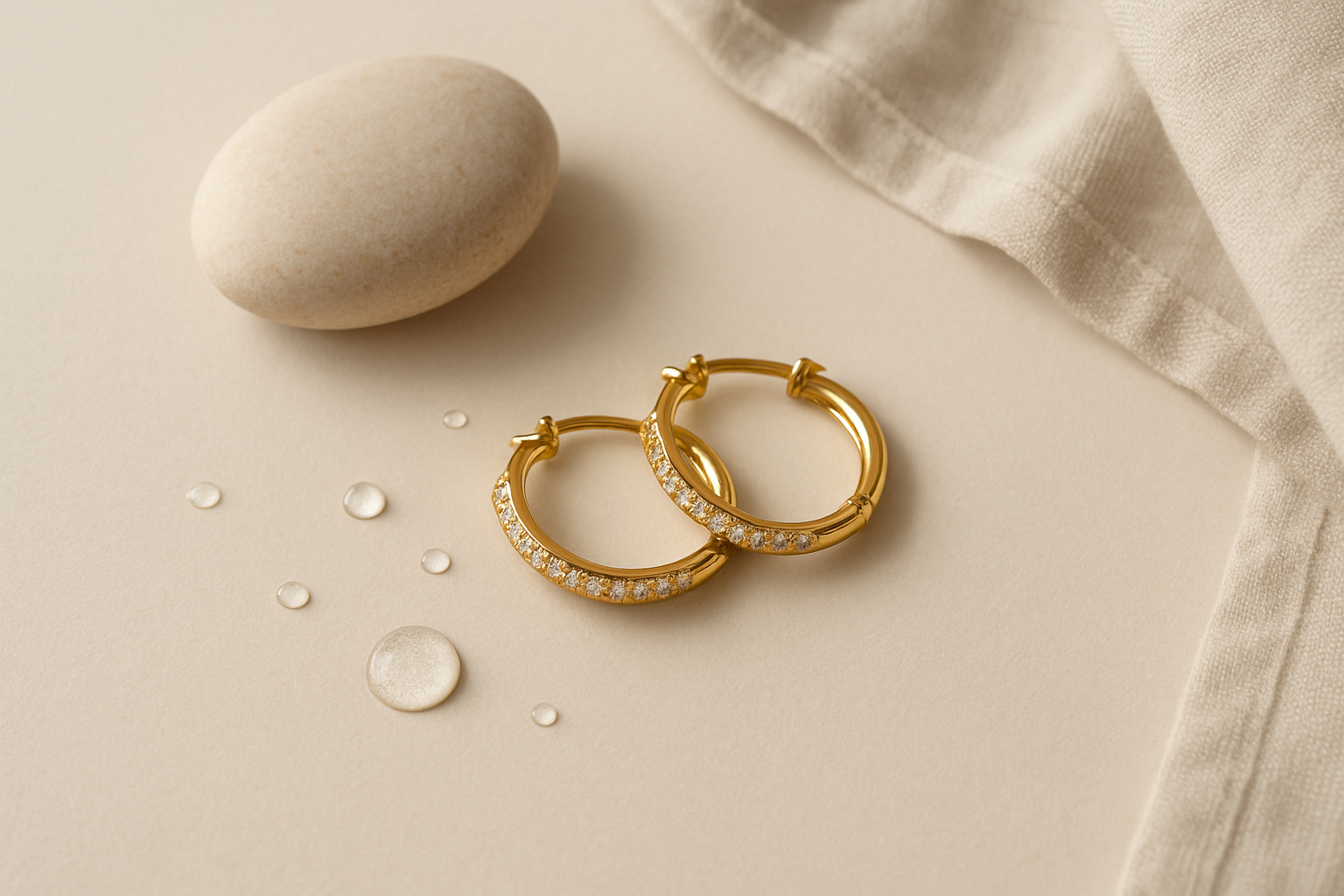
- Best everyday earrings: small hoops (around 12–16 mm) or simple CZ studs. They go from desk to dinner and stay put through a gym session — the most "set it and forget it" category.
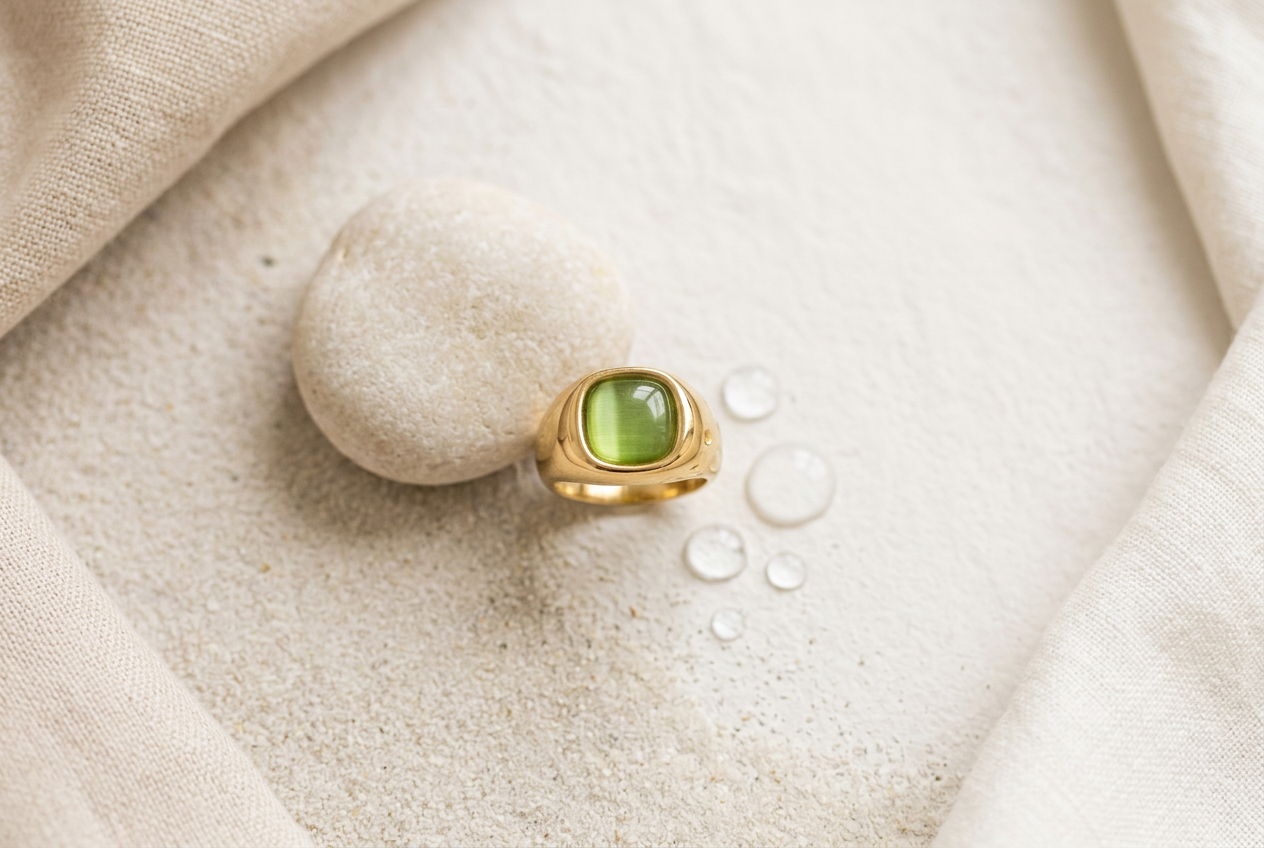
- Best everyday ring: a slim or stackable band. One reads minimal; two or three stacked reads intentional. Stackers let you change the look without changing the budget.
- Best everyday bracelet: a thin bangle or a flexible tennis-style line. Pick a clasp (or bangle fit) you can put on one-handed, since this is the piece you'll take on and off most.
What's everyday-worthy — and what isn't
Most of the everyday decision comes down to the base metal and the finish. Here's how the common options compare for daily wear:
| Material | Everyday durability | The honest spec | Typical price (a piece) |
|---|---|---|---|
| 18k-gold-plated 316L stainless steel | Excellent — water-safe, low-nickel, holds color for years | Stainless core + a gold layer; FTC requires gold plating to be at least 0.175 micron and 10k or finer | ~$25–$95 |
| Gold-filled | Very good, but pricier and not all styles available | A thicker bonded gold layer (at least 1/20 of the weight) | ~$40–$150+ |
| Gold-plated brass | Mixed — can tarnish and may leave green marks as the plating wears | Brass core (copper alloy) under thin plating | ~$15–$60 |
| Solid 14k/18k gold | Excellent and lifelong — but a different budget entirely | 14k is 58.3% gold, 18k is 75% gold all the way through | ~$150–$1,000+ |
For wear-it-daily-and-don't-think-about-it, well-made plated 316L wins on value; solid gold wins if you want an heirloom and have the budget. Plated brass is where most "why did it change color?" stories come from.

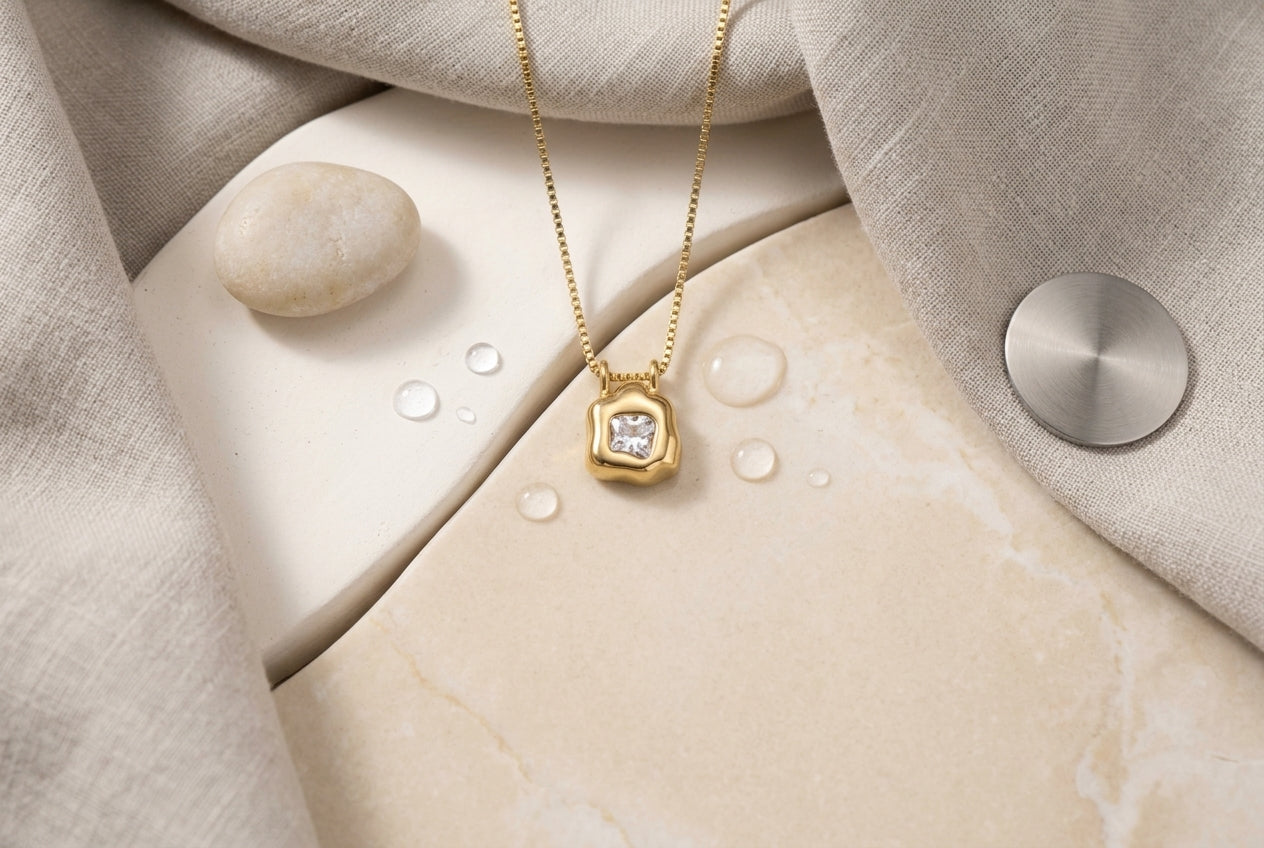
Ivery CZ Pendant Necklace
A dainty 18k-gold-plated stainless-steel pendant set with a single CZ stone — easy to wear alone or layered, and built to stay on through water.
Shop this necklace →Honest caveats — the real questions
- Will it actually hold up? The stainless steel core won't rust or corrode, and quality plating resists tarnish for years of daily wear. But no plating is permanent — a surface layer eventually thins with enough friction, so it's a "lasts a long time," not "lasts forever." Rinse off lotion and perfume and it lasts longer.
- Will it arrive looking like the photo? Meideya jewelry is dainty and demi-fine by design, so check the millimeter measurements before you buy — a close-up photo can make a 1.5 mm chain look chunkier than it is. The spec, not the styling, tells you the true scale.
- Are the stones diamonds? No — the sparkle is cubic zirconia (CZ), which is a real, durable stone (about 8.5 on the Mohs hardness scale) but not a mined diamond. It's honest, affordable shine, not a diamond claim.
- Any hidden costs? No. The price you see is one-time — no membership, no auto-enrollment, no surprise charge later.
The short version: choose the material first, then your real size, then the style you'll actually reach for. Browse the full Best Sellers collection to see the everyday staples other shoppers keep coming back to.
Frequently asked questions
Is stainless steel jewelry good for everyday wear?
Yes — 316L stainless steel is one of the best materials for daily wear. It's corrosion-resistant and waterproof, it's low in nickel so most people tolerate it well, and it won't turn your skin green the way copper-based brass can. With quality gold plating on top, it keeps its color through years of regular wear.
Will everyday gold-plated jewelry turn my skin green?
Quality 18k-gold-plated 316L stainless steel will not turn your skin green. Green marks come from copper oxidizing in brass and copper alloys, not from stainless steel. If a piece has left green marks before, it was almost certainly brass-based under the plating.
Can I shower and swim in everyday jewelry?
You can shower, sweat, and get caught in the rain with waterproof 316L stainless steel without harm. Chlorinated pools and salt water are harsher, so it's smart to rinse pieces with fresh water afterward and dry them — that habit extends the life of the plating.
How long does 18k gold plating last with daily wear?
Good plating on a stainless-steel base resists tarnish and holds its finish for years of everyday wear, especially with PVD plating. It's a surface layer, though, so it isn't permanent — keeping pieces away from lotion, perfume, and constant friction helps the color last longer.
What everyday jewelry is best for sensitive skin?
Look for 316L stainless steel (often labeled surgical steel), which is low in nickel and widely tolerated. Because nickel is one of the most common contact allergens, a low-nickel material is the safest everyday choice. If you have a history of severe metal reactions, patch-test a new piece first.
Build the four basics in one metal tone and you'll have jewelry that works with everything and survives real life. For more on putting it together, see our guides on how to stack rings and choosing huggie earrings.

Laat een reactie achter
Deze site wordt beschermd door hCaptcha en het privacybeleid en de servicevoorwaarden van hCaptcha zijn van toepassing.