

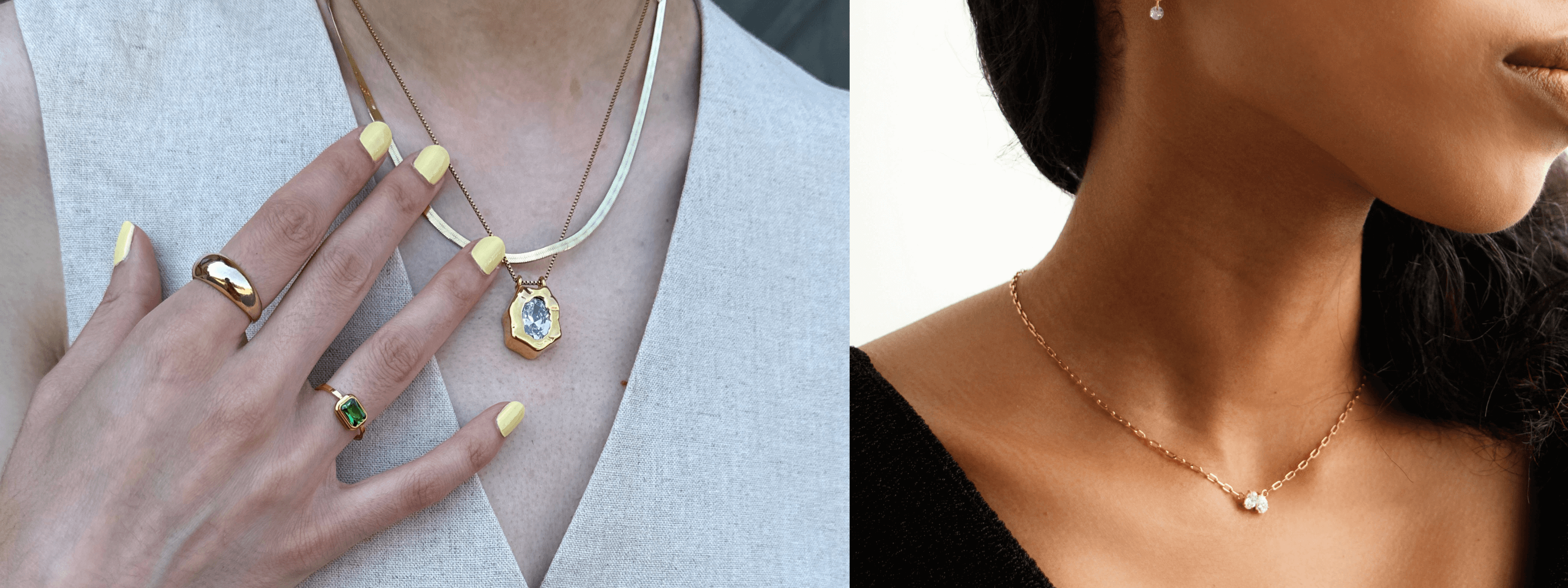
How to Layer Necklaces: A Beginner's Guide to the Perfect Stack
You’ve seen it everywhere on Pinterest and Instagram: that effortlessly cool "neck mess." A cascade of delicate chains, a perfectly placed pendant, a mix of textures... it looks amazing. But when you try to replicate it, you end up with a tangled, clashing disaster. What’s the secret?
As a designer and a "long-termist," my philosophy is that style should be personal and effortless, not complicated. Layering necklaces isn't about following strict rules; it's about learning a few simple principles to create a look that feels uniquely *you*.
I live in my jewelry, and that means it needs to be durable. My go-to base for any layered look is always stainless steel jewelry because it's waterproof, tarnish-proof, and won't cause irritation. This guide will teach you the basic rules for creating the perfect necklace stack that you can wear with confidence, every single day.

Key Takeaways
- The Rule of Three: The easiest way to build a stack is by focusing on three key elements: Length, Texture, and Weight.
- Vary Your Lengths: This is the most important rule. Choose chains with at least 1-2 inches (2.5-5cm) of separation to give each piece its own space. A common combo is 16", 18", and 20".
- Mix Your Textures: Don't just stack three identical chains. Combine different styles—like a flat herringbone chain, a round snake chain, and a classic link chain—to create visual interest.
- Add an "Anchor": Finish your stack with a "hero" piece, like a pendant or a charm. This gives the eye a focal point and tells your story.
Rule 1: Master Your Lengths (The Foundation)
The number one secret to a good stack is creating clear separation. If your necklaces are all the same length, they'll just clump together. You need to create distinct tiers.
- The Choker (14-16 inches): This is your base layer. A simple, delicate chain that sits high on the collarbone.
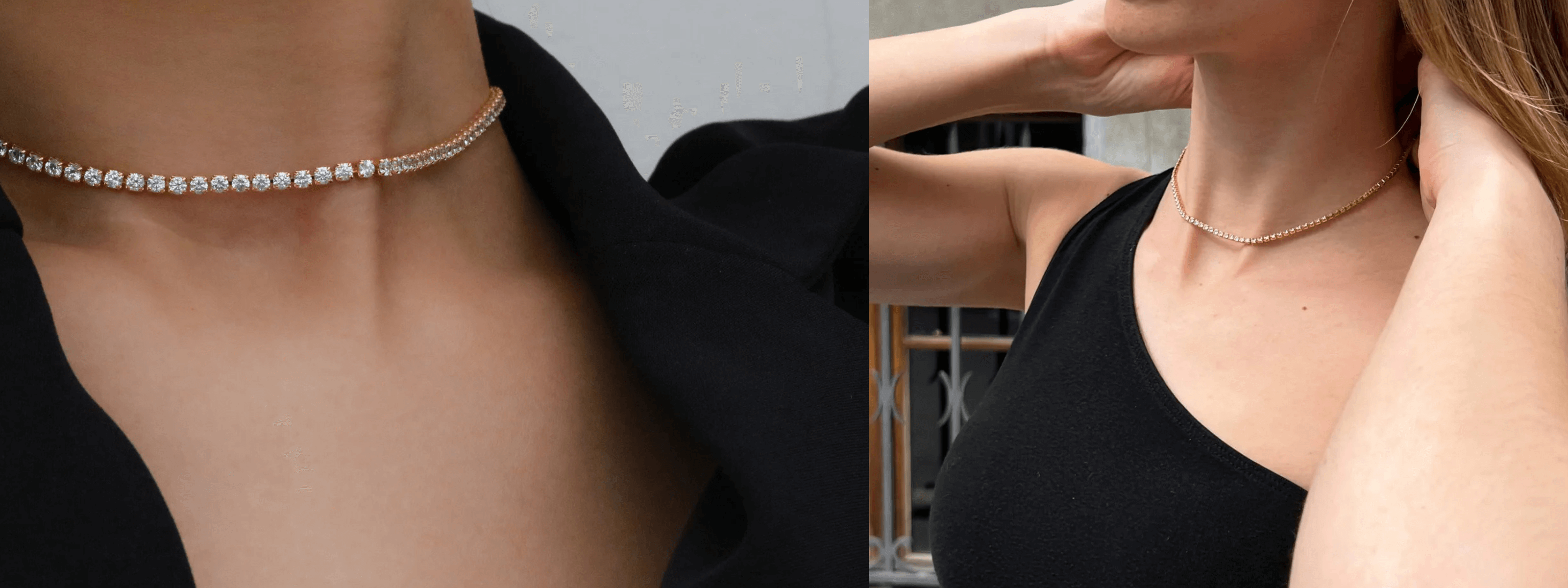
- The Mid-Length (18-20 inches): This is your main "body" piece. It sits just below the collarbone and is a great place to add a bit more texture, like a thin curb chain or a tennis necklace.
- The "Anchor" (22+ inches): This is your longest piece, and it's the perfect place for a meaningful pendant, like a Tiger's Eye gem or a Jade amulet. It draws the eye downward and completes the V-shape.
Pro Tip: Aim for at least 1-2 inches (2.5-5cm) of space between each necklace. Using necklace detangler clasps can also be a lifesaver for keeping your stack perfectly spaced and tangle-free.
Rule 2: Play with Texture and Weight (The "Art")
This is where your personality comes in. A stack of three identical, delicate chains is fine, but it can be boring. The magic happens when you mix different styles. The golden rule is contrast.
- Flat vs. Round: Pair a flat chain (like a herringbone) with a round chain (like a rope or box chain). The different ways they catch the light is what creates a dynamic look.
- Delicate vs. Chunky: Combine a "barely-there" chain with a single, slightly heavier piece, like a paperclip or Cuban link chain.
- Sparkle vs. Shine: Mix a classic polished steel chain with a sparkling gemstone chain, like a tennis necklace.
Rule 3: Add Your Anchor (The "Story")
Your stack should tell a story. The anchor piece is the "main character." This is typically your longest necklace, and it's the piece with the most personal meaning.
This could be:
- A gemstone pendant (like Emerald, Jade, or Abalone)
- A symbolic charm (like a Moonface or Leopard)
- A locket or a personalized engraved disc
This piece grounds the entire look and makes the stack uniquely yours, rather than just a random collection of chains.

Featured: Layering Essentials
Build your perfect, tarnish-proof stack. Start with our durable, hypoallergenic 316L steel herringbone, snake, and curb chains.
Shop All NecklacesBonus Tip: Yes, You Can (and Should) Mix Metals
The old rule about not mixing gold and silver is dead. One of the most modern and sophisticated looks is a mixed-metal stack. The key is to make it look intentional.
The easiest way? Choose an "anchor" piece that is two-toned. Or, try a stack of two silver-tone steel chains with one PVD gold-plated steel chain in the middle. The durability of PVD coated stainless steel means your gold tones won't fade or tarnish, making it the perfect, reliable material for mixing.
Frequently Asked Questions
Q1: How do I stop my layered necklaces from tangling?
Tangling is the biggest frustration! First, ensure you have good separation in length (at least 1-2 inches). Second, mix your textures; two delicate chains of the same style will tangle more than a flat chain and a round chain. Finally, you can buy a "layering clasp" or "stacking clasp," which is a single clasp that has multiple loops to attach each necklace to, keeping them separate.
Q2: How many necklaces is "too many" for a stack?
There's no set rule, but a great starting point for beginners is three. A stack of two is minimalist, three is classic, and five or more creates a bold "maximalist" look. I'd recommend starting with three and seeing how it feels.
Q3: Can I layer necklaces with a turtleneck?
Absolutely. For a turtleneck or high-crew neck, it's best to wear your necklaces *over* the fabric. This is where chunkier, heavier chains (like a 20" or 22" curb or herringbone chain) made of stainless steel jewelry look fantastic, as they have the weight to lie flat and make a statement.
Q4: Where should the pendant go in a stack?
Typically, the "anchor" or pendant piece is the longest necklace in your stack. This draws the eye down and creates a beautiful V-shape. However, a modern twist is to wear a tiny, delicate charm as your *shortest* (choker) layer, with two simple chains below it.

Laat een reactie achter
Deze site wordt beschermd door hCaptcha en het privacybeleid en de servicevoorwaarden van hCaptcha zijn van toepassing.