

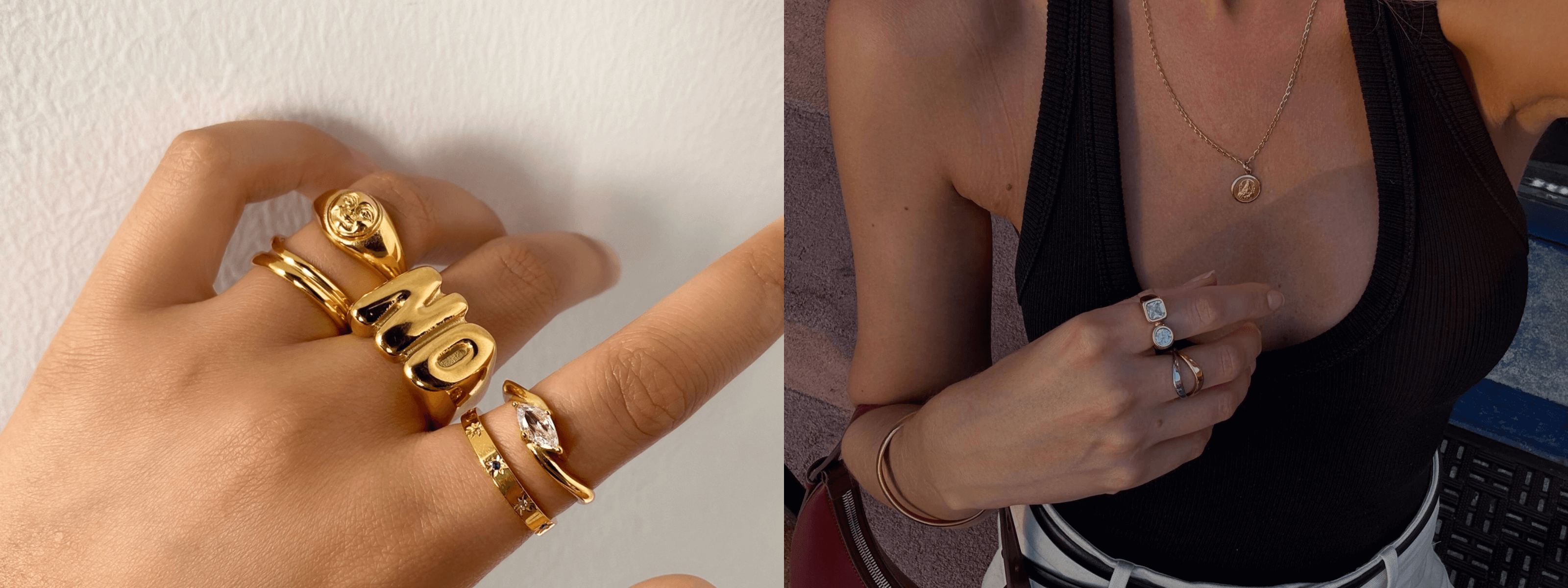
What is a Signet Ring? A Modern Guide to History and Style
There are few pieces of jewelry with a history as rich and profound as the signet ring. This isn't just a trend that cycled back from the 90s; it's a thousand-year-old tradition that symbolizes heritage, power, and personal commitment. To wear a signet ring is to wear a story, not just a piece of metal.
As a designer, I'm fascinated by the blend of ancient history and modern style that the signet ring embodies. But what exactly is its legacy, and how does a modern woman wear this powerful, often masculine, symbol without sacrificing her own style?
This guide will break down the history, decode the meaning, and give you the modern rules for styling this iconic piece—proving that this ring, especially when crafted from durable stainless steel jewelry, is the ultimate statement of self-possession.

Key Takeaways
- The Legacy: Historically, the signet ring was used as a **wax seal** to sign and authenticate important documents, acting as a personal signature and mark of status.
- The Modern Meaning: Today, the signet ring symbolizes **personal power, identity, and legacy**. It’s often engraved with initials, mottos, or meaningful symbols.
- Styling Trend: It is now a **unisex statement piece**. Modern style dictates wearing it on the middle or index finger, letting the bold design anchor the hand.
- The Material Advantage: Because signet rings are prone to wear, 316L steel is the superior modern material. Its strength protects the engraved surface and ensures the ring’s legacy lasts without requiring polishing.
The Legacy: From Wax Seal to Power Symbol
The signet ring's history is inextricably linked with power and authority. Its name comes from the Latin word "signum," meaning "sign."
Historically, the flattened bezel of the ring was engraved with a unique family crest, initials, or symbol. This engraved face was pressed into hot wax to create an official seal—a process that authenticated letters and documents. Since the ring was literally the wearer's official signature, its value was enormous. If a nobleman died, his signet ring was often destroyed immediately to prevent forgery.
Wearing the signet ring today is a way to tap into that feeling of **authority and heritage**, even if the engraving is a symbol of your own making, not an inherited crest.
The Modern Comeback: Style and Meaning Today
In 2025, the signet ring is no longer reserved for European aristocracy or men's pinky fingers. It has been completely embraced as a powerful, customizable statement piece by women who appreciate its history.

Which Finger Do You Wear It On?
The choice of finger dictates the ring's visual weight and meaning:
- The Pinky Finger (Traditional): Traditionally worn on the non-dominant pinky finger. This is the classic, sophisticated, and slightly understated way to wear it.
- The Index Finger (Statement): This is the most popular modern placement for women. Wearing a signet ring here makes the boldest statement and positions it as the "hero" of the hand.
- The Middle Finger (Balance): Worn here, the signet ring acts as a stable anchor for the entire hand, perfect for balancing out stacked rings on the adjacent fingers.
The Modern Engraving: Beyond the Family Crest
The modern signet ring is less about family history and more about **personal identity**. Engravings can now be:
- Your own initials or your partner's initials.
- A personal mantra or date.
- A minimalist symbol (like a star, moon, or eye) that represents your personal commitment or philosophy.
Because the ring face is often flat and exposed, choosing a material that protects the design is essential. This is where the extreme hardness of **stainless steel rings** comes into play.

Featured: The Heritage Signet Ring
Capture the legacy of power and identity. Our Signet Ring is crafted in hard, scratch-resistant 316L stainless steel, designed to carry your personal seal forever.
Shop The ClassicWhy Stainless Steel is the Ideal Material for Heritage
A ring used for signing documents needs to be tough, and 316L stainless steel provides the functional strength this historical design demands.
Protection Against Wear
The flat surface of a traditional signet ring is highly prone to abrasion. Softer metals like 14k gold or sterling silver will quickly show deep scratches. The incredible hardness of **stainless steel rings** protects the surface, ensuring that any engraving—whether a crest or an initial—remains crisp and visible for decades.
No Compromise on Safety
Since the ring is meant to be worn daily, its hypoallergenic nature is vital. Our steel is biocompatible, ensuring that your powerful statement piece won't cause the irritation or rash common with cheaper, nickel-based alloys.
Low Maintenance, Lasting Shine
The heritage of a signet ring should be easy to maintain. Unlike silver that requires constant polishing, stainless steel maintains its luster with zero maintenance, allowing you to focus on the ring's symbolic value, not its upkeep.
Frequently Asked Questions
Q1: What is the traditional meaning of a signet ring?
Historically, the signet ring was a symbol of family heritage, status, and power. It was primarily used by nobility and clergy to create seals in hot wax to legally authenticate documents, serving as a signature.
Q2: Which finger should I wear a signet ring on?
Traditionally, it was worn on the pinky finger of the non-dominant hand. However, for modern style, the index finger or middle finger are the most popular choices, as they give the ring more visibility and make a stronger fashion statement. It depends entirely on your personal preference.
Q3: Are signet rings still just for men?
No. The signet ring is now a popular unisex accessory. Modern designs often feature softer stones, unique engraving, or minimalist metal work, making them a perfect statement piece for women who appreciate classic style with a powerful edge.
Q4: Why is stainless steel a good material for a signet ring?
Signet rings are meant to be worn constantly and are often subject to impact. 316L stainless steel is incredibly hard and scratch-resistant, which protects the intricate engraving better than softer metals like silver or gold. It's the ideal choice for a daily, enduring symbol.

Laat een reactie achter
Deze site wordt beschermd door hCaptcha en het privacybeleid en de servicevoorwaarden van hCaptcha zijn van toepassing.