

Birthstone ring: A Buyer's Guide
A birthstone ring is simply a ring set with the stone tied to a birth month — and the smartest buy is one where the stone is genuine where it counts and the everyday hardware survives real life. If you wear a ring through showers, gym sessions, and dishwashing, the single trade-off that decides the purchase is durability versus delicacy: some birthstones (ruby, sapphire) are tough enough to forget about, while others (pearl, moonstone) are genuinely soft and need a gentler routine. This guide covers which stone belongs to which month, how to read hardness honestly, what the band is actually made of, and how to pick a birthstone ring that looks luxe without the upkeep.
Key takeaways
- The traditional birthstone list was standardized in 1912 — January garnet, July ruby, September sapphire, and so on — but many months have a second accepted stone, so you have options.
- Hardness is the criterion that actually matters for daily wear: ruby and sapphire sit at the top of the scale, while pearl and moonstone are soft and meant to be babied.
- Be honest with yourself about price: at affordable-luxury prices, a vividly colored "ruby" or "sapphire" accent is usually cubic zirconia (honest sparkle, not a mined gem) — genuine stones like jade, tiger's-eye, and pearl are the real deal.
- For everyday wear, a waterproof 18k-gold-plated 316L stainless-steel band with a colored stone is the easy pick — luxe look, no tarnish, no upkeep.
Birthstones by month — and what each one is made of
The modern birthstone calendar most U.S. jewelers use was set by the national retail jewelers' association in 1912, and several months later picked up a second "alternate" stone. Here is the standard list, plus a quick note on what each stone actually is — because "birthstone" tells you the month, not the material.
- January — Garnet. A durable silicate, deep red, comfortably hard enough for daily wear.
- February — Amethyst. Purple quartz; a hard, everyday-friendly stone.
- March — Aquamarine. Pale blue beryl, hard and resilient.
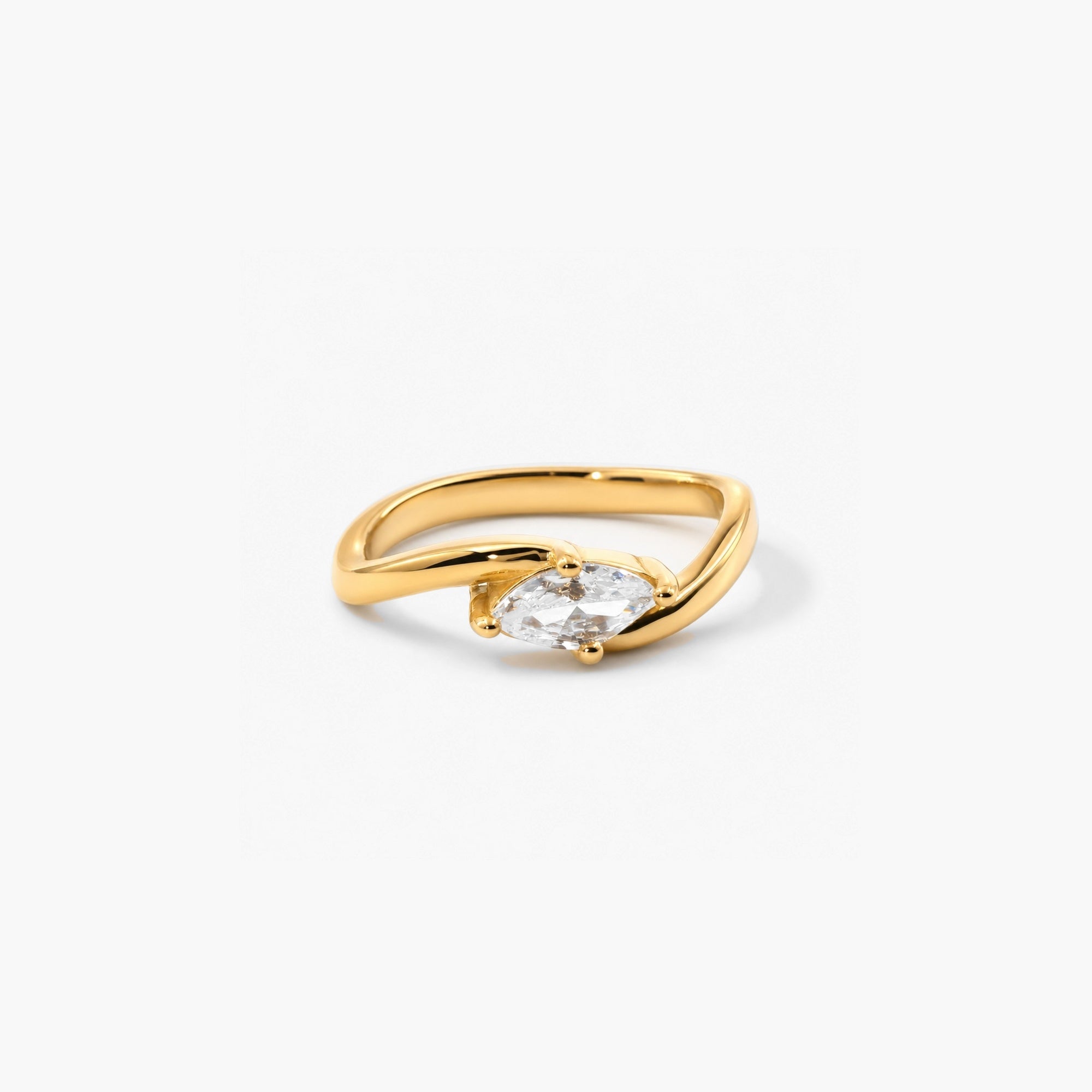
- April — Diamond. The hardest natural material on the Mohs scale (10). At affordable prices, the sparkle is almost always cubic zirconia, a diamond simulant — not a diamond.
- May — Emerald. Green beryl; hard but brittle, with natural inclusions.
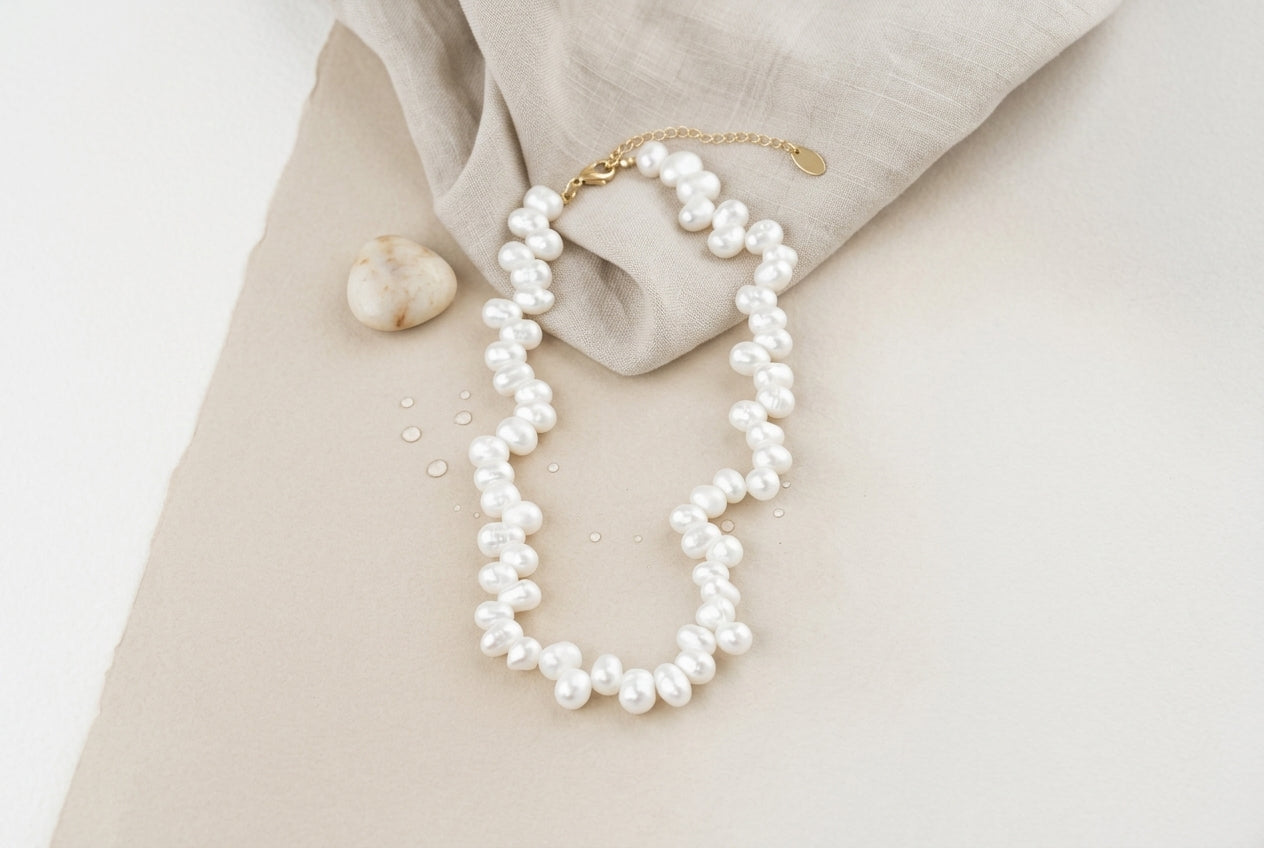
- June — Pearl (alternates: moonstone, alexandrite). Pearl and moonstone are both soft — the gentle-care stones of the list.
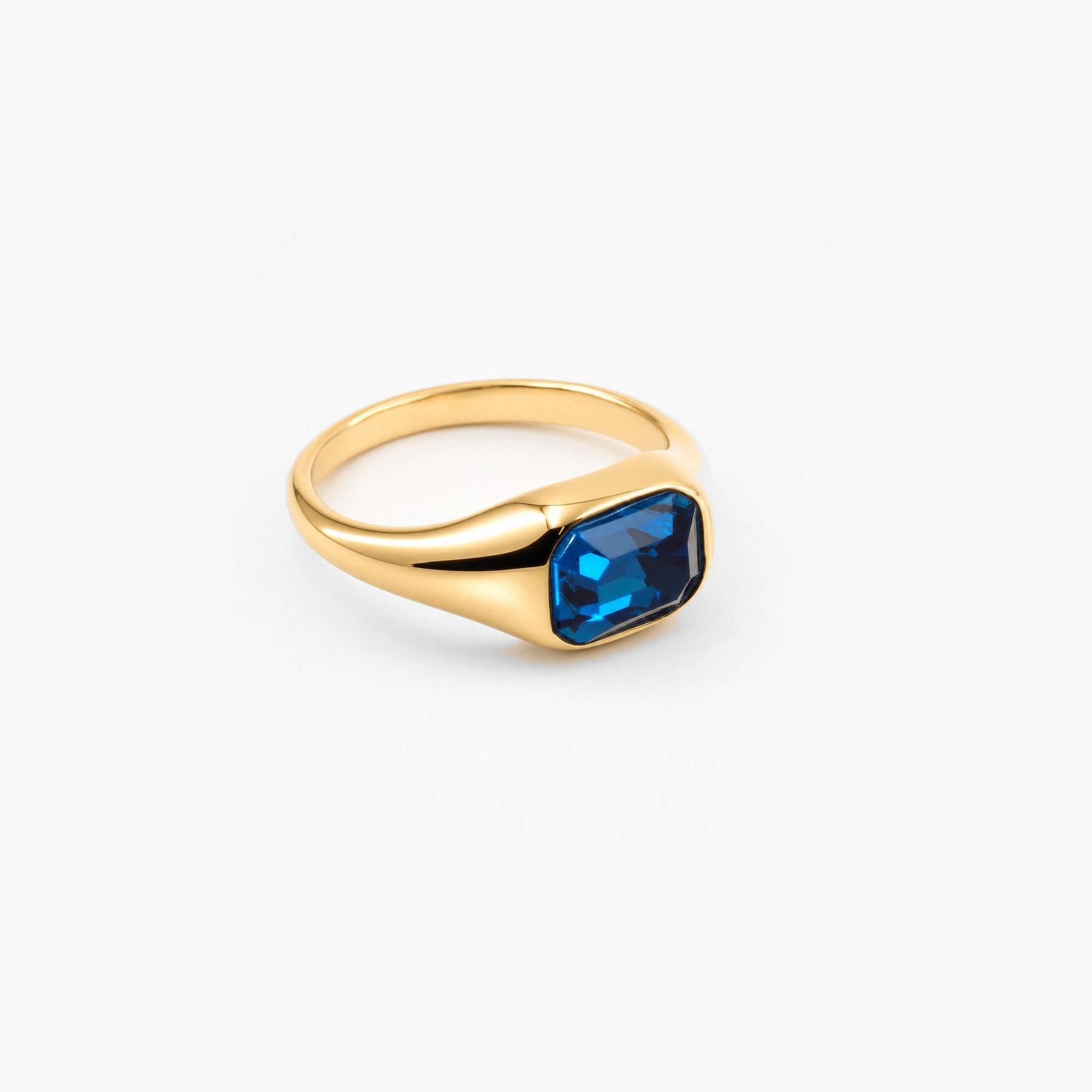
- July — Ruby. Corundum, Mohs 9 — one of the toughest gems you can wear.
- August — Peridot (alternate: spinel). A bright olive-green stone.
- September — Sapphire. Also corundum, Mohs 9 — sapphire's only the color away from ruby.
- October — Opal (alternate: tourmaline). Opal is soft and water-sensitive; tourmaline is the harder choice.
- November — Topaz (alternate: citrine). Both hard and warm-toned.
- December — Turquoise (alternates: blue topaz, tanzanite). Turquoise is porous and needs care.
How to choose — the criteria that actually matter
A birthstone ring you wear every day lives or dies on four practical points.
- Stone hardness. The Mohs scale runs 1 (talc) to 10 (diamond) and is the best shorthand for "will this scratch?" Ruby and sapphire (9) shrug off daily knocks; cubic zirconia (8.5) is plenty hard for a ring. Jade, tiger's-eye, and onyx (around 6–7) are fine with light awareness. Moonstone (6–6.5), mother-of-pearl (2.5–4.5), and pearl (~2.5) are soft — beautiful, but occasion-ring material, not the one you garden in.
- Genuine stone vs. honest simulant. A genuine jade, tiger's-eye, or pearl is a real natural stone. A vivid red or blue accent at an affordable price is typically cubic zirconia — genuine, durable sparkle, just not a mined ruby or sapphire. Neither is "fake"; the only mistake is being misled about which one you're getting.
- The band, not just the stone. A pretty stone on a band that turns your finger green is a bad ring — check the base metal and how the gold tone is applied (more below).
- Width and fit. For wider bands — roughly 7–8 mm and up — size up about half a size, because the extra surface area makes the same nominal size feel tighter over the knuckle.
Best birthstone ring for each kind of buyer
Match the pick to how you'll actually wear it.
- Best for everyday, set-and-forget wear: a July (ruby) or September (sapphire) look — or any tough-stone style — on a waterproof stainless band. Mohs-9 stones and CZ accents handle the shower and the gym without drama.
- Best for sensitive skin: an 18k-gold-plated 316L stainless-steel ring. 316L is the implant-grade alloy used in medical devices precisely because it releases almost no nickel — the most common contact allergen behind most "jewelry rash."
- Best as a gift / occasion ring: a softer signature stone like June's pearl or moonstone — personal and photogenic, with the understanding they want gentler handling.
- Best for a budget or starter stack: a thin colored-CZ stacking band. Honest sparkle, low price, easy to layer.
Birthstone hardness and care, at a glance
Here's how the popular birthstone materials compare on the two things that decide daily wearability — hardness and care. Prices below are typical affordable-luxury ranges, not exact quotes; check the live product page for the current price.
| Stone | What it is | Mohs hardness | Care reality |
|---|---|---|---|
| Ruby / Sapphire (July / Sept) | Corundum (genuine or lab-grown); CZ at low prices | 9 (corundum) · 8.5 (CZ) | Toughest of the group — true everyday wear |
| Cubic zirconia (any color) | Lab-made diamond simulant | 8.5 | Durable, daily-friendly; honest sparkle, not a diamond |
| Jade | Genuine jadeite or nephrite | ~6–7 | Sturdy; ask whether it's natural vs. dyed |
| Tiger's-eye / Onyx | Quartz / chalcedony (genuine) | ~7 | Fine for daily wear with light care |
| Moonstone | Feldspar (genuine), with adularescent glow | ~6–6.5 | Soft and low-toughness — an occasion stone |
| Pearl / Mother-of-pearl | Genuine nacre | ~2.5–4.5 | Softest here — keep away from chemicals, wipe gently |
The takeaway: if you want a ring you never have to think about, pick from the top two rows. If you fall for a softer stone, buy it knowing it's a treat-it-kindly piece — not a flaw, just physics.

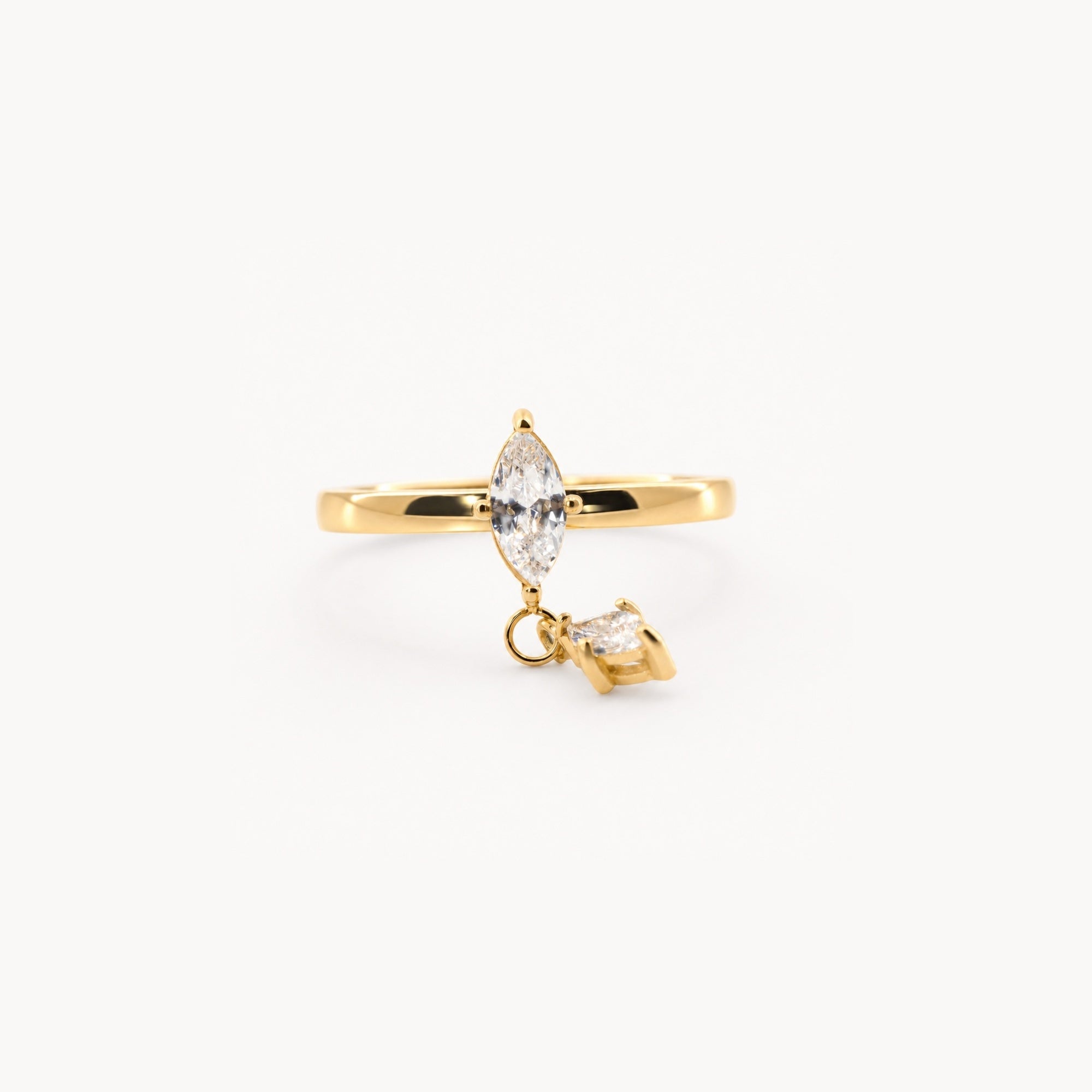
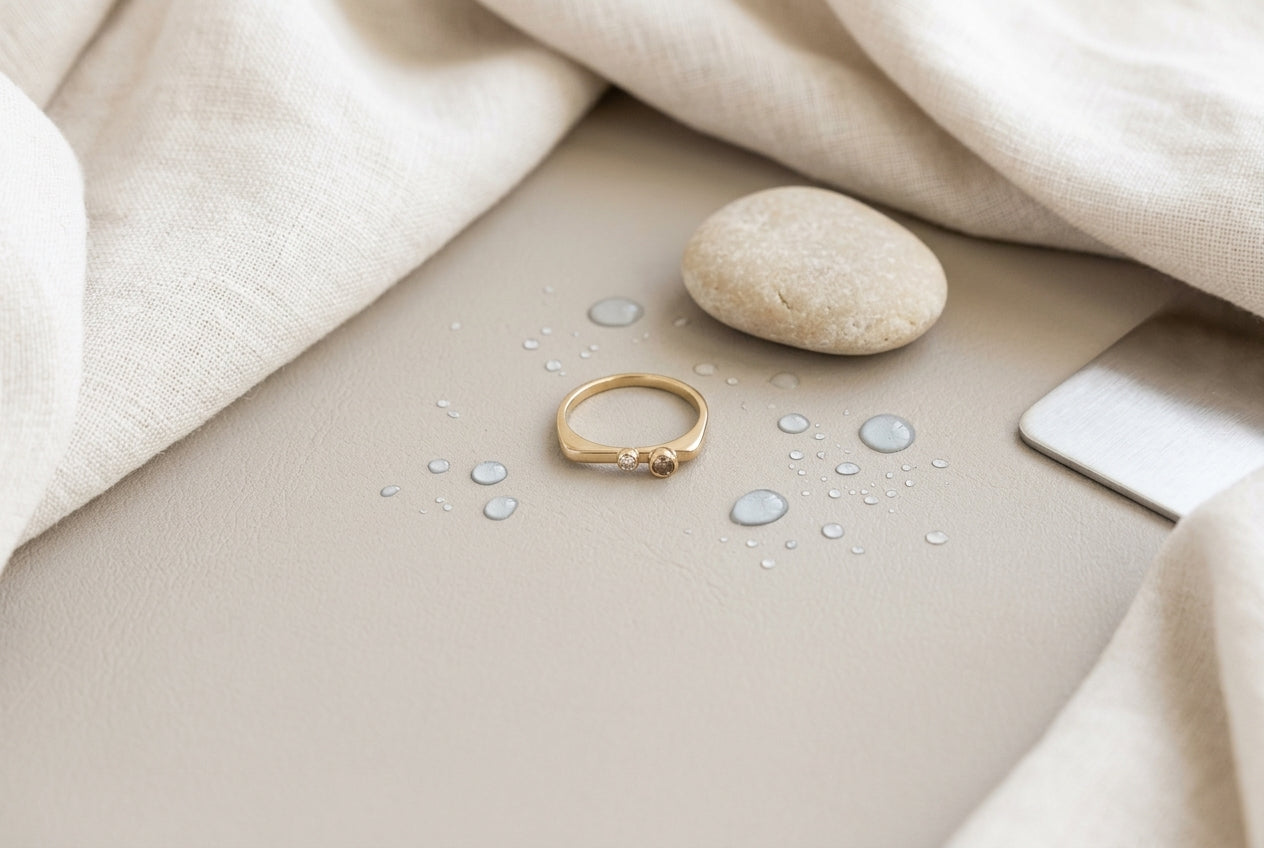
Ruby Stacking Ring
A sleek gold geometric band with two asymmetric gemstone accents — one clear CZ and one vibrant red stone — bold enough to stand alone.
Shop this ring →Honest caveats — the questions worth asking before you buy
- Is the stone genuine? It depends on the stone. Jade, tiger's-eye, onyx, moonstone, and pearl are genuine natural stones. A vivid red, green, or blue "birthstone" accent at an affordable price is almost always cubic zirconia — a real, lab-made simulant that gives diamond-like sparkle but is not a mined ruby, sapphire, or diamond. For jade, dyed stone is a real market issue, so it's fair to ask whether it's natural or color-treated.
- Is it solid gold? No — and any honest brand will say so. Affordable-luxury rings like ours are 18k-gold-plated over a 316L stainless-steel core, applied by PVD. By the FTC's jewelry guides, "gold-plated" requires at least 0.175 microns of at least 10-karat gold — a durable surface layer that resists tarnish for years, but a plating, not solid gold, and not permanent.
- Will it hold up to water and turn my skin green? A 316L stainless band is corrosion-resistant — "waterproof" in the everyday sense of surviving showers, pools, and sweat. It won't turn your finger green; that tint comes from copper in cheap brass alloys, not stainless steel. And because 316L releases so little nickel (well under the EU's 0.5 µg/cm²/week limit), it suits most sensitive skin.
- Will it look like the photo, and are there hidden costs? Birthstone rings are often dainty by design, so read the band width as a real measurement. For wider bands (7–8 mm+), size up about half a size. There are no hidden costs — one-time price, no membership, no auto-enrolled subscription.
Ready to find your month's stone? Browse the full Stainless Steel Rings collection and filter by the color that matches your birthstone.
Frequently asked questions
What is my birthstone by month?
Using the standard list set by U.S. jewelers in 1912: January is garnet, February amethyst, March aquamarine, April diamond, May emerald, June pearl (alternates moonstone or alexandrite), July ruby, August peridot, September sapphire, October opal, November topaz, and December turquoise. Several months have a second accepted stone, so you usually have more than one option.
Is the ruby in an affordable birthstone ring a real ruby?
Usually not — at affordable-luxury prices, a vibrant red "ruby" accent is typically cubic zirconia, a durable lab-made simulant that mimics a gem's sparkle but is not mined corundum. A genuine or lab-grown ruby costs significantly more. CZ is honest, real sparkle; it just isn't a ruby or a diamond, and a trustworthy listing will describe it accurately.
Which birthstones are durable enough for everyday wear?
Ruby and sapphire (both corundum, Mohs 9) are the toughest and ideal for daily wear, and cubic zirconia (8.5) is also plenty durable. Jade, tiger's-eye, and onyx (around 6–7) are fine with light care. Pearl, mother-of-pearl (Mohs ~2.5–4.5), and moonstone (~6–6.5) are soft and low in toughness, so they're better as occasion rings than daily knock-arounds.
Are gold-plated birthstone rings good for sensitive skin?
Yes, when the base is 316L stainless steel. 316L is the implant-grade alloy used in medical devices, and it releases very little nickel — well below the EU tolerance of 0.5 µg/cm²/week — even though nickel is the single most common cause of jewelry-related contact allergy. The 18k gold plating sits on top of that stable core, so most people with sensitive skin wear it comfortably.
Should I size up for a wide birthstone band?
For wider bands — roughly 7–8 mm and up — go up about half a size from your usual measurement. A wide band covers more of your finger, creating more friction and needing a little more room to slide over the knuckle, so the same nominal size feels tighter than a thin band.
Choose your birthstone ring by working backward from how you'll wear it: pick a tough stone (or honest CZ) and a waterproof 316L band for everyday, or a soft signature stone for an occasion piece — and always buy from a listing that's clear about which stones are genuine and which are simulants. See also our guides on chunky ring styling and the stainless steel ring buyer's guide.

Leave a comment
This site is protected by hCaptcha and the hCaptcha Privacy Policy and Terms of Service apply.