

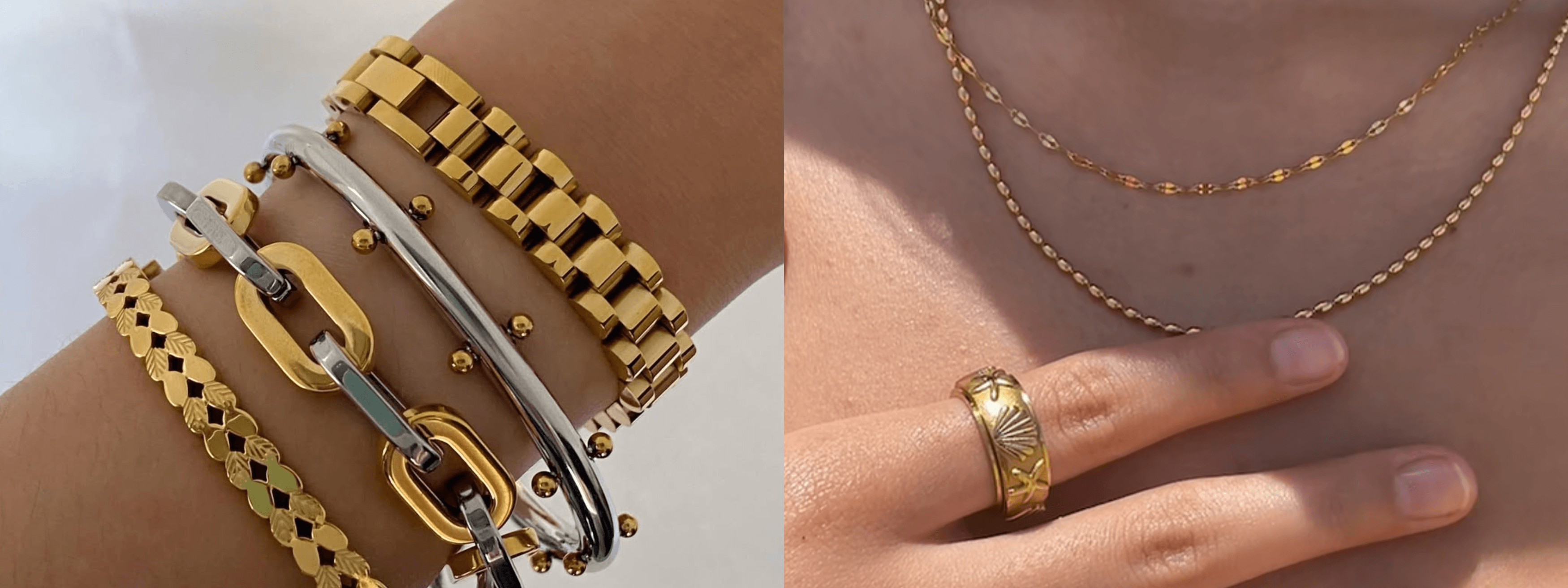
How to Clean Stainless Steel Jewelry

Wondering how to clean stainless steel jewelry? It is a straightforward maintenance routine designed to safely remove hard water deposits, oils, and daily grime without degrading the metal's finish or delicate gold plating.
While this durable alloy resists rust and tarnish, daily wear still leaves behind a cloudy film of soap scum and minerals. Whether you are polishing a solid steel band, an 18k gold-plated hoop, or a delicate gemstone setting, using the right technique prevents micro-scratches and preserves the coating for years.
What is Stainless Steel Jewelry?
Stainless steel jewelry is a category of wearable accessories built on a chromium-iron alloy base that resists rust, tarnish, and corrosion far better than brass or copper alternatives.
Most quality pieces use a 316L grade alloy, which adds molybdenum to the mix. That single addition is what makes it survive daily showers, gym sessions, and summer sweat without pitting or discoloring.
If you're wondering, does stainless steel jewelry tarnish, the answer is that it holds its finish for years compared to silver or brass. The surface forms a passive oxide layer that self-repairs minor scratches at a microscopic level.
That said, the metal's core is built to survive the shower, but the surface still needs a gentle wipe to keep its shine. Skin oils, soap residue, and lotion build up on even the toughest alloy over time.
Most gold-plated stainless pieces, like the Hope Small Hoop Earrings 20mm at $36, layer 18k gold over that 316L base, giving you the warm look of gold with the structural durability of steel underneath.
The "Waterproof" Myth: Dealing with Hard Water Buildup
Your stainless steel jewelry isn't rusting — it's collecting a thin film of calcium and magnesium deposits left behind every time tap water evaporates on its surface. That's the real reason a piece you've worn in the shower for months starts looking flat and cloudy.
When shopping for waterproof gold jewelry, remember that "waterproof" means the metal won't corrode or rust through. It says nothing about soap scum, shampoo residue, or the minerals dissolved in your water supply. Those still cling to the surface after every rinse.
Why Hard Water Is the Main Culprit
Hard water contains elevated levels of calcium carbonate and magnesium, those minerals stay behind as a whitish, hazy layer. Over weeks, that buildup stacks up and scatters light instead of reflecting it cleanly.
You don't have to worry about structural rust on a stainless steel base. The dullness you're seeing is purely surface-level mineral buildup, and it wipes away with the right approach.
How to Remove Hard Water Deposits
Mix 1 part white vinegar with 3 parts warm water in a small bowl. Soak the piece for no longer than 5 minutes — vinegar is mildly acidic and dissolves mineral deposits quickly without damaging the metal.
After soaking, scrub gently with a soft toothbrush, rinse under clean water, and dry immediately with a lint-free cloth. Skipping the dry step is what lets the next layer of deposits start forming right away.
For lighter buildup between deeper cleans, a quick wipe with a damp microfiber cloth after every shower takes about 10 seconds and keeps the finish looking sharp. Delicate pieces like the Hope Small Hoop Earrings 20mm ($36) respond especially well to this habit since their polished surfaces show water spots faster than textured styles.
Prevention Beats Deep Cleaning
Pat your jewelry dry after every shower rather than letting it air-dry. That single habit cuts mineral buildup by a significant margin and means you'll need a vinegar soak far less often.
How to Clean Solid vs. 18k Gold-Plated Stainless Steel
The short answer: gold-plated stainless steel needs a gentler touch than solid steel. Think of the plating like a delicate fabric — you wipe it clean, you don't scrub it. Solid stainless steel can handle a bit more friction, but even then, abrasives are never worth the risk.
Cleaning Solid Stainless Steel
Mix 1 part dish soap to 10 parts warm water in a small bowl. Dip a soft microfiber cloth into the solution, wring it out until it's just damp, and wipe the piece in long strokes following the metal's grain.
Rinse under cool running water for about 20 seconds, then pat dry immediately. Leaving water to air-dry on stainless steel is how you end up with the white mineral spots covered in the previous section.
For tight spots like chain links or engraved details, a soft-bristle toothbrush works well. Keep your strokes light — you're loosening debris, not sanding it off.
Cleaning 18k Gold PVD-Plated Stainless Steel
The fear of rubbing off the gold color is real, and it's worth taking seriously. 18k gold PVD plating is a thin but durable layer, and repeated friction from rough cloths or brushes will wear it down over time. According to the Gemological Institute of America (GIA), gentle cleaning is paramount for plated metals to prevent premature wear.
Use the same 1:10 soap-to-water ratio, but apply it with the softest cloth you own — a lint-free jewelry cloth or a clean cotton pad. Dab and wipe gently. No circular scrubbing, no back-and-forth pressure on the same spot.
Skip the toothbrush entirely on plated pieces. Even soft bristles concentrate pressure on a small area, which is exactly where micro-abrasion starts.
| Step | Solid Stainless Steel | 18k Gold-Plated Stainless Steel |
|---|---|---|
| Solution | 1 part soap, 10 parts warm water | 1 part soap, 10 parts warm water |
| Tool | Microfiber cloth or soft toothbrush | Lint-free cloth or cotton pad only |
| Motion | Gentle strokes along the grain | Light dabbing and single-direction wipes |
| Rinse | Cool running water, 20 seconds | Damp clean cloth wipe — avoid soaking |
| Dry | Pat dry immediately | Pat dry immediately, air for 2 minutes |
One thing I've noticed after cleaning plated pieces repeatedly: the gold stays vivid longest on pieces where the PVD layer was applied over a well-polished steel base. The Hope Small Hoop Earrings, for example, hold their finish well because the base metal is properly finished before plating — that foundation matters as much as how you clean them.
If you wear gold-plated stainless steel daily, a quick wipe-down after each wear does more to preserve the color than any deep-clean session once a month.
Cleaning Stainless Steel Set with Natural Stones
Pearls, jade, and lapis lazuli need a completely different approach than bare metal. Keep soap away from these stones entirely — a simple damp cloth is all they need to stay vibrant, while the steel band gets its own targeted clean.
The core rule: treat the stone and the metal as two separate surfaces. Cleaning solutions safe for stainless steel—a popular choice for hypoallergenic jewelry—can dull, pit, or permanently stain porous stones like lapis and jade.
Why Porous Stones Need Special Care
Jade, lapis lazuli, and pearls are all porous or surface-sensitive. Soap residue seeps into their structure and clouds their finish over time. Ultrasonic cleaners are completely off the table for any piece with natural stone inlays.
Lapis lazuli is especially reactive. Its deep blue color comes partly from pyrite and calcite minerals that can bleach or streak when exposed to even mild detergents.
Step-by-Step Cleaning for Stone-Set Pieces
- Dampen a soft microfiber cloth with plain water, no soap, no solution.
- Wipe the stone only with the damp cloth using light, circular strokes. Do not soak or submerge the piece.
- Pat the stone dry immediately with a second dry cloth. Letting water sit in the setting can loosen the adhesive or prong over weeks.
- Mix 1 part mild dish soap to 10 parts water in a small bowl for the metal band.
- Use a soft-bristle toothbrush to scrub only the stainless steel portions, work carefully around the stone setting without touching the stone itself.
- Rinse the metal quickly under a slow stream of lukewarm water, keeping the stone face-down and away from the flow.
- Dry everything thoroughly with a lint-free cloth before storing.
Specific Pieces Worth Extra Care
The Square Jade Hoops ($56) feature jade panels set directly into gold-plated stainless steel hoops. Submerging these in any cleaning solution risks water wicking under the stone setting. Stick to the damp-cloth method on the jade face, then clean the hoop frame separately with your soap solution.
The Bar Lapis Lazuli Ring ($48) has a flat lapis bar that sits flush against the band. A cotton swab dampened with plain water works better than a cloth here, it gives you precise control around the metal edges without flooding the stone.
Pearl Jewelry Cleaning Notes
Pearls are the most fragile of the three. Their nacre surface scratches easily and reacts badly to acids, including the citric acid in some "natural" cleaners. Use only a barely damp cloth and skip the metal-cleaning step entirely until the pearl is fully dry and set aside.
After cleaning any pearl piece, lay it flat to dry rather than hanging it. Hanging a pearl necklace or ring while wet can stress the setting over time.
Common Cleaning Mistakes to Avoid
Bleach, chlorine-based cleaners, and abrasive silver polishing cloths will permanently damage stainless steel jewelry. Bleach breaks down the protective chromium oxide layer, leaving the metal vulnerable to pitting. Chlorine does the same, which is why the American Gem Society recommends removing your jewelry before entering a pool or hot tub.
Silver polishing cloths are treated with abrasive compounds designed for softer metals. Drag one across a stainless steel surface and you'll leave micro-scratches that permanently dull the finish. Use a soft microfiber cloth instead, the kind rated for eyeglasses or camera lenses works perfectly.
Acetone nail polish remover is another common offender. It strips the PVD or gold plating from pieces like the Hope Small Hoop Earrings 20mm ($36), leaving patchy, uneven color that can't be reversed at home.
Ultrasonic cleaners seem convenient, but skip them entirely if your piece includes porous stones, turquoise, lapis lazuli, tiger's eye, or mother of pearl. The vibrations open micro-fractures in softer stones over repeated use. Soap and warm water is safer every time.
Toothpaste is not a substitute for jewelry cleaner. It contains silica particles fine enough to feel smooth on teeth but coarse enough to scratch a polished metal surface. Stick to 1 part mild dish soap mixed with 10 parts warm water.
Finally, air-drying face-down on a cloth traps moisture in settings and chain links. Pat dry immediately after rinsing, then let the piece sit upright in open air for a few minutes before storing it.
Where to Go Next
Keep it simple: warm water, a drop of dish soap, and a soft toothbrush every two to three weeks. That routine handles sweat, lotion, and daily grime before buildup has a chance to dull the finish.
After cleaning, dry each piece completely with a microfiber cloth. Moisture left in crevices is the main reason plated pieces lose their finish faster than they should.
If you own pieces with natural stones, like the Bar Lapis Lazuli Ring, skip soaking entirely. A barely damp cloth wiped across the metal, away from the stone, is enough.
For plated pieces, the single biggest thing you can do is understand how PVD and standard gold plating behave differently under daily wear. Reading a dedicated PVD plating guide before you clean will save you from stripping a finish you can't restore at home.
Store pieces separately in a pouch or lined box so they don't scratch each other overnight. That one habit extends the life of a finish more than any cleaning product will.
Stainless steel is genuinely low-maintenance. Treat it gently, dry it thoroughly, and it will look the same in two years as it does today.


Leave a comment
This site is protected by hCaptcha and the hCaptcha Privacy Policy and Terms of Service apply.