

Dainty Gold Cross Necklace — A Buyer's Guide
A dainty gold cross necklace is a small (roughly 10–18 mm), thin-chain cross pendant in a gold tone — and the version that survives everyday life is 18k gold-plated stainless steel, not solid gold. If you want a delicate cross you can actually wear in the shower, at the gym, and on a hot day without it turning your neck green or going dull, the deciding factors are the base metal under the gold, the real pendant size in millimeters, and how the gold layer is applied. This guide walks through each one, names the honest trade-offs, and points you to a dainty cross that holds up.
Key takeaways
- "Dainty gold" almost always means gold-plated, not solid gold. At the $30–$60 price most people shop, a solid-gold dainty cross is not realistic — so the real question is what's under the gold.
- The base metal decides longevity. 18k gold-plated 316L stainless steel resists corrosion and is a low nickel-releaser, which is why it tolerates water and sweat far better than plated brass.
- Size is the thing buyers get wrong. "Dainty" means small — check the millimeter spec before you buy so it arrives looking like the photo, not "tiny and unrecognizable."
- Quick pick: for an everyday dainty cross with a meaningful twist, a stainless-steel-based gold-plated cross with a birthstone accent is the easiest one to live in.
What to look for in a dainty gold cross necklace
A cross necklace is one of those pieces you put on and forget about — which is exactly why the construction matters more than the styling. Four things actually separate a cross you'll still wear in two years from one you'll retire in two months:
- Base metal. The gold you see is a coating; what's underneath does the real work. 316L stainless steel contains roughly 16–18% chromium, 10–14% nickel and 2–3% molybdenum — and it's the molybdenum that gives 316L its edge over cheaper 304 steel against pitting and corrosion in sweat and chlorinated water. Plated brass, by contrast, can corrode and discolor once the gold wears thin. For a piece that lives against your skin, the steel base is the upgrade that counts.
- How the gold is applied. Most fashion "gold-plated" jewelry uses a thin electroplated layer — under U.S. FTC jewelry guides, gold electroplate need only be about 0.175 micron of at-least-10k gold, so plating thickness is usually well under a micron. The more durable version is PVD / ion plating — a vacuum-deposited layer that bonds harder and resists tarnish and water far better than ordinary electroplating. Either way it is not solid gold, and it is not gold-filled (which by FTC rule carries at least 1/20 — 5% — gold by weight, a far thicker mechanically bonded layer, and costs much more). Knowing which you're buying sets honest expectations.
- Real size in millimeters. "Dainty" is a look, not a measurement. A genuinely delicate cross pendant sits around 10–18 mm tall on a thin (roughly 1–1.5 mm) chain. Always read the spec — the most common complaint about online jewelry is that it arrives smaller than the styled photo suggested.
- Skin safety. If you react to cheap jewelry, the base metal is usually why. The American Academy of Dermatology lists surgical-grade stainless steel among the materials safe for nickel-sensitive skin: 316L does contain nickel, but it's locked in a stable crystal structure and releases very little.
Best for X — which dainty cross fits which buyer
Not everyone is shopping for the same thing. Match the piece to how you'll actually wear it:
- Best for everyday / shower-and-gym wear: an 18k gold-plated 316L stainless steel cross — corrosion-resistant base plus PVD plating is the combination that tolerates water and sweat.
- Best for sensitive skin: a 316L stainless-steel base, for the low nickel-release reason above. Avoid plated-brass pieces if cheap jewelry has bothered you before.
- Best for a meaningful gift: a dainty cross with a personal touch — a birthstone accent adds significance without making the piece heavy or flashy.
- Best for a true heirloom / no-compromise metal: solid 14k or 18k gold. It's the only option that never wears through — but expect a different price tier entirely, often 5–10x a plated piece.
Gold-plated stainless steel vs. plated brass vs. gold-filled vs. solid gold
Here's the honest comparison of the four ways a "gold cross" gets made, so the price tags make sense:
| Type | Best for | Key spec (verified) | Typical price tier |
|---|---|---|---|
| 18k gold-plated 316L stainless steel | Everyday + water/sweat wear | Corrosion-resistant steel base (16–18% Cr, 2–3% Mo); durable PVD/ion gold plating; low nickel release | Affordable luxury (~$36–$55) |
| Gold-plated brass | Short-term / occasional wear | Brass base can corrode as plating thins; not a low-nickel-release guarantee | Budget |
| Gold-filled | Long-term wear, lower budget than solid | ≥5% gold by weight, mechanically bonded (~50–100 microns) | Mid |
| Solid 14k / 18k gold | Heirloom, never wears through | Gold throughout — no coating to lose | Premium (often 5–10x plated) |
For most people who want a delicate cross to wear daily without babying it, gold-plated 316L stainless steel is the sweet spot: it looks high-end, costs a fraction of solid gold, and the steel base is what keeps it from corroding the way plated brass does.

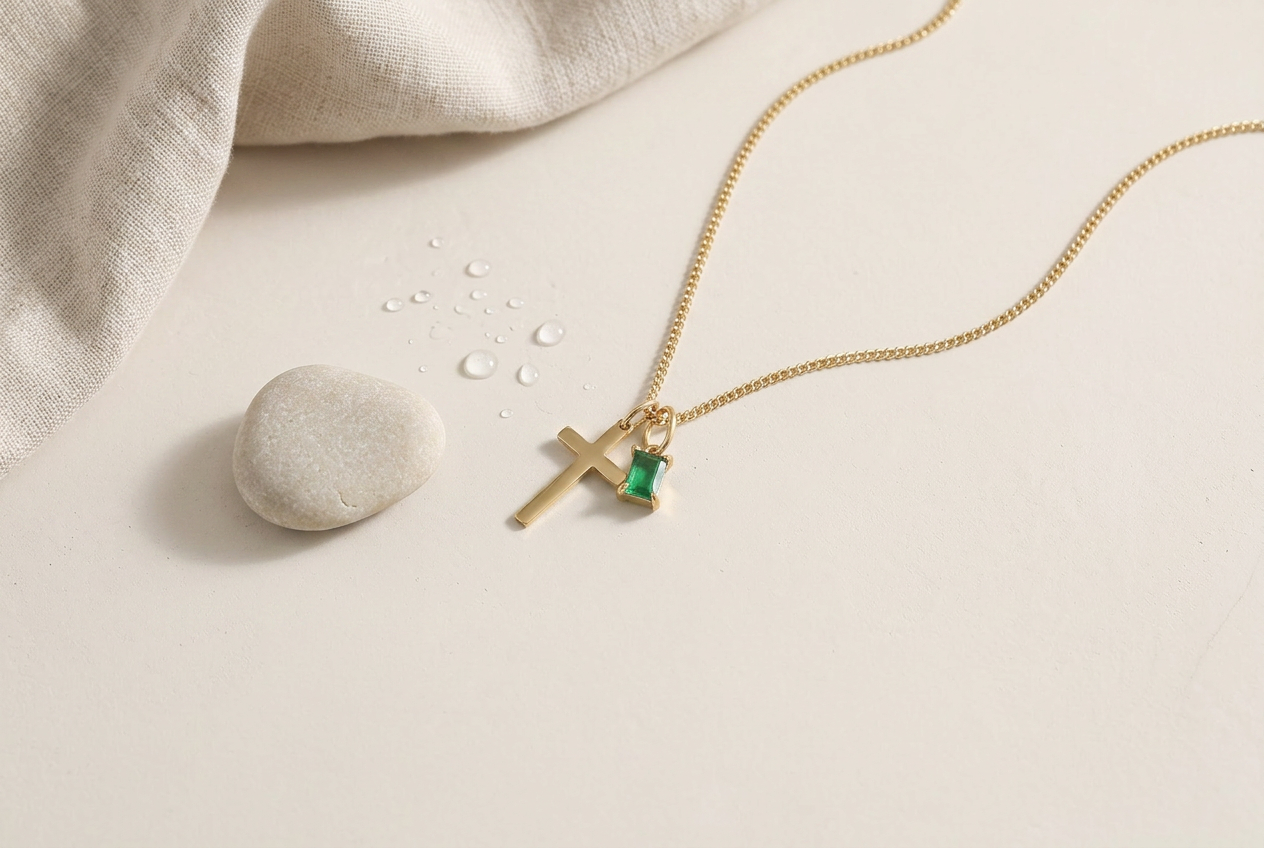
Cross and Birthstone Necklace
18k gold-plated, stainless-steel based, waterproof and tarnish-free — a dainty cross paired with a rectangular birthstone (4mm × 6mm) for each of the twelve months. The cross measures about 10mm.
Shop this necklace →Honest caveats — the objections worth answering
- Is it actually waterproof, or will it tarnish like my last "gold-plated" set? A gold-plated stainless steel piece is genuinely water- and tarnish-resistant — the steel base doesn't corrode and PVD plating shrugs off moisture, sweat, soap and shampoo. The honest caveat: no plated jewelry is indestructible. Chlorine pools and hot tubs are the real enemy, so take it off before a long soak to keep the gold tone its brightest. (The pieces that tarnished on you before were likely plated brass — different base, different outcome.)
- Will it arrive looking like the photo, or be tiny and unrecognizable? "Dainty" does mean small — that's the point — so go in with the millimeters in mind. A cross around 10mm reads delicate-and-intentional, not lost on the neck. We list the actual pendant and stone sizes so you can picture the scale before it ships, not after.
- Am I going to get signed up for a hidden monthly fee? No. The price you see is a one-time price. There is no membership, no auto-enrolled subscription, and nothing added during checkout — a deliberate contrast to the brands that quietly slip a recurring charge into express checkout.
- What about the stones — are they real diamonds? Affordable cross necklaces in this range use cubic zirconia (CZ) or colored stones, not mined diamonds. CZ sits around 8–8.5 on the Mohs hardness scale versus a diamond's 10, so it's still hard enough for everyday wear but can scratch over years of heavy use. That's the honest trade-off behind the affordable price — and the reason a birthstone or CZ accent makes far more sense on a daily piece than a real diamond would.
If you'd rather browse the full range of pendant styles first, explore our pendant necklace collection.
Frequently asked questions
Is a dainty gold cross necklace real gold?
At the affordable price most people shop, no — it's gold-plated, not solid gold. The best versions are 18k gold-plated over a 316L stainless steel base, which gives the gold look and color while the steel base provides the durability and water resistance. Solid-gold dainty crosses exist but cost several times more.
Will a gold-plated cross necklace tarnish or turn my skin green?
A gold-plated stainless steel cross is water- and tarnish-resistant and won't discolor skin under normal wear, because the steel base doesn't corrode and PVD plating resists moisture and sweat. Plated brass is the version that can tarnish and discolor as the gold thins — which is why the base metal matters most. Avoid chlorinated pools and hot tubs to keep any plated piece looking its best.
How big is a "dainty" cross pendant?
A dainty cross pendant typically measures around 10–18 mm tall on a thin chain. "Dainty" describes a small, delicate look rather than a fixed size, so always check the listed millimeters before buying so the piece arrives at the scale you expect.
Is a stainless steel cross necklace safe for sensitive skin?
Generally yes. The American Academy of Dermatology lists surgical-grade stainless steel among the materials safe for people with nickel allergies. 316L stainless steel does contain nickel (about 10–14%), but it's tightly bound in the alloy's crystal structure and releases very little, which is why it's considered a low nickel-release, skin-friendly option.
Are there hidden subscription fees when I buy?
No. Meideya charges a one-time price for the piece you choose. There's no membership, no recurring monthly charge, and nothing auto-added at checkout — unlike some brands that enroll you in a paid loyalty subscription during express checkout.
The short version: choose the dainty gold cross by what's under the gold, not just the gold tone. A small (~10mm) cross in 18k gold-plated 316L stainless steel gives you the delicate look, the everyday durability, and an honest one-time price. For related guides, see our cross necklace collection guide and our diamond (CZ) cross necklace guide.
,%20thin-chain%20cross%20pendant%20in%20a%20gold%20tone%20%E2%80%94%20and%20the%20version%20that%20survives%20everyday%20life%20i...)
Leave a comment
This site is protected by hCaptcha and the hCaptcha Privacy Policy and Terms of Service apply.