

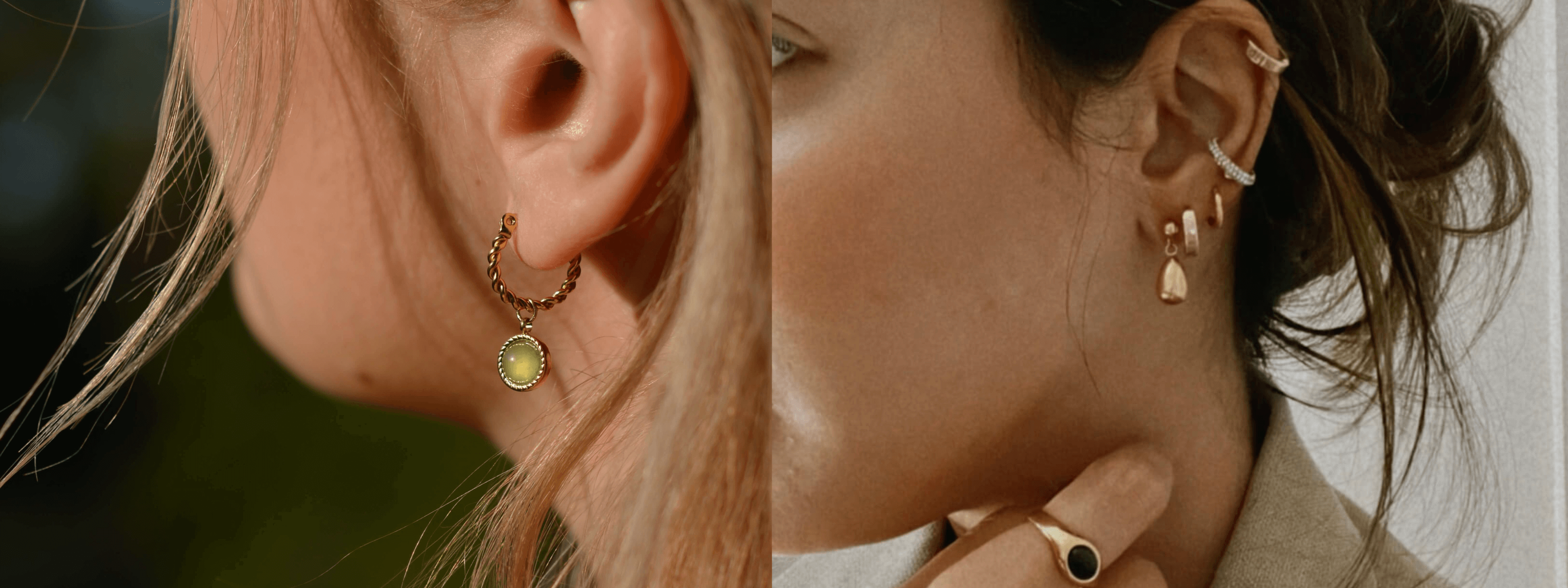
Is Stainless Steel Safe for Cartilage Piercings?
Cartilage piercings—like the helix, tragus, or conch—are a beautiful way to express your style. But as anyone with one can tell you, they are notoriously more sensitive and slower to heal than a standard lobe piercing. This makes your choice of initial jewelry absolutely critical.

So, when it comes to the popular and durable option of stainless steel, is it a safe choice for your delicate, healing cartilage?
The answer is nuanced: Yes, implant-grade surgical stainless steel is a safe material, but it's crucial to understand why professionals often have a preferred hierarchy of metals for this specific type of piercing.
This expert guide will explain why cartilage is unique, what materials and styles professionals recommend, and how to make the safest choice for a happy, healthy piercing.
Why Cartilage Piercings Are Different
Unlike your soft, fleshy earlobe which has abundant blood flow, your ear cartilage is avascular tissue. This means it has very little blood supply. The result?
-
Much Slower Healing: A lobe piercing might heal in 6-8 weeks, but a cartilage piercing can take 6 to 12 months, or even longer.
-
Higher Sensitivity: During this long healing period, the piercing is extremely susceptible to irritation, which can lead to dreaded irritation bumps and other complications.
This is why the material of your starter earring must be as non-reactive and body-friendly as possible.
The Professional Piercer's Material Guide for Cartilage
To get the safest answer, we look to the Association of Professional Piercers (APP). They set the global standard for body piercing safety, and their recommendations are based on decades of experience.
The Top Recommendation: Implant-Grade Titanium
For initial cartilage piercings, most reputable piercers will recommend implant-grade titanium (ASTM F-136) as the gold standard. The reasons are simple: it is 100% nickel-free and extremely lightweight. For a long and sensitive healing process, eliminating all potential allergens (nickel) and minimizing physical stress (weight) gives your body the best possible chance to heal smoothly.
The Trusted Standard: Implant-Grade Surgical Steel (316L)
Implant-grade 316L surgical steel (ASTM F-138) is also an APP-approved material for initial piercings. It has a long and successful track record in the piercing and medical fields. While it contains nickel, its composition is so stable that the nickel release rate is negligible for most people.
So, why the preference for titanium? As we cover in our Titanium vs. Surgical Steel guide, for the ultra-sensitive, long-term healing of cartilage, piercers prefer the "zero-risk" approach of titanium. However, 316L surgical steel remains a widely used, safe, and reliable industry standard.
Style Matters More Than You Think: Why Your Earring's Shape is Crucial
For cartilage, the style of your initial earring is just as important as the material.
-
Best Choice: Flat-Back Labrets. These are studs with a flat disc on the back. They are internally threaded or threadless, meaning no rough threads pass through your fresh piercing. The flat back sits flush against your ear, preventing snagging and reducing pressure, especially while sleeping.
-
Avoid at All Costs: Butterfly Backs and Hoops.
-
Butterfly Backs: The classic earring backing is a nightmare for cartilage. It traps bacteria, is difficult to clean, and can put pressure on the back of the piercing, causing irritation bumps.
-
Hoops (Rings): Hoops move and rotate freely, dragging external bacteria through the healing fistula (the piercing channel) and causing constant irritation. They should only be worn after the piercing is fully healed.
-
The Verdict: The Journey from Healing to Healed
For a New or Healing Cartilage Piercing:
Your piercer will make the final call, but your safest choices are implant-grade titanium or 316L surgical steel. Always prioritize your piercer's recommendation, as they can assess your personal anatomy and history. During this 6-12+ month period, your only job is aftercare, which you can learn about in ourBody Jewelry Cleaning Guide.
For a Fully Healed Cartilage Piercing: The Ultimate Choice
Once your piercing is completely and maturely healed, your options explode. This is where the true benefits of stainless steel jewelry shine. You can now safely switch to the vast array of styles—including the hoops and more decorative pieces you've been waiting for.
The proven safety, exceptional durability, and incredible variety of a high-quality stainless steel jewelry collection make it the perfect, worry-free choice for adorning your healed cartilage piercing for a lifetime.
Frequently asked questions
Is stainless steel safe for cartilage piercings?
Yes, implant-grade 316L surgical stainless steel is a safe material for cartilage piercings and is a trusted standard among professionals. That said, piercers often follow a hierarchy of metals, and many prefer implant-grade titanium for the initial, healing stage. Steel becomes an excellent choice once the piercing is fully healed.
Why do cartilage piercings take so long to heal?
Ear cartilage is avascular tissue, meaning it has very little blood supply compared to your fleshy earlobe. This is why a lobe piercing might heal in 6 to 8 weeks while a cartilage piercing can take 6 to 12 months or longer. The long, sensitive healing period makes your choice of non-reactive metal especially important.
What metal do professionals recommend for a new cartilage piercing?
For initial cartilage piercings, most reputable piercers recommend implant-grade titanium (ASTM F-136) as the gold standard because it is 100% nickel-free and extremely lightweight. Eliminating all potential nickel allergens during the long, sensitive healing process reduces the risk of irritation bumps. The Association of Professional Piercers sets these material standards.
Does the shape of the earring matter for cartilage piercings?
Yes, style matters more than many people think for cartilage. The earring's shape affects how much it moves, snags, or presses on the healing tissue, which can lead to irritation bumps if it is poorly suited. Choosing the right shape alongside the right metal helps your piercing heal happily.
Can I wear stainless steel in a fully healed cartilage piercing?
Yes. Once your cartilage piercing is fully healed, durable 316L stainless steel is an excellent everyday choice. Meideya's hypoallergenic, nickel-safe 316L steel is also waterproof and tarnish-resistant, so it holds up well to daily wear in healed piercings. For the new, healing stage, implant-grade titanium remains the safest pick.

Leave a comment
This site is protected by hCaptcha and the hCaptcha Privacy Policy and Terms of Service apply.