

Jade bracelet: A Style Guide
A jade bracelet pairs a genuine, meaning-laden stone — most often the round "donut" disc symbolizing peace and protection — with a setting you can wear every day, and the choice that actually decides your purchase is whether the jade is untreated (Type A) and what the band is made of. This guide is for anyone shopping their first jade piece or upgrading from a costume version: we cover what jade actually is, how to read color and treatment honestly, how to match the setting to your lifestyle, and the care realities of a softer natural stone on a plated band.
Key takeaways
- "Jade" means two real minerals — jadeite (Mohs 6.5–7) and nephrite (Mohs 6–6.5) — both genuine stones, but treatment matters more than the label: ask for Type A (untreated) over Type B (bleached/polymer-filled) or Type C (dyed).
- The stone is genuine; the band is the variable. Many jade-disc styles are set on 18k gold-plated brass, not 316L stainless — that affects care and water exposure, so check before you buy.
- Don't overpay for "Imperial green" hype on an everyday piece. A clean, even-toned jade in a comfortable setting wears beautifully for far less.
- For the most common case — a meaningful daily bracelet that still looks luxe — a classic adjustable jade-donut link is the easy pick.
What jade actually is — and the criteria that decide your purchase
Before you compare styles, get the material straight. It changes everything about value and care.
- Two minerals, both real "jade." Gemologically, jade is either jadeite or nephrite. Jadeite sits around Mohs 6.5–7 and resists surface scratching slightly better; nephrite is a touch softer at 6–6.5 but is one of the toughest natural gemstones, with a fibrous structure that resists chipping. Either is a genuine stone — neither is glass or plastic when sold honestly.
- Treatment is the real value driver. The trade grades jadeite as Type A (untreated, only waxed), Type B (bleached and polymer-impregnated to mask fractures), or Type C (dyed to enhance or change color). Type A holds its color and value; Type B and C look attractive but are less durable and worth far less. Crucially, Mohs hardness can't tell you which you have — only a reputable lab or seller disclosure can.
- Color, read honestly. Green is jade's most prized color (from trace chromium or iron), and lavender is the next most valued (from manganese or titanium). But "Imperial green" pricing belongs to fine collectible jade — for an everyday bracelet, an even, pleasant tone matters more than chasing the rarest shade.
- The setting. A jade disc or bead has to be drilled and set onto a band or chain. That band is where durability and water-resistance actually live, so judge it separately from the stone.
Best for X — matching the style to how you'll wear it
Different buyers want different things from a jade bracelet. Here's how to pick.
- Best for meaning and everyday wear: a classic jade donut (the round disc with a hole, known as the "Ping An Kou") on an adjustable link — a timeless Eastern symbol of peace and protection that reads as jewelry, not a talisman.
- Best for a gift: the donut style again, because the symbolism does the talking; choose a calm, even green and an adjustable length so fit is never a problem.
- Best for sensitive skin: a jade or gemstone piece set on a 316L stainless steel band — 316L has a very low nickel-release rate and is the most skin-friendly option in our lineup. (Confirm the specific item is stainless, not brass — see the comparison below.)
- Best for a budget / a first piece: a gold-plated style. You get the luxe gold tone and a genuine jade stone at an accessible price; just follow the plated-band care rules.
Jade bracelet types compared — verified material values
The honest differences come down to the stone's hardness and what the band is made of. Use this to set expectations before you buy.
| Option | Best for | Key facts — verified | Typical price |
|---|---|---|---|
| Jade disc on 18k gold-plated brass | Luxe gold tone, symbolism, budget | Genuine jade (Mohs ~6–7); band is plated brass — gold finish is a surface layer, keep away from prolonged water/sweat/lotion | ~$40–$70 |
| Jade/gemstone on 18k gold-plated 316L stainless | Sensitive skin, daily/water wear | 316L is hypoallergenic (very low nickel release per EN1811), waterproof, won't turn skin green; jade stone still needs gentle handling | ~$40–$80 |
| Tiger's eye or black onyx beaded | Hard-wearing daily stone, neutral tones | Quartz/chalcedony family, Mohs ~6.5–7 — similar hardness to jade but a denser, more uniform structure that takes everyday knocks well | ~$30–$60 |
| Mother-of-pearl or freshwater pearl accent | Soft, luminous look | Nacre is soft (Mohs ~2.5–4.5); needs the gentlest care of any option here | ~$35–$70 |
The takeaway: jade is a mid-hardness stone, so no jade bracelet is truly knockaround-proof. If you want maximum daily durability, a quartz-family stone on a 316L band wins; if you want the jade symbolism, accept gentle care as the trade-off.

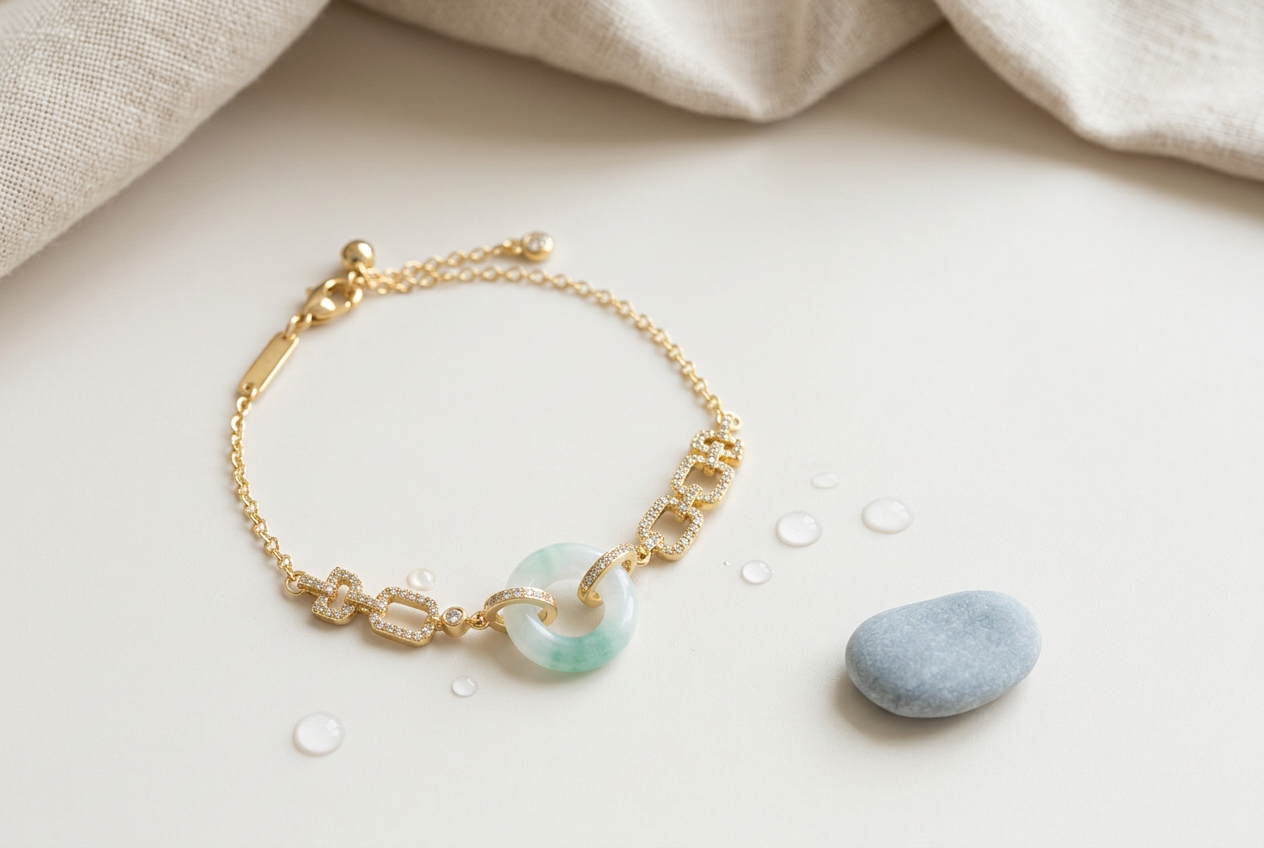
Jade Donut Pave Link Bracelet
A classic jade donut — the "Ping An Kou," a timeless symbol believed to bring peace, safety, and protection — on an adjustable 18k gold-plated brass chain.
Shop this bracelet →Honest caveats — the questions worth asking before you buy
- Is the jade real, and is it treated? The stone is genuine jade, but "genuine" and "untreated" are different things. Type A is untreated; Type B and C have been bleached/filled or dyed. We don't claim lab-certified Type A grading on our fashion pieces, so treat these as genuine-jade fashion jewelry rather than investment-grade collectible jade.
- Is the band solid gold? No. Our jade-disc styles use 18k gold-plated brass — never solid gold. Plating is a real surface layer of gold (the FTC requires at least 0.175 micron of 10k-or-finer gold to be called "gold plated"), and it resists wear for a long time, but it is not permanent. We say plated, not solid, on purpose.
- Will it survive the shower? Jade itself tolerates water, but a plated brass band does not love prolonged moisture — keep it away from extended contact with water, sweat, lotions, and perfumes to protect the gold finish. If you want a piece you can wear in the shower and gym, choose a 316L stainless style instead (316L is genuinely waterproof and won't turn skin green — that green tint comes from copper in unplated brass, not from stainless).
- Will it arrive looking like the photo? Yes — and it's a dainty, demi-fine piece, not a chunky statement cuff. The donut style is adjustable (our jade-donut link measures 8" with a roughly 15mm outer / 8mm inner disc), so fit is forgiving across most wrists.
- Any hidden costs? None. The price you see is a one-time price — no subscription, no auto-enrollment, no membership to keep your jewelry.
Ready to find the one that fits the symbolism you're after? Browse the full bracelets collection.
Frequently asked questions
Is a jade bracelet made of real stone?
Yes. Genuine jade is either jadeite (Mohs 6.5–7) or nephrite (Mohs 6–6.5), and both are real minerals. What varies is treatment: untreated stone is graded Type A, while Type B has been bleached and polymer-filled and Type C has been dyed. Our jade pieces use genuine jade as fashion jewelry; we don't represent them as lab-certified Type A collectible jade.
What does the jade donut bracelet symbolize?
The round jade disc with a center hole is known in Eastern culture as the "Ping An Kou." It is a classic, traditional symbol long believed to bring peace, safety, and protection to the wearer, which is why it remains one of the most enduring jade motifs.
Is the band solid gold or gold-plated?
Our jade-disc bracelets are 18k gold-plated, not solid gold. Many are set on a brass base with a gold-plated finish. By FTC standards, "gold plated" means a layer of at least 0.175 micron of 10k-or-finer gold; it resists tarnish for years but is a surface layer, not solid metal throughout.
Can I wear a jade bracelet in the shower?
Jade tolerates water, but a gold-plated brass band does not — keep plated-brass pieces away from prolonged contact with water, sweat, lotions, and perfumes to protect the gold finish. If you want a piece for daily water and gym wear, choose a style set on 18k gold-plated 316L stainless steel, which is waterproof and won't turn skin green.
Is jade good for sensitive skin?
The jade stone itself is inert and skin-friendly. Skin sensitivity comes down to the band metal: nickel is one of the most common contact allergens, but 316L stainless steel releases very little nickel (tested under EN1811), making it the safest choice for sensitive skin. Choose a 316L-set style if reactions are a concern, and note that plated brass is less ideal for very sensitive wearers.
Bottom line: buy the jade for its meaning and even color, then choose the band for how you'll actually live in it — 316L stainless if you want shower-and-gym durability, gold-plated brass if you want the luxe tone at a friendly price. See also our guide on dainty gold bracelets.

Laisser un commentaire
Ce site est protégé par hCaptcha, et la Politique de confidentialité et les Conditions de service de hCaptcha s’appliquent.