
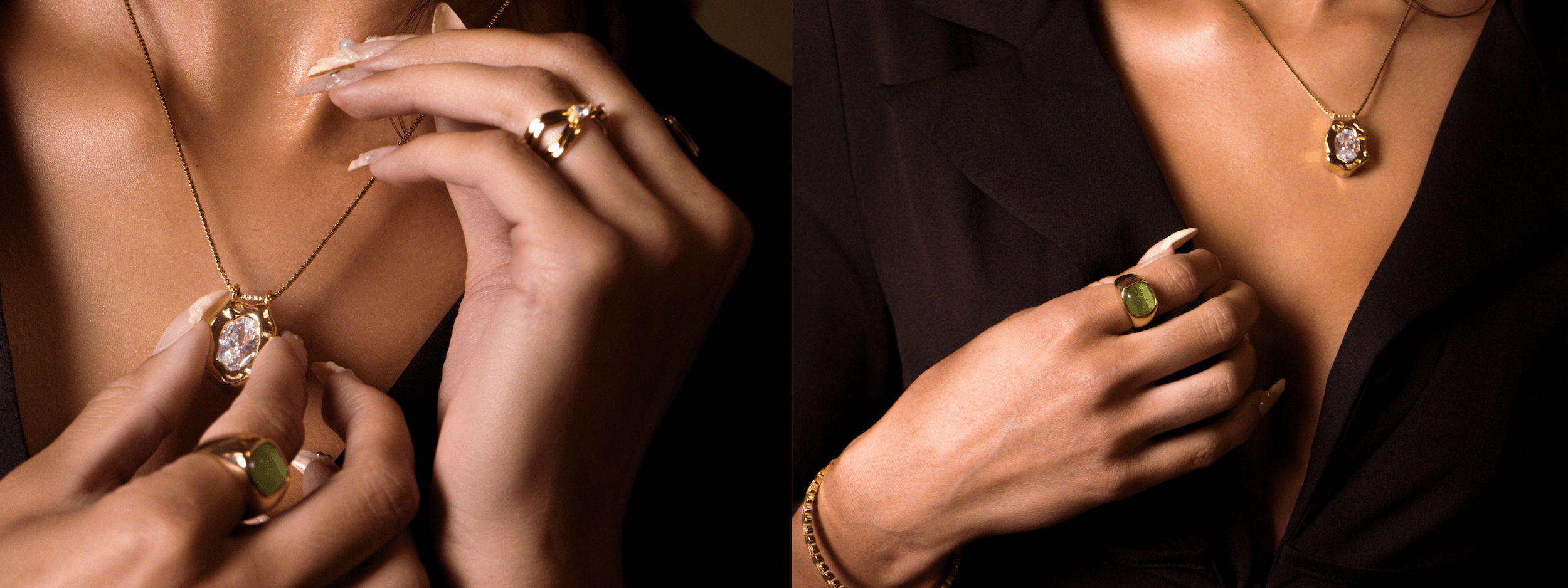
Kendra Scott Initial Necklace Alternatives
When shopping for everyday jewelry, finding the perfect kendra scott initial necklace often feels like the ultimate goal for personalized style. But before investing, it pays to understand exactly what you are buying. What is a Kendra Scott initial necklace? It is a popular personalized pendant featuring a single letter charm, typically crafted with a brass core and finished with 14k gold electroplating. While highly recognizable, its brass foundation means it requires careful maintenance to prevent tarnishing over time. If you want a piece that survives daily showers and workouts without turning your skin green, exploring waterproof alternatives built on stainless steel, like those from Meideya, is essential. Let's explore how different base metals impact the lifespan of your favorite letter pendant.
What is a Kendra Scott Initial Necklace?
Most shoppers assume all initial necklaces are basically the same piece of jewelry with a different letter stamped on. The Kendra Scott version actually commands $60–$80 at retail because of how it's built and finished, and understanding that construction helps you decide whether the price is justified for your situation.

A Kendra Scott initial necklace is a personalized pendant featuring a single letter charm suspended on a delicate chain. The pendant itself typically measures between 12mm and 18mm, small enough to layer but large enough to read clearly across a room.
Construction starts with a brass core. Brass gives the pendant its shape and weight without adding bulk, which is why your initial sits so flat and clean against your collarbone. That core is then finished with 14k gold electroplating, the same standard used across most fashion jewelry in this price range.
The electroplating is where real-world experience matters. Buyers who wear their initial necklace daily report the plating holds well for six to twelve months before showing wear near the bail and chain links. One verified Amazon buyer noted the finish started fading around the clasp after about eight months of daily wear — a realistic timeline for any brass-core, gold-plated piece regardless of brand.
If long-term tarnish resistance is your priority, pieces built on a stainless steel base with 18k plating offer a waterproof, tarnish-free alternative worth comparing before you buy, which brings us to the important differences between these underlying materials.
The Hidden Truth About Brass vs. Stainless Steel Base Metals
Stainless steel outlasts brass by roughly 3x before tarnishing becomes visible — and that difference explains why your cost-per-wear math changes completely depending on which base metal sits under the gold plating when shopping for the best initial necklaces. Brass is a copper-zinc alloy. Copper oxidizes when exposed to moisture and skin oils, producing that greenish patina (copper carbonate) that stains your neck and signals the plating has worn through. According to NIST corrosion data, copper alloys begin surface oxidation within weeks of regular contact with sweat and humidity.
316L stainless steel contains chromium and molybdenum, which form a passive oxide layer that resists corrosion without breaking down. That's the chemistry behind "tarnish-free" claims — it's not marketing language, it's metallurgy.
| Factor | Brass Base | 316L Stainless Steel Base |
|---|---|---|
| Tarnish timeline | Weeks to months with daily wear | Years with daily wear |
| Skin reactions | Common (copper oxidation) | Rare (hypoallergenic grade) |
| Water resistance | Avoid showers, pools, sweat | Shower, pool, gym-safe |
| Typical price range | $30–$60 per piece | $40–$60 per piece |
| Cost-per-wear (est.) | Higher — shorter usable life | Lower — 3x longer lifespan |
Many shoppers discover this the hard way. One common complaint across jewelry forums: a necklace worn daily starts leaving a faint green mark on the collarbone within two months. That's brass oxidation working through a thinning gold layer — and once it starts, there's no reversing it.
The Timeless Bond Necklace from Meideya Jewelry uses 18k gold-plated 316L stainless steel at $48. That base metal means you can wear it in the shower, pool, or gym without worrying about tarnish or skin discoloration. A comparable brass-based piece at $35 looks cheaper upfront, but if it needs replacing every six months, you've spent more by year two.
The price difference between brass and stainless steel pieces is often under $10 at purchase. Spread across two or three years of daily wear, that price difference disappears fast. Your necklace should still look the same in December as it did in January — and that only happens reliably with the right base metal underneath, preventing the chemical reactions that ruin so many favorite pieces.
Experience the Meideya Waterproof Guarantee
Tired of taking off your jewelry before every shower or workout? Upgrade to 18k gold-plated 316L stainless steel.
Shop Tarnish-Free NecklacesThe Root Cause of Tarnishing in Fashion Jewelry
Gold-plated initial necklaces tarnish because a thin layer of gold sits over a reactive base metal, usually brass or copper, and that layer wears through with regular exposure to water, sweat, and friction. Whether you choose a simple pendant or a layered gold initial necklace, once moisture reaches the base metal underneath, oxidation starts fast. The green skin stain you sometimes notice is copper oxide transferring directly from the jewelry to your skin.
Standard electroplating deposits gold at roughly 0.5 to 2.5 microns thick. That sounds fine until you factor in daily wear: showering, hand-washing, applying lotion. Each exposure strips a fraction of that coating. Within a few months, the high-contact points on a pendant or chain are already down to bare metal.
Brass is the most common base metal in affordable fashion jewelry because it's cheap to stamp and easy to plate. The problem is that brass contains zinc and copper, both of which react aggressively with oxygen and moisture. When your initial necklace sits against your skin on a warm day, the combination of sweat and heat accelerates that reaction noticeably.
The fix isn't a better polishing cloth. It's a different base metal entirely. Stainless steel doesn't contain copper or zinc, so there's nothing reactive waiting beneath the plating. Meideya Jewelry builds its necklaces on a stainless steel base with 18k gold plating, which is why pieces like the Amara Trio Stone Necklace are described as waterproof and tarnish-free at $53. That's not marketing language; it reflects a real difference in what happens when moisture hits the metal beneath the gold.
If your current initial necklace is already showing dark spots or leaving marks on your skin, the base metal has been compromised. No amount of careful storage reverses oxidation once it starts at the substrate level, which is why modern manufacturing has shifted toward more durable bonding techniques.
The Science of PVD Plating for Waterproof Jewelry
PVD plating beats standard electroplating because it bonds gold color at the molecular level inside a vacuum chamber, creating a layer that grips the base metal far more tightly than a conventional acid bath deposit ever could. The result is a finish that genuinely resists daily showers, sweat, and chlorine rather than peeling away after a few weeks of regular wear.
How PVD Works, Step by Step
- The piece enters a vacuum chamber. All air and moisture are removed, eliminating the oxidation that causes standard plating to degrade from the inside out.
- A gold target is vaporized. High-energy ions bombard a solid gold source, turning it into a cloud of metal particles at the atomic scale.
- Particles collide with the base metal. Those atoms travel across the vacuum and embed directly into the surface of the stainless steel, forming a bond that is physically part of the metal rather than sitting on top of it.
- The layer cools and hardens. The finished coating is typically 2–5 microns thick, which sounds thin but is dense enough to resist scratching, moisture, and body chemistry that would strip electroplated brass within months.
Standard electroplating, by comparison, uses an electrical current to deposit gold ions from a liquid solution. That layer sits on the surface. Sweat, soap, and water work underneath it over time, and the gold lifts away. According to NIST materials research, vacuum-deposited coatings consistently outperform solution-deposited ones in adhesion strength and corrosion resistance.
This is exactly why your Kendra Scott initial necklace may start showing brass undertones after a season of daily wear. The brass base and electroplated gold are two separate layers with different expansion rates. Heat, moisture, and friction pull them apart, a common issue with traditional letter necklaces.
Stop treating your signature jewelry like a temporary rental. A molecular bond survives daily showers in a way that a liquid-deposited layer simply cannot.
The Timeless Bond Necklace from Meideya uses an 18k gold PVD process over a stainless steel base, priced at $48. That stainless steel foundation matters as much as the plating method: there is no brass underneath to corrode and push the gold layer off from below.
If you are spending $58–$78 on a Kendra Scott initial necklace, the plating method is worth understanding before you buy. A piece that tarnishes in three months is not a bargain at any price point, especially if that tarnishing also leads to uncomfortable skin irritation.
Are Gold-Plated Initial Necklaces Safe for Sensitive Skin?
Gold-plated initial necklaces can be safe for sensitive skin, but only when the base metal underneath is nickel-free. The gold layer itself rarely causes reactions. What triggers contact dermatitis is the nickel hiding in the alloy beneath.
Certifications to Look For
The American Academy of Dermatology identifies nickel as the most common cause of allergic contact dermatitis from jewelry. To protect your skin, look for pieces that explicitly state a nickel-free, hypoallergenic base metal, and verify the core material, not just the plating.
Stainless steel cores are the most reliable option. Surgical-grade stainless steel contains nickel in a tightly bound alloy where it does not leach freely onto skin. Brass cores, by contrast, can release trace metals as the plating wears thin, which is exactly when redness and itching start showing up after weeks of daily wear.
What 24/7 Wear Actually Requires
Wearing your necklace overnight, through showers, and at the gym puts real stress on the plating. Thin gold layers over reactive base metals fail faster under sweat and friction. A thicker PVD or 18k gold plating over a stainless steel core holds up significantly longer before any base metal exposure becomes possible.
One customer pain point worth flagging: several buyers of fashion initial necklaces report noticing a green tint or itchy patch at the neck after just a few weeks. That is almost always a brass-core piece losing its plating, not a reaction to gold itself.
Meideya Jewelry builds its necklaces on a stainless steel base with 18k gold plating, which addresses both the tarnishing and skin-sensitivity problems at once. The Timeless Bond Necklace ($48) is a good example: stainless steel core, waterproof, and tarnish-free for daily wear without the rash risk that comes with brass alternatives.
If you have a confirmed nickel sensitivity, skip any piece that lists "alloy" or "zinc alloy" as the base material without specifying the exact composition. Those vague labels are a reliable signal that nickel is present in the mix, making material transparency the most important factor in your final purchase decision.
Putting It All Together
Your everyday necklace should survive your everyday life, workouts, showers, and all. For that, 18k gold-plated 316L stainless steel with PVD coating beats brass every time, holding its finish without the tarnish or skin reactions that frustrate so many buyers.
Kendra Scott initial necklaces carry real brand appeal, but their brass base and standard electroplating put longevity at risk. Shoppers who've gone that route know the feeling: a beautiful piece that starts showing wear within months.
If you want personalized jewelry that actually lasts, the Timeless Bond Necklace from the Meideya collection shows what waterproof, tarnish-free stainless steel construction looks like at $48. That's a price point where you're getting genuine durability without the compromise.
Skip the guesswork on base metals. Buy 316L stainless steel, confirm PVD plating, and your initial necklace will still look sharp two years from now, not two months.



Laat een reactie achter
Deze site wordt beschermd door hCaptcha en het privacybeleid en de servicevoorwaarden van hCaptcha zijn van toepassing.