

Rings That Don't Tarnish: How to Choose
If you want a ring that won't tarnish, the metal matters far more than the price tag — and the most reliable, wear-it-everywhere options are 316L stainless steel, solid karat gold, titanium, and tungsten. Each resists tarnish for a different reason, and each suits a different buyer. This guide breaks down what actually keeps a ring looking new, which option fits your life and budget, and how to read past the marketing so the ring you order is still bright a year from now.
Key takeaways
- "Tarnish-free" comes down to the metal: 316L stainless steel forms a self-healing chromium oxide layer that resists corrosion, fading, and tarnish through everyday wear, water, and sweat.
- The biggest tarnish trap is thin gold plating over brass or copper — once that micron-thin layer wears, the base metal underneath discolors and can leave a green mark on your skin.
- Don't overpay for solid gold if your goal is a daily stacker you can shower in; 18k-gold-plated 316L gives the look at a fraction of the price and won't rust.
- For the most common case — a delicate, everyday ring that survives the gym and the shower — a waterproof 316L stainless steel band is the easiest pick.
What "tarnish-free" actually means — and the criteria that decide it
Tarnish is a chemical reaction between a metal's surface and air, moisture, or skin oils. The reason some rings stay bright for years and others dull in weeks is simply the metal — and how it's constructed. Here is what to weigh before you buy:
- The base metal, not just the surface. A ring is only as durable as its core. 316L stainless steel resists tarnish because chromium in the alloy forms an invisible, self-repairing oxide layer that blocks corrosion. Solid gold and platinum are noble metals that essentially don't tarnish. Brass and copper, by contrast, oxidize readily — which is why plated-brass rings are the usual culprits behind dull, discolored bands.
- Plating thickness (if it's plated at all). Plating is a thin surface layer, so its longevity depends on how thick it is and what's beneath it. Under the FTC's jewelry rules (16 CFR Part 23), gold electroplate must be at least 0.175 microns of 10k-or-higher gold; gold-filled carries a far thicker layer — at least 1/20 (5%) of the item's weight in 10k-plus gold — and lasts much longer. The smarter move for everyday wear is plating over stainless steel rather than over brass: even if the gold layer eventually thins, the corrosion-resistant steel underneath won't rust or turn your finger green.
- Waterproofing for real life. "Waterproof" jewelry means the metal is corrosion-resistant enough to handle showers, sweat, and swimming without degrading — not that it's literally indestructible. 316L stainless steel earns the label; thinly plated brass does not.
- The stone, if there is one. The setting can tarnish independently of the gem, and the gem itself has a lifespan. Cubic zirconia (CZ) is a durable, brilliant diamond simulant at Mohs 8.5, but over years of daily wear it can micro-scratch and gradually cloud. Choosing a tarnish-free metal protects the setting; gentle care protects the sparkle.
Best for X — which non-tarnish ring fits you
Different buyers want different things from a ring that won't tarnish. Match the scenario to the pick:
- Best for everyday wear and stacking: 18k-gold-plated 316L stainless steel. It delivers the warm gold look, shrugs off water and sweat, and the steel core means no rust even as the plating ages.
- Best for sensitive skin: 316L stainless steel or titanium. Both are well-tolerated; 316L's nickel is locked into the alloy and releases very little — well below the EU REACH limit of 0.5 µg/cm²/week — which matters because nickel is the most common contact allergen (per the American Academy of Dermatology and Mayo Clinic).
- Best for an active, hands-on lifestyle: Tungsten or titanium. Tungsten is near-diamond hard (about Mohs 9) and stays scratch-free, though it's brittle under a hard blow; titanium is lighter and tougher, so it resists cracking.
- Best for a budget that still looks luxe: Plated stainless steel. You get the polished, fine-jewelry look for a fraction of solid-gold pricing — and unlike plated brass, it won't tarnish to a dull brown.
- Best as an heirloom investment: Solid 14k or 18k gold. It essentially never tarnishes and holds value, but you'll pay a premium and most people won't want to wear it through every workout.
How the tarnish-resistant metals compare
Here's how the common "won't tarnish" options stack up on the specs that matter, using verified figures and realistic price ranges (exact prices vary by piece):
| Metal | Why it resists tarnish | Hardness / durability | Best for | Typical price (ring) |
|---|---|---|---|---|
| 316L stainless steel (often 18k-gold-plated) | Chromium forms a self-healing oxide layer; corrosion- and water-resistant | Tough, scratch-resistant; very low nickel release (hypoallergenic) | Everyday wear, stacking, sensitive skin, budget luxe | $20–$60 |
| Solid 14k / 18k gold | Noble metal — essentially doesn't tarnish (14k = 58.3% pure, 18k = 75% pure) | Soft enough to scratch and bend; needs care | Heirloom pieces, investment | $200–$1,000+ |
| Titanium | Forms a stable oxide layer; corrosion-resistant and hypoallergenic | Mohs ~6; lightweight and very tough (resists cracking) | Active wear, sensitive skin, comfort | $40–$200 |
| Tungsten carbide | Won't tarnish or corrode from air, water, or sweat | Mohs ~9 (near-diamond hard, scratch-proof) but brittle | Hands-on lifestyles, scratch resistance | $50–$250 |
| Gold-plated brass | Only the thin surface resists; brass core oxidizes once plating wears | Plating wears with use; can leave green marks | Short-term / fashion only | $10–$40 |
The takeaway: if you want the gold look without the tarnish risk or the solid-gold price, gold-plated stainless steel wins — it's the only column that pairs the warm finish with a base metal that won't rust or discolor. Gold-plated brass looks identical on day one and is the one to avoid for daily wear.

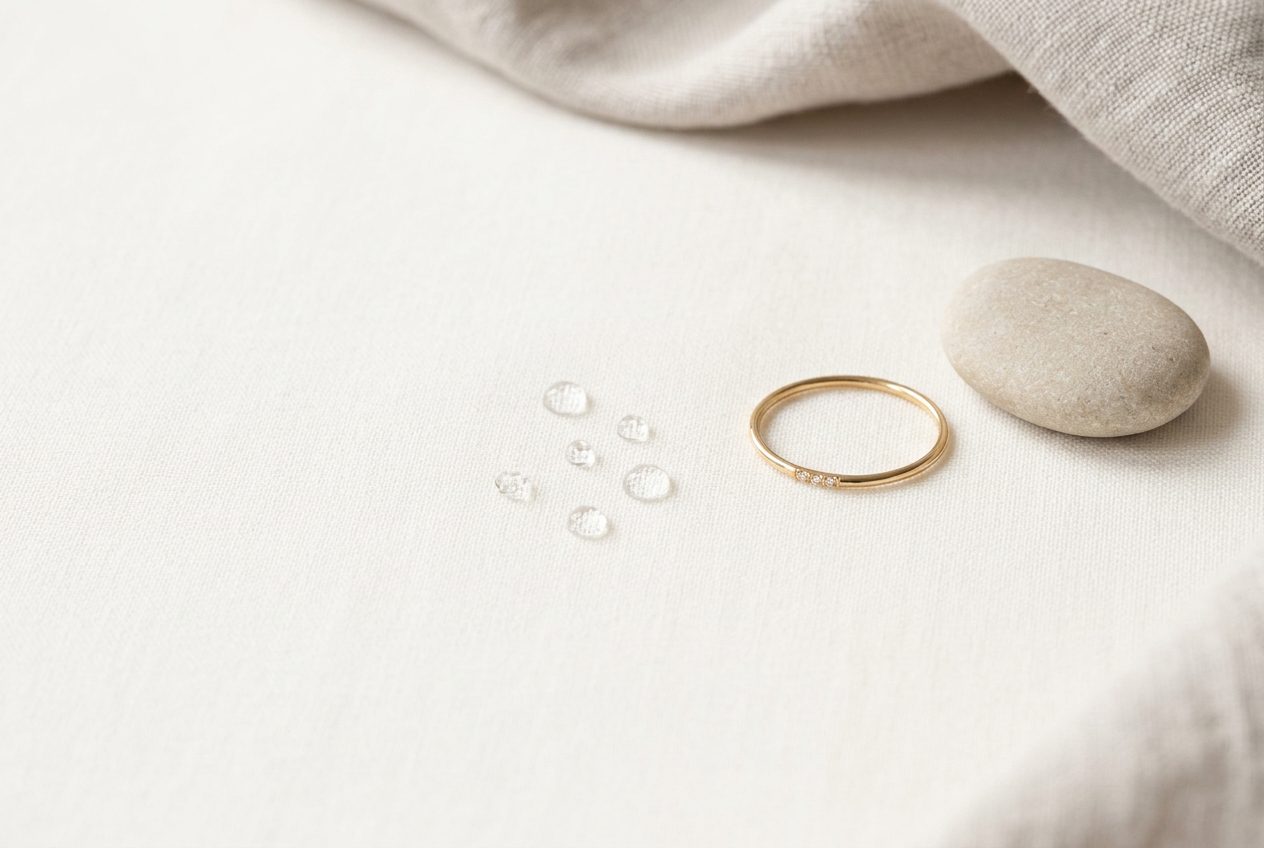
Tiny CZ Stacker Ring
A thin, minimalist band with delicately set AAA cubic zirconia stones on an 18k-gold-plated 316L stainless steel base — waterproof and tarnish-free, in US sizes 5–8.
Shop this ring →Honest caveats — the questions we'd ask too
- Will it actually hold up, or tarnish like my last gold-plated set? That depends on what's under the gold. Cheap "gold" rings are usually plated over brass — once the micron-thin layer wears, the brass oxidizes and dulls. Meideya plates over 316L stainless steel, so the corrosion-resistant core can't rust and won't turn your finger green. Honest version: plating is still a surface layer, so it resists tarnish for years, not literally forever — but a steel base outlasts a brass one by a wide margin, and gentle care (off before harsh chemicals, dry after swimming) extends it further.
- Will it arrive looking tiny compared to the photos? Daintiness is intentional, not a bait-and-switch. The Tiny CZ Stacker Ring is meant to be thin and minimalist — a fine line on the hand built to layer, not a chunky statement band. If you want presence, you'll want a wider style or a stack of several. Ring fit also runs in US sizes (women's most popular is around a 6), and wider bands tend to feel snugger, so size up about half a size when in doubt.
- Any hidden costs or subscription? No. Meideya rings are a one-time purchase — there's no club, no auto-enrollment, and no recurring charge hiding in the checkout. The price you see is the price you pay.
Ready to find your everyday band? Browse the full stainless steel rings collection for waterproof, tarnish-free styles.
Frequently asked questions
Do stainless steel rings really not tarnish?
316L stainless steel resists tarnish, corrosion, and fading through everyday wear because chromium in the alloy forms an invisible, self-healing oxide layer that blocks reactions with air and moisture. It holds up to showers, sweat, and swimming far better than plated brass. Like any metal it benefits from occasional cleaning, but it won't dull or discolor the way oxidizing metals do.
Why do some gold rings turn my finger green or go dull?
The usual cause is a base metal of brass or copper under a thin gold plating. Copper oxidizes and can leave a green mark on the skin, and once the micron-thin gold layer wears, the band looks dull. Stainless steel does not cause green skin, so a gold-plated 316L ring avoids that problem even as the plating ages.
Is 18k-gold-plated the same as solid gold?
No. Solid gold is gold throughout (14k is 58.3% pure, 18k is 75% pure), while gold-plated means a thin layer of gold bonded to a base metal. Under FTC rules, gold electroplate is at least 0.175 microns of 10k-or-higher gold, and gold-filled carries a much thicker layer — at least 1/20 of the item's weight in gold. Plating gives the same look for far less; plating over stainless steel is the most durable plated option because the core won't rust.
Are stainless steel rings safe for sensitive skin?
For most people, yes. The nickel in 316L stainless steel is tightly bound in the alloy and releases very little — below the EU REACH threshold of 0.5 µg/cm²/week — which is why it's widely considered hypoallergenic and used in body jewelry. Since nickel is the most common contact allergen (per the American Academy of Dermatology and Mayo Clinic), a low-release metal like 316L or titanium is the safer choice.
Will the cubic zirconia in my ring cloud or scratch over time?
Cubic zirconia is a durable, brilliant diamond simulant at about Mohs 8.5 (diamond is 10, moissanite 9.25). It holds up well to everyday wear, but over several years it can pick up micro-scratches and gradually look cloudier than when new. Gentle care — removing it before harsh chemicals and cleaning it occasionally — keeps it sparkling longer.
The simple rule: to buy a ring that won't tarnish, choose the metal first. A waterproof 316L stainless steel band — plated or not — gives you the look and the longevity without the upkeep or the solid-gold price. See also our guide to chunky ring jewellery styles and how to measure your ring size at home.

Laat een reactie achter
Deze site wordt beschermd door hCaptcha en het privacybeleid en de servicevoorwaarden van hCaptcha zijn van toepassing.